

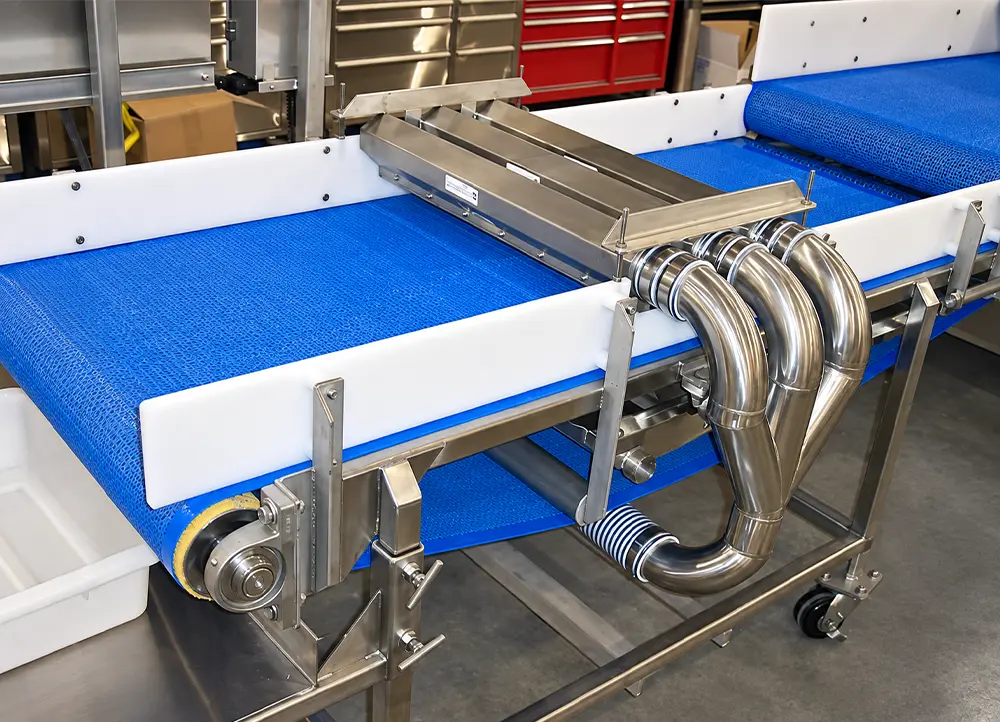
Yes, but only when wet conveyor surfaces are on the startup critical path. If the next shift is waiting for the belt to dry before pre-operation inspection, reassembly, or product release, an Air Knife for conv...
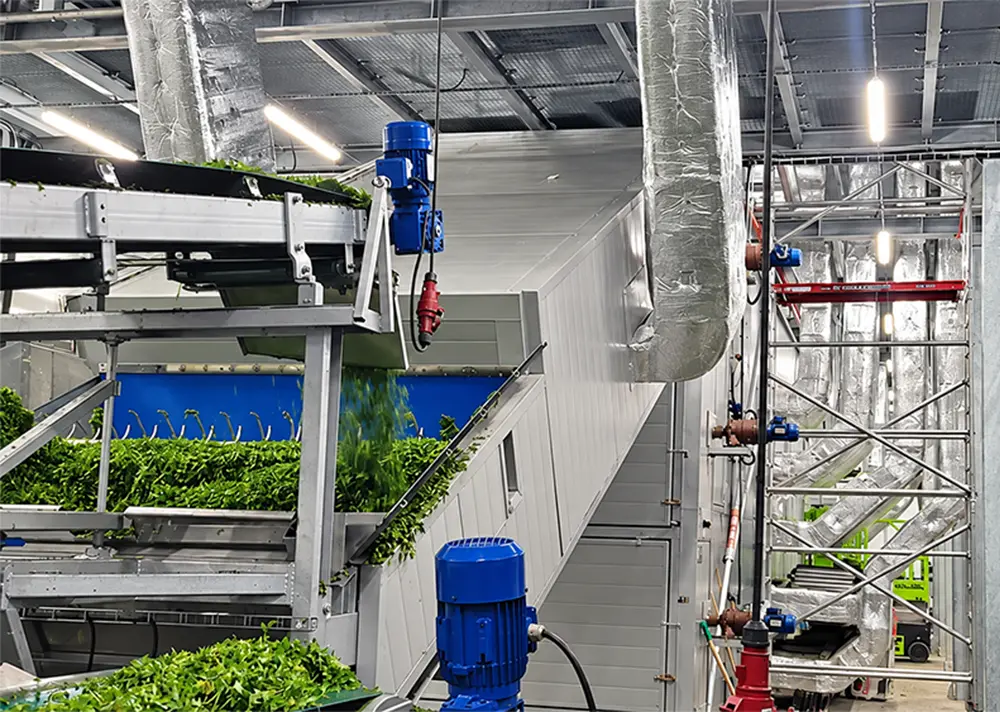
Leafy vegetables leave a wash system with water on flat surfaces, inside curls, around stems, and between overlapping leaves. Removing it reduces package fog, clumping, ingredient dilution, and drip. Yet spinac...
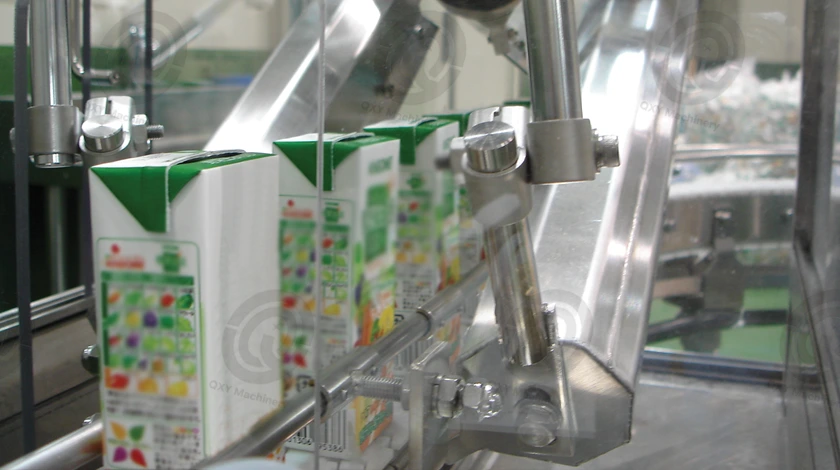
Water appears in almost every dairy plant: container rinsing, equipment washdown, crate washing, chilled-room condensation, and product splash. The problem is not simply that a surface is wet. Water can weaken ...
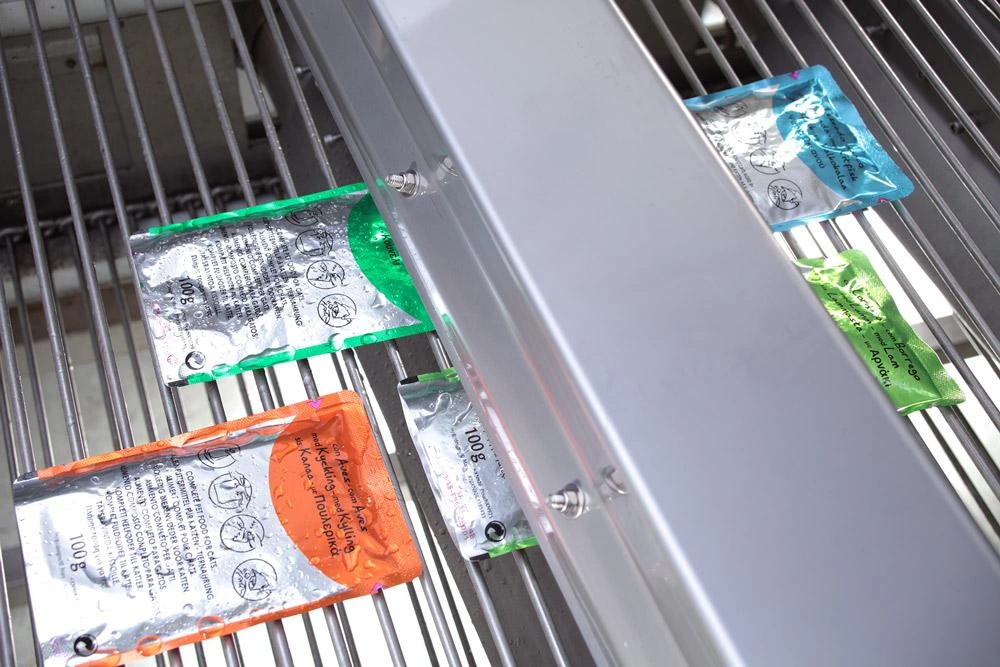
A food plant does not judge equipment only by what happens during production. The harder test comes after the line stops. Foam, alkaline cleaner, sanitizer, hot rinse water, humidity and repeated inspection all...
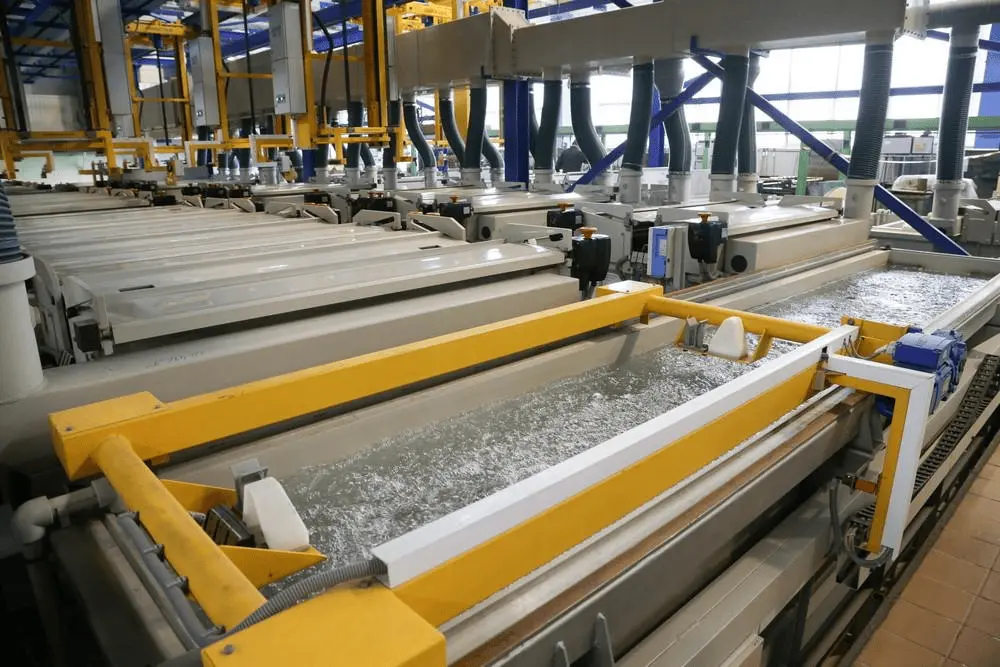
Chemical waste often begins as a thin film on a part. The liquid leaves a cleaner, acid, etchant, plating bath, conversion stage, or rinse and travels forward on the product, rack, basket, sheet, or conveyor. O...
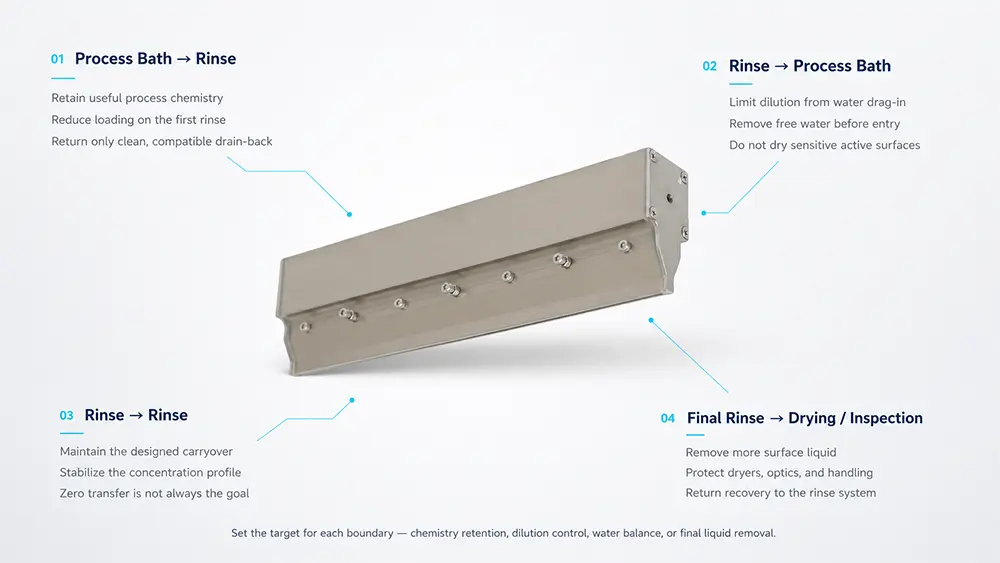
A process bath can meet its setpoint at the start of a shift and still run inefficiently. Every wet part, rack, basket, sheet, or strip transfers liquid when it moves to the next stage. The source bath loses us...
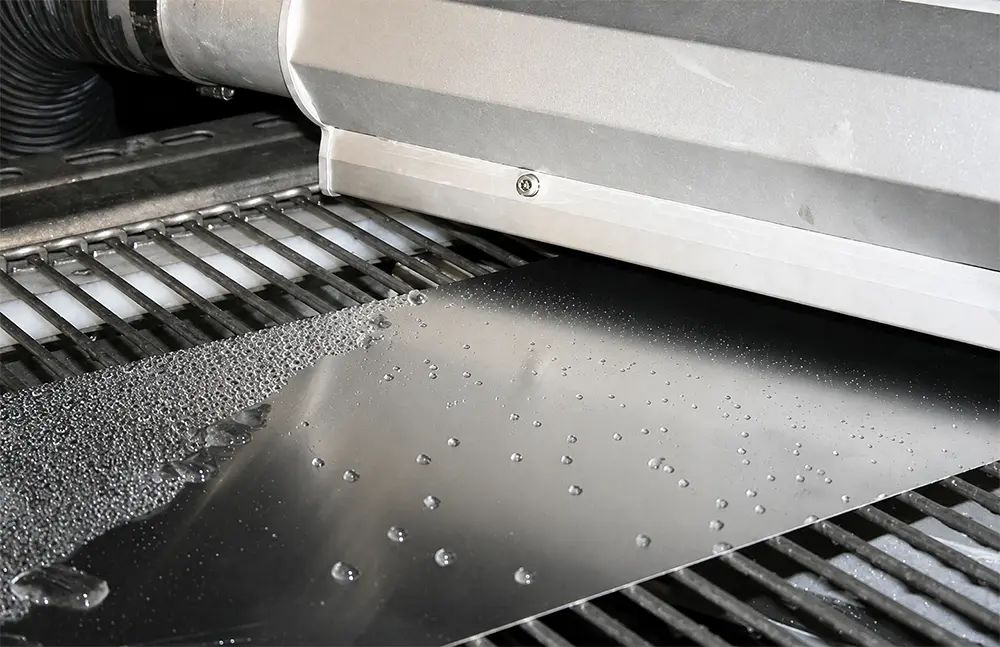
Every rack that leaves an electroplating bath carries a liquid film with it. Some solution sits on open surfaces. More remains around hooks, holes, seams, rack insulation, recesses, and horizontal ledges. If th...
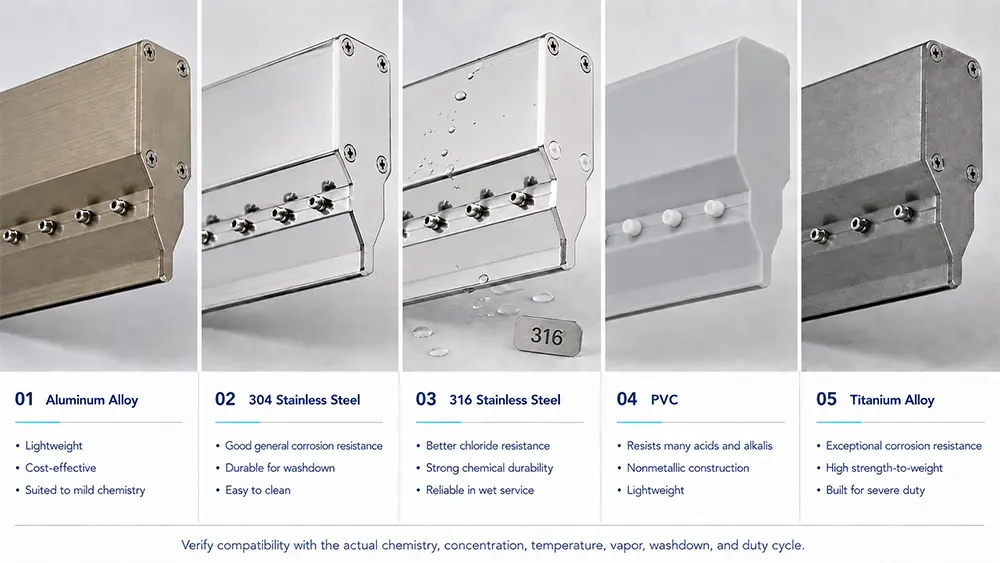
Material selection is not a choice between “metal” and “plastic.” A chemical-resistant air knife must survive the actual solution, concentration, temperature, splash pattern, vapor, washdown method, and product...

Shenzhen Qixingyuan Machinery Equipment Co., Ltd.
info@airknifecn.com
Building 8, Wanfeng Third Industrial Zone, Xinqiao Street, Bao'an District, Shenzhen, Guangdong, China


