
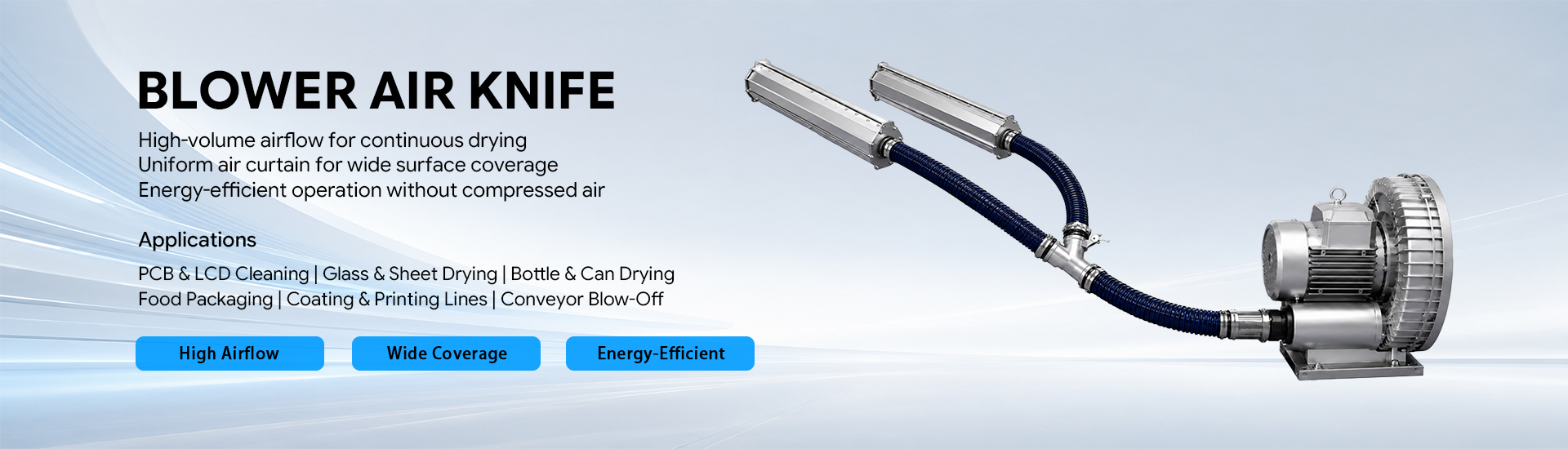
Blower Air Knife
QXY blower air knives are engineered for continuous drying, water removal, cooling, dust control and air-curtain tasks using a dedicated blower rather than plant compressed air. The blower supplies a high volume of low-pressure air to the air knife plenum, where the internal flow path distributes and accelerates it through an adjustable slot or an engineered row of small holes. The result is broad, controlled airflow for conveyor widths and long production cycles.
Aluminum alloy is the main body material across the range, and several product pages specify 6063-T6. Its low density, rigidity, machinability and thermal conductivity support long, accurately formed outlets without unnecessary load on machine frames. Compared with stainless steel or titanium alloy, aluminum also provides a practical cost-to-performance balance for standard factories.
For PCB and LCD lines, ultrasonic cleaning, glass washing, electroplating, coating, printing, metal strip processing, electronics, automotive production and selected food or pharmaceutical processes, a correctly matched blower air knife can provide wide-area treatment with lower dependence on costly compressed air. Final performance still depends on blower selection, total outlet area, duct losses, knife length, installation angle, working distance, conveyor speed and the liquid or contaminant being removed.


Category-Specific Advantages
Dedicated blower supply: Built around a matched industrial blower for continuous, high-volume air delivery instead of routine plant compressed-air consumption.
Wide-area coverage: A continuous slot or distributed small-hole outlet treats panels, boards, sheets, parts and conveyor lanes across a useful working width.
Multiple outlet geometries: Adjustable strong-air-knife models, small-hole models, winged models, double-headed outlets and cooling configurations support different airflow tasks.
Flexible integration: Current product pages show one-side, both-end or bottom air-supply options, together with customizable dimensions and outlet arrangements.
Lightweight aluminum construction: The main aluminum-alloy body reduces mounting load while supporting accurate machining, heat dissipation and economical customization.
Process scalability: One or more air knives can be arranged above, below or at an angle according to product shape, conveyor width and required drying result.
Controlled energy use: Blower power, airflow and outlet demand can be engineered as one system; avoiding an oversized blower or excessive gap prevents unnecessary energy use.
Broad industrial fit: The current range covers drying, blow-off, cooling, dust removal, air curtains and selected heating or process-air applications.
How a Blower Air Knife System Works
The dedicated blower generates airflow. It is selected for the required volume and pressure at the actual operating point, not by motor power alone.
Ducting carries air to the knife. Pipe length, bends, filters, manifolds, leaks and inlet size all affect the pressure that reaches the air knife.
The plenum distributes the airflow. The internal chamber and flow path help equalize the air before discharge.
The outlet accelerates the air. An adjustable slot creates a continuous air sheet, while small-hole models create multiple controlled jets.
Angle and distance convert airflow into useful surface force. The air stream shears water, dust, chips or heat away from the product and directs it toward a safe discharge path.
Drainage and enclosure complete the process. Splash control, water collection and suitable guarding prevent removed liquid or debris from returning to the product.
Materials Used
The current Blower Air Knife category consistently identifies aluminum alloy as the primary body material. Several product pages specifically state 6063-T6, including the small-hole air knife with wings, Type A-E, the double-headed air knife and the air knife for cooling. Because not every product page publishes a complete bill of materials, the table below separates confirmed category information from components that should be verified for the selected model.
Why aluminum fits this category: Its density is approximately 2.7 g/cm3, about one-third that of steel. This helps reduce the weight carried by brackets and moving or adjustable machine assemblies. Aluminum is also easy to extrude and machine into long plenums and accurate outlet profiles, offers useful thermal conductivity for cooling-related duty, and normally costs less to process than stainless steel or titanium. In standard factory environments, the natural oxide layer and optional anodized finish provide practical surface protection; aggressive chemicals, salt spray or sustained high-temperature exposure may require a different material.
Component | Confirmed material or construction | Why it is used | Selection note |
Main body and blade | Aluminum alloy across the current category; 6063-T6 is explicitly listed on several product pages. | Low density, useful rigidity, good machinability, thermal conductivity and a strong cost-to-performance balance. | Confirm the exact alloy and temper on the selected model and purchase specification. |
Adjustable outlet structure | Thickened adjustable aluminum blades are stated on current A-series and Type B pages. | Allows the outlet opening and airflow demand to be matched to the process while maintaining a stable body profile. | Adjustment range is model-specific; do not apply one gap specification to the entire category. |
Small-hole outlet | Machined small-hole aluminum outlet; the winged page states a 1 mm standard hole arrangement when no custom request is given. | Provides distributed jets for PCB and precision blow-off tasks; winged designs add airflow guidance and mounting support. | Hole size, rows and angle can be customized when specified. |
Surface finish | Anodized surface treatment is explicitly stated on the current Air Knife for Cooling page. | Improves wear resistance, cleanability and corrosion protection in normal industrial service. | Do not assume every model is anodized unless the quotation or drawing confirms it. |
Inlet connectors, fasteners and seals | Metal inlet connections are shown, but exact grades and sealing materials are not uniformly published. | These components complete the air path and mounting system. | Specify temperature, humidity, chemicals and cleaning method so suitable components can be confirmed. |
Alternative materials for harsher duty | Current Type B and A-series pages recommend stainless steel for high-temperature, high-humidity or corrosive conditions and titanium alloy for higher structural demands. | Extends suitability beyond the normal aluminum-alloy service environment. | These are alternative material selections, not the default material of this Blower Air Knife category. |
Representative Application Cases and Images
The examples below are application references based on the industries and product structures shown on the current QXY category and product pages. They are not presented as named customer case studies or guaranteed performance results; final layouts must be engineered around the actual line.
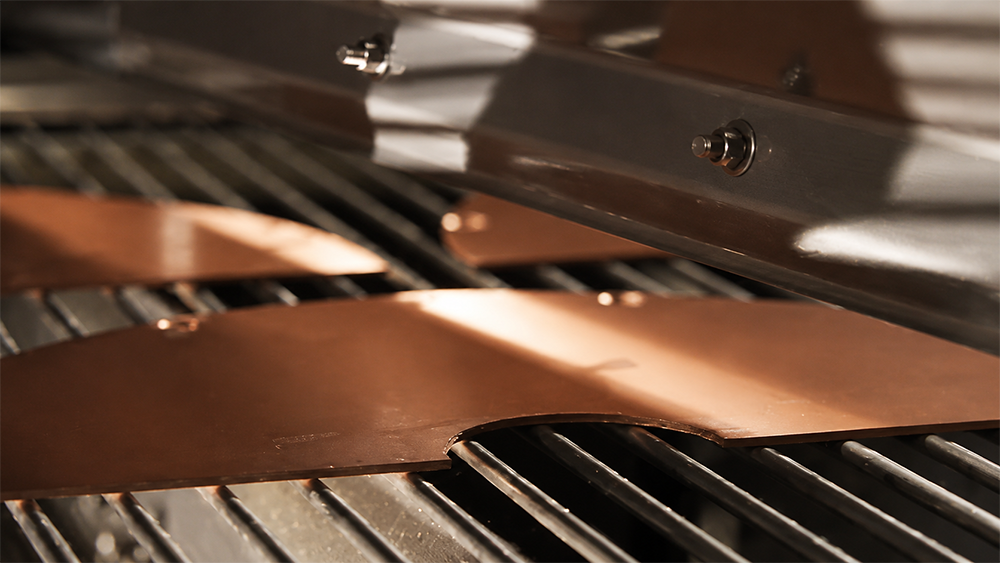
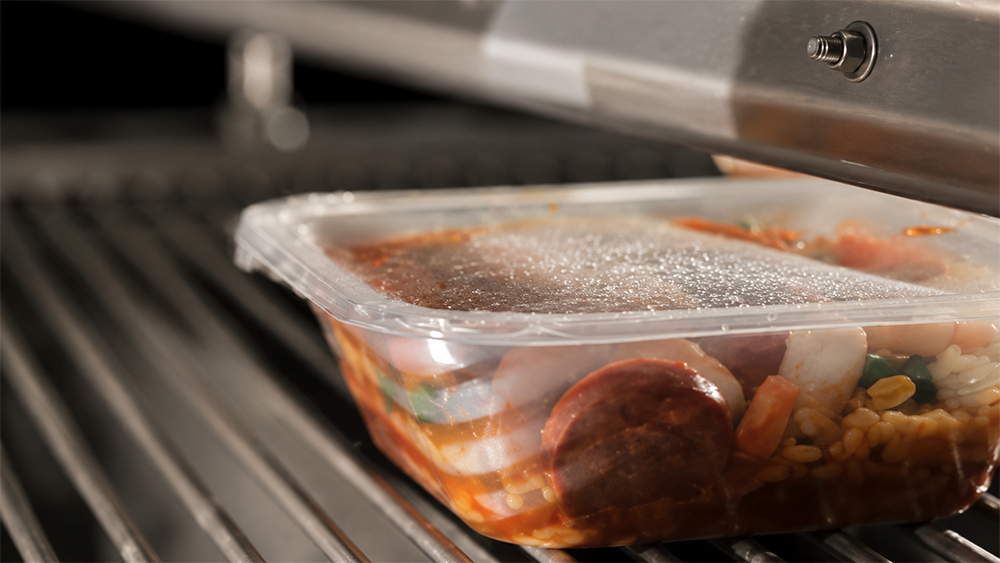
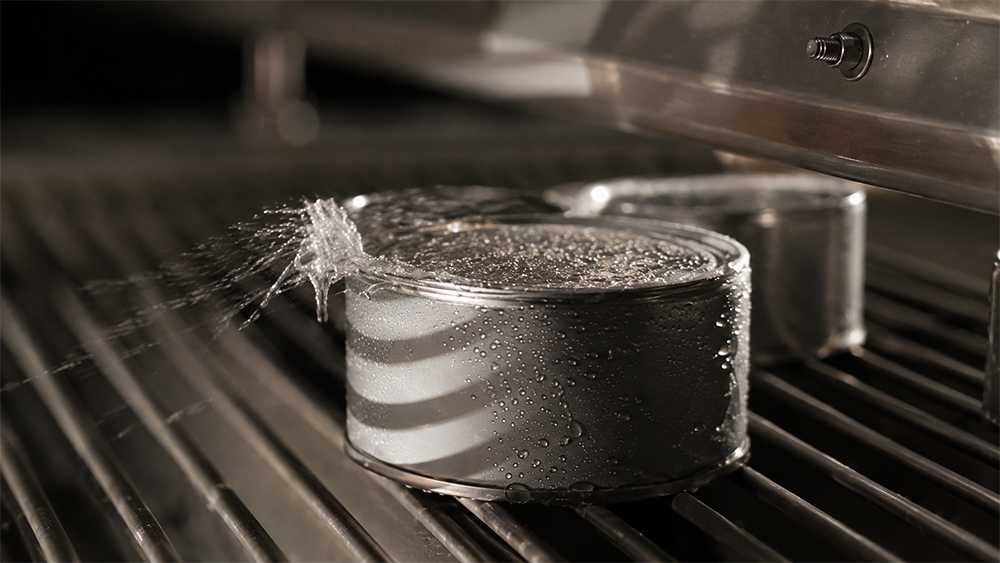
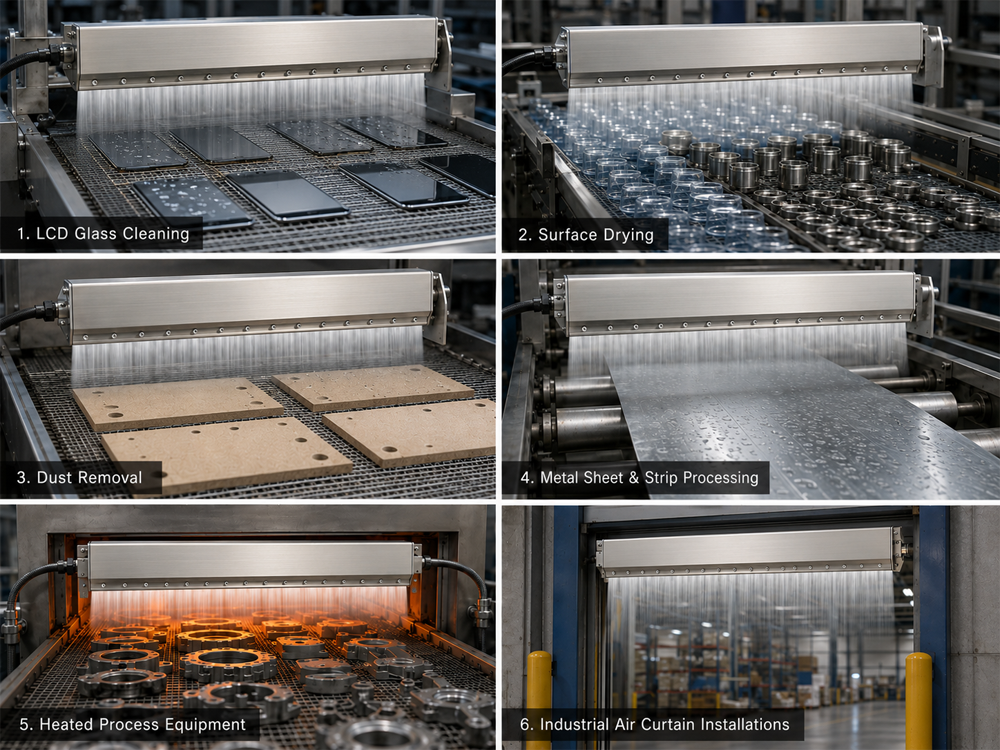
Information Required for Correct Selection
Process objective: Drying, water removal, dust or chip blow-off, cooling, air curtain, heating or another defined task.
Product details: Width, length, shape, weight, surface condition, holes, grooves, edges and whether one or both sides must be treated.
Production conditions: Conveyor speed, parts per minute, operating hours and acceptable residual moisture or cleanliness.
Liquid or contaminant: Water, coolant, oil, cleaning chemistry, dust, powder or chips, including temperature and concentration.
Air-knife layout: Required length, number of knives, outlet type, inlet position, mounting angle and available working distance.
Blower and duct data: Available blower model or curve, motor power, airflow, pressure, pipe diameter, duct length, bends, filters and manifolds.
Environment and material: Ambient temperature, humidity, corrosive chemicals, washdown method, food-contact requirements and preferred surface finish.
Machine integration: Installation space, supports, height adjustment, enclosure, drainage, controls, noise limits and upstream/downstream equipment.
FAQ
1. What air source does a Blower Air Knife use?
It uses a dedicated industrial blower selected for the air knife system. The blower provides the high airflow volume and low pressure required by the knife. This category should not be described as a standard plant compressed-air product.
2. What is the main difference between a blower air knife and a compressed-air knife?
A blower air knife is normally selected for continuous, wide-area drying or blow-off because it delivers a large volume of air across longer outlets. A compressed-air knife is usually more compact and is often used for localized, high-velocity treatment where compressed air is already available. Energy and performance depend on the actual system, but replacing wide continuous compressed-air use with a correctly matched blower system can reduce dependence on costly plant air.
3. What materials are used in the current Blower Air Knife range?
The current category products use aluminum alloy as the primary body material. Several product pages explicitly specify 6063-T6. Exact alloy temper, surface treatment, fastener grade and sealing materials should still be confirmed on the selected model and quotation.
4. Should I choose an adjustable slot or a small-hole outlet?
Choose an adjustable slot when a continuous air sheet and process tuning are priorities. Choose a small-hole outlet when multiple directed jets, localized impact or distributed precision airflow is more suitable. Winged small-hole models add lateral airflow guidance and extra mounting support. The best choice depends on product geometry, liquid load, line speed and blower capacity.
5. How should the blower be selected?
The blower must be matched to the total air-knife length, number of knives, outlet area, required surface impact and pressure losses through the duct system. Motor power alone is not enough. The blower curve and the complete air-knife system resistance should be checked at the intended operating point.
6. What working distance should be used?
There is no single distance for every model. Several current adjustable product pages recommend positioning the outlet approximately 10 to 30 mm from the workpiece as a starting reference. Final distance and angle should be tested at normal conveyor speed and liquid load to prevent weak drying, product movement, mist or splashback.
7. Which industries can use QXY blower air knives?
Current product pages identify PCB and LCD production, ultrasonic cleaning, glass washing, electroplating, coating and painting, printing, non-ferrous metal sheet and wire processing, electronics, automotive manufacturing, and selected food and pharmaceutical processes. They can also support cooling, dust removal and industrial air-curtain applications when correctly engineered.
8. What information should I send for a quotation?
Provide the product dimensions and photos, line speed, process objective, liquid or contaminant, required dryness or cleanliness, air-knife length and quantity, preferred inlet position, available blower or duct data, installation space, material environment and any drawings of the production line. This information allows the blower, air knife and piping to be selected as one system.
Need a custom air knife solution? Send us your application details, material requirement ,or air source type . Our engineering team will help you select the right model.

Shenzhen Qixingyuan Machinery Equipment Co., Ltd.
info@airknifecn.com
Building 8, Wanfeng Third Industrial Zone, Xinqiao Street, Bao'an District, Shenzhen, Guangdong, China


