

A food plant does not judge equipment only by what happens during production. The harder test comes after the line stops. Foam, alkaline cleaner, sanitizer, hot rinse water, humidity and repeated inspection all reach the equipment, around the conveyor. I see that a painted or lightly protected body may look fine on day one but equipment becomes harder to clean when coatings chip joints corrode or water sits in recesses.
That is why a stainless steel air knife is often specified in wet processing and packaging areas. It removes rinse water, product water, or cleaning liquid without touching the surface. Just as important, the metal body can be built with smooth, accessible, drainable surfaces that fit a documented sanitation routine. Material alone does not make the unit hygienic. Grade, finish, welds, fasteners, mounting, air quality, and cleaning access must work together.
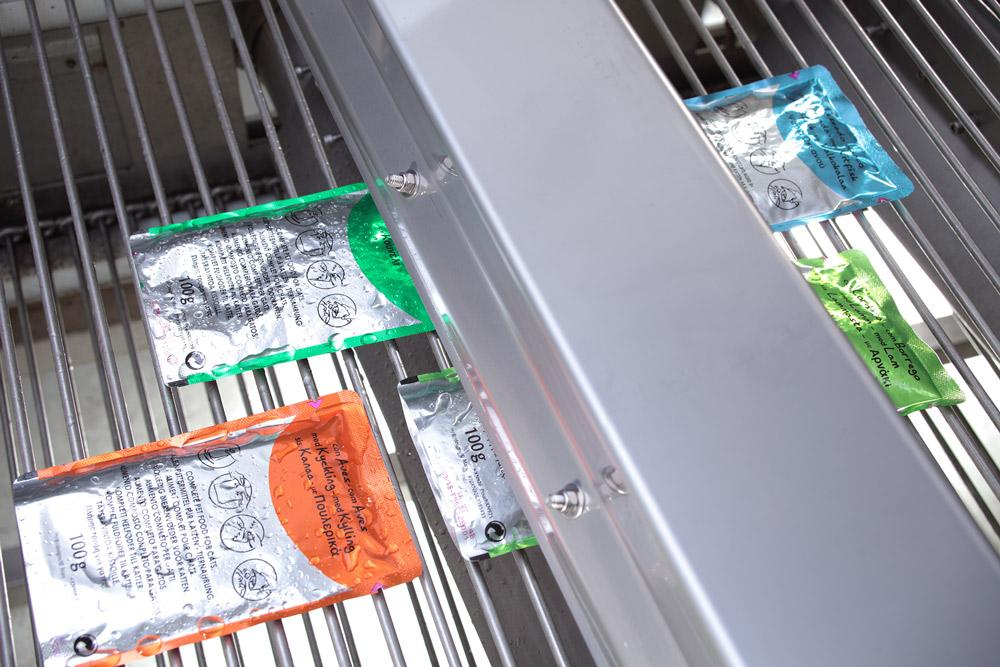
Follow the air knife through one production day. It removes liquid at line speed, then receives detergent, sanitizer, rinse water, and brushing during cleanup. After washdown, the body and brackets should drain. Before restart, staff must see and reach the surfaces that matter.
This lifecycle view also applies beyond direct food-contact positions. A unit above a bottle, package, conveyor, or tote can still receive product splash and frequent cleaning. USDA FSIS guidance says non-food-contact surfaces exposed to splash, soiling, or frequent cleaning should be corrosion-resistant, nonabsorbent, and smooth enough to clean.
Mechanical squeegees, rollers, and wipers can remove water, but they create a contact point. That contact surface wears, holds soil, and may carry material from one product to the next. An air knife creates a continuous sheet of moving air instead. On the right geometry, the jet pushes bulk liquid toward an edge or drain before the next operation.
Typical duties include clearing bottles before labeling, reducing water on produce before inspection, and drying sealed packs before coding. A stainless steel air knife is preferred when daily washdown reaches the equipment. Define “dry” first: a labeler may need only a dry adhesive band, while machine vision needs a stable view without droplets or glare.
Corrosion is not a concern for how long a system lasts. Pits, flakes and rough welds can hold onto soil and debris making inspections harder and less reliable. Stainless steel stays protected when it has a layer of chromium. This only happens when the grade is right the fabrication is done well and cleaning chemicals match the job.
A 304 stainless steel air knife works in general food and beverage areas where the chemicals are not too harsh.. If the environment has a lot of chlorides or salt like in seafood processing, brine systems, raw protein handling, dairy or strong cleaning programs then grade 316 is better. It offers resistance in those tough conditions. For structures that are welded 316L is often chosen because it reduces the risk of sensitization near welds. Still no stainless steel grade is completely safe from damage. Things like sanitizer strength, temperature, how long the surface stays wet how well it rinses and trapped residue still play a role.
Don’t just polish over problems like tea staining, pits rust around bolts or damage near welds. Look into why they happened. The cause could be using the grade using tools that are contaminated letting chloride dry, on the surface not rinsing properly or having a spot where liquid can collect and stay. These issues need fixing at the root.
Wash water that remains on a horizontal ledge can carry diluted soil and sanitizer into the next shift. A smooth steel body helps, but drainage comes from geometry. Rounded or sloped outer surfaces, sealed unused ports, smooth weld transitions, and brackets that do not form cups are easier to rinse and dry than a box profile with ledges and exposed threads.
The 2026 update to the 3-A General Requirements standard reinforces this broader approach to hygienic equipment: acceptable materials, cleanable construction, inspectability, and seal integrity belong in the same design review. A stainless steel air knife should not be described as “3-A compliant” merely because it uses 304 or 316. Any certification or conformance claim must be supported for the exact product and installation.
If the unit is opened or washed internally, include the plenum, inlet, gasket joints, and outlet slot in the cleaning method. A clean exterior does not prove that the internal air path is clean.
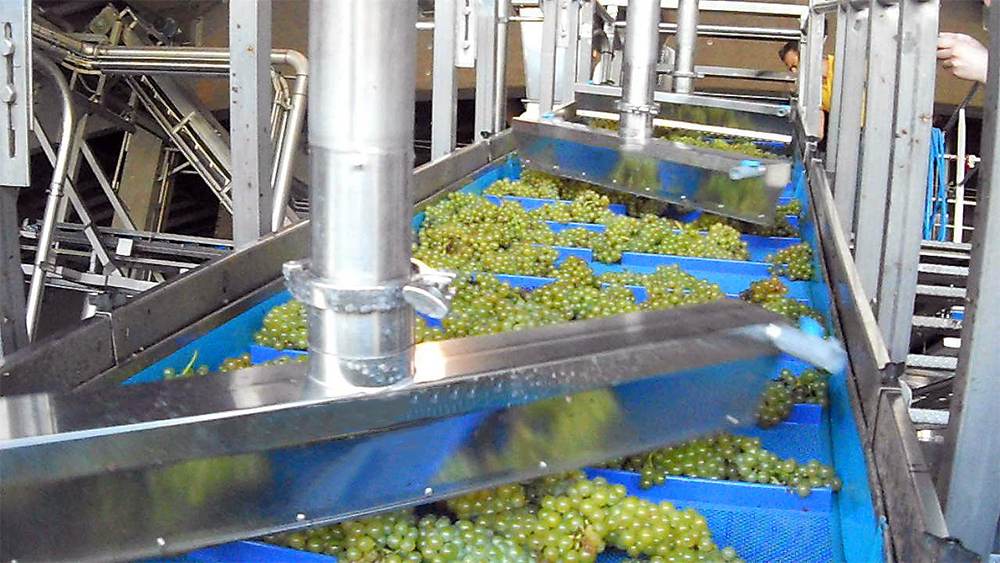
A sanitation team needs more, than a material certificate. Inspectors must be able to see welds check gasket joints reach the underside and make sure that no water has collected behind the mount. Polished metal that is hidden behind a fitting plate is still hidden. FSIS guidance says that food-contact surfaces must be smooth durable corrosion-resistant, free of breaks and crevices and accessible. Apply the same review to nearby equipment. Leave room for the plant’s foam, rinse, inspection, and swab tools. Quick-release mounts help only when the position can be restored.
Grade 304 is often used as a starting point in packaging areas, bakery equipment and for handling beverages when there is not much chloride exposure. A 316 stainless steel air knife is an option, near seafood, brine, salted products and cleaning programs that have chlorides. Grade 316L is usually chosen for welded assemblies because the lower carbon content helps prevent problems during the welding process.The alloy does not finish the specification. State the weld procedure, post-fabrication cleaning, passivation, finish, chemical limits, and any material-traceability documents the risk assessment requires.
A stainless body does not compensate for a carbon-steel bolt, unsealed thread, unsuitable gasket, or liquid-holding bracket. Review the body, shims, end plates, fasteners, fittings, duct, seals, supports, blower, motor, and nearby accessories.
Washdown-rated electrical parts and suitable lubricants may also be required. Enclosure ratings depend on the cleaning method and local rules; they cannot be inferred from the air knife material. Put any disassembly and open-part protection steps in the sanitation procedure.
Clean stainless steel does not clean dirty air. FDA guidance says air introduced into food or used on food-contact surfaces should be treated so it does not contaminate food. Controls may include filtration, condensate and oil control, intake placement, and routine verification based on the hazard analysis.
Blowers and plant compressed air need different reviews. For a blower, intake location and filter condition matter. Plant air can carry oil, water, scale, or microbial contamination if treatment is poor. When air reaches food or a critical contact surface, verify it at the point of use under operating conditions.
QXY Machinery supplies stainless steel air knives in 304, 316, and 316L options, with lengths and inlet arrangements matched to the conveyor. The values below are practical starting points, not guaranteed settings for every food process. Product shape, line speed, water load, allowable mist, and hygiene-zone rules decide the final position.
Control variable | QXY starting point | Food-plant commissioning check |
Knife-to-product distance | 20-50 mm | Confirm clearance through the full product-height range and after sanitation reassembly. |
Impingement angle | 15-45 degrees | Aim removed liquid toward a controlled drain or collection point, not an adjacent clean zone. |
Blower pressure at knife inlet | 2-6 psi (0.14-0.42 bar) | Measure at the air knife under operating flow; duct loss can make blower nameplate pressure misleading. |
Outlet slot | 0.5-2 mm, set to the order | Use the smallest practical opening that meets removal needs without excessive noise, mist, or airflow demand. |
Length and inlets | 150-1,000 mm standard; custom to 6 m | For lengths above 600 mm, evaluate dual inlets and verify end-to-end removal on the actual conveyor. |
Direct water toward a controlled collection point. Round bottles may need opposing or staged knives. On belts and trays, do not drive liquid into hinges, seams, or the product underside. Excess slot length wastes airflow and can push water into clean areas.
On beverage lines, water can weaken label adhesion, blur codes, or disturb camera inspection. Target the shoulder, cap, neck, or label band. Produce lines deal with leaves, cavities, and changing sizes, so the goal is often loose-water removal before sorting rather than a bone-dry surface.
Meat, seafood, and dairy areas add salt, protein soil, fat, cold rooms, and stronger sanitation. These services often justify 316 or 316L, smooth welds, sealed hardware, and open mounting. Trays, crates, and belts may need several jet angles because ribs and pockets hold water. Washing should remove attached soil before blow-off.
Test the wettest normal product at the highest approved speed and through the full size range. Observe where liquid goes. Check nearby floors, equipment, cameras, open product, and return air for mist or re-deposition. Measure the result that controls production: water mass, label peel, code readability, false-reject rate, seal condition, or drip rate.
Microbial safety needs separate validated sanitation controls; an air knife drying test is not a kill study. Record stand-off, angle, slot, blower speed, duct arrangement, product recipe, and the acceptance limit. Mark brackets so the position can be restored after cleaning.
Inspect the slot for film, scale, dents, and uneven gaps. Check mounts and the underside for water. Replace seals with the specified material and avoid unauthorized fasteners. Track blower filter condition and drain compressed-air condensate. If performance falls, check pressure at the knife, duct leaks, slot condition, stand-off, and product position before raising pressure.
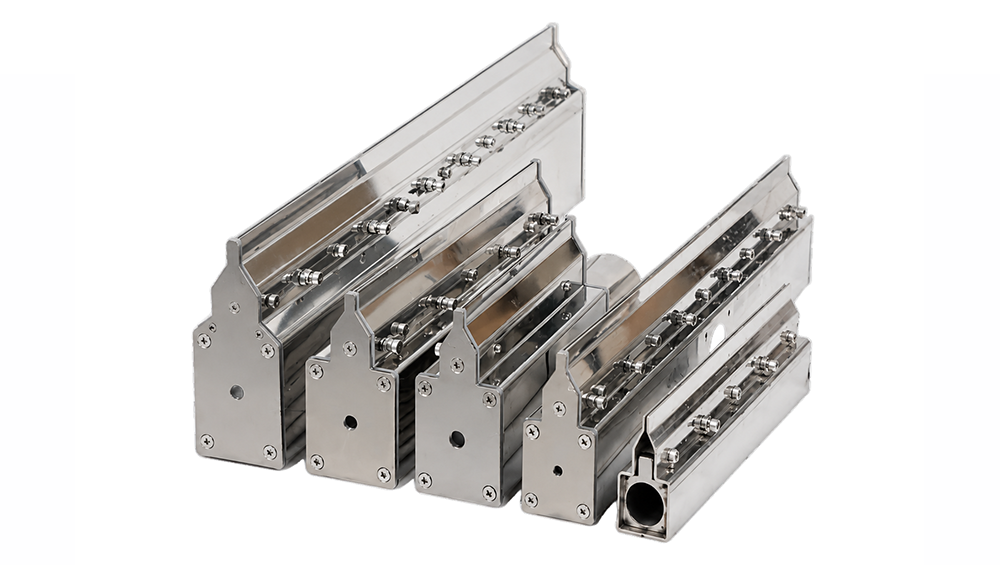
Translate “preferred” into verifiable requirements: stainless grade, process and cleaning chemicals, temperatures, finish, weld treatment, drainage, gaskets, exposed-fastener policy, air quality, and inspection access. Add product width, speed, water load, target dryness, available pressure, and acceptable noise or mist.
A well-specified stainless steel air knife removes liquid without contact and supports repeated cleaning, drainage, and inspection. Those benefits come from the complete design and sanitation program, not from the metal name on a drawing.
QXY Machinery (Shenzhen Qixingyuan Machinery Equipment Co., Ltd.) is a Shenzhen-based manufacturer integrating R&D, design, production, and sales. The company has more than 10 years of focused experience in air knife systems for industrial drying, dust removal, and water blow-off.
For food and beverage projects QXY Machinery can give 304, 316 or 316L stainless steel air knives, plus custom lengths, slot widths and inlet layouts. The engineering team will look at conveyor width, product shape, line speed, washdown exposure, cleaning chemicals, drainage direction and blower duty. Compliance and hygienic design rules must be agreed on for the model and installation before buying.
Q: Why use a stainless steel air knife instead of aluminum in a food plant?
A: I think stainless steel is better suited for repeated cleaning and, for many food-plant chemicals. Stainless steel also supports corrosion-resistant inspectable construction. I think aluminum may still work in a low-risk packaging zone but the exposure and sanitation method should decide the material.
Q: Is 304 stainless steel suitable for all food-processing air knives?
A: No. Grade 304 can work for food and beverage tasks. Salt, brine, chloride cleaner, stronger chemicals and constant moisture can require 316. Check the list of chemicals, temperatures and cleaning process instead of picking based on industry name only.
Q: When should a plant specify a 316 stainless steel air knife?
A: I think 316 is the choice, for seafood, brine, salted products, raw‑protein areas, dairy service and sanitation programs that have meaningful chloride exposure.316 Should also cover welds, fasteners, seals, finish and drainage.
Q: Does a stainless steel air knife sanitize food or equipment?
A: No. It removes loose liquid or debris by airflow. It does not replace washing, chemical sanitation, thermal treatment, or microbiological validation. Hygienic construction helps the equipment itself be cleaned and inspected.
Q: Can an air knife blow directly onto food?
A: It may be possible when the process hazard analysis permits it, but the air source and all downstream components must be controlled. Filtration, oil and condensate control, intake location, materials, and point-of-use verification may be required.
Q: How close should the air knife be to the product?
A: QXY uses 20-50 mm as a common starting range, with a 15-45 degree impingement angle. Final settings must be tested on the real product at line speed because shape, water load, clearance, and mist control change the result.
Q: Does stainless steel mean the air knife is automatically FDA or 3-A compliant?
A: No. Material grade is only one part of hygienic design. Verify the exact product documentation, construction, surface finish, seals, cleanability, intended zone, and any certification or conformance claim required by the project.
Need a custom air knife solution? Send us your application details, material requirement ,or air source type . Our engineering team will help you select the right model.

Shenzhen Qixingyuan Machinery Equipment Co., Ltd.
info@airknifecn.com
Building 8, Wanfeng Third Industrial Zone, Xinqiao Street, Bao'an District, Shenzhen, Guangdong, China


