

Water appears in almost every dairy plant: container rinsing, equipment washdown, crate washing, chilled-room condensation, and product splash. The problem is not simply that a surface is wet. Water can weaken a label, hide a cap defect from a camera, drip across a hygiene boundary, or remain inside a reusable tray. Each result needs a different air knife layout.
An Air Knife produces a continuous sheet of moving air that pushes free liquid toward an edge or drain. It is most effective on water that can move. It is less effective on thick dairy soil, water locked inside deep pockets, or moisture that must evaporate from a porous surface. The first design task is therefore to define the wet target and the production result that matters.
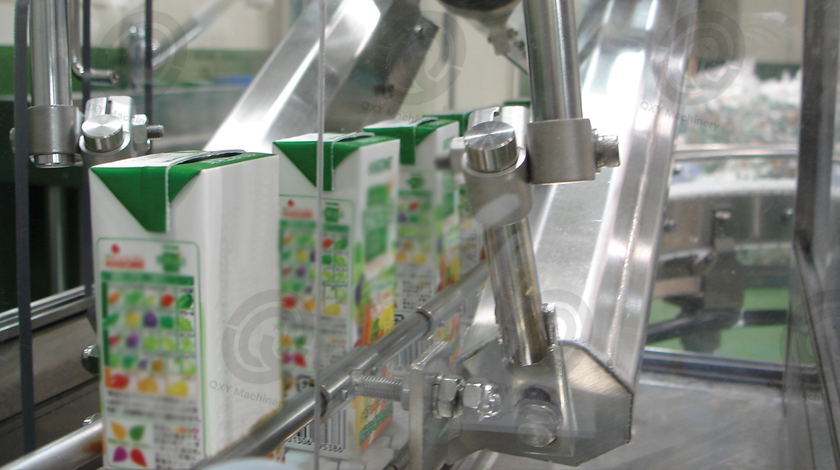
Dairy applications fall into three broad exposure classes. The first is the outside of a sealed package, such as a capped milk bottle or closed yogurt cup. The second is non-product-contact equipment that may receive splash or washdown, including conveyors, guides, crates, and change parts. The third is exposed product or a product-contact surface. That third class needs a much stricter air-quality and hygienic-design review.
This distinction changes the system boundary. A blower aimed at a sealed bottle may be evaluated mainly for drying, mist, noise, and cleanable construction. Air directed into an empty container before filling, onto cheese, or onto a product-contact surface can become an ingredient-like exposure. Intake air, filters, oil, moisture, pipe condition, final filtration, and backflow protection all enter the hazard analysis.
The table below links common air knife applications to a result that operators and quality teams can measure. It is intentionally outcome-based. The same package may pass one requirement and fail another.
Dairy-line result | Typical target | Useful air knife position | Acceptance measure |
Label and code readiness | Sealed milk bottles, drinkable-yogurt bottles, tubs | After exterior rinse and before labeler or coder | Dry label band; readable code; no adhesive lift |
Stable inspection | Caps, foil lids, seals, date codes, package walls | Before camera with a short settling distance | False-reject rate; image contrast; no lens mist |
Lower drip transfer | Conveyors, trays, closed packs, change parts | Before a cleaner zone, turn, lift, or manual station | Drip count or water mass at transfer |
Reusable-item turnaround | Crates, molds, trays, racks, carriers | After final rinse and gravity drain | Defined dry area; no pooled water in pockets |
Controlled contact-surface blow-off | Selected equipment or empty containers | Only at a validated point with treated air | Air-quality result plus surface acceptance criterion |
Cold milk bottles, cultured-drink containers, and yogurt cups often leave a rinse or cooling step with water on the exterior. A pressure-sensitive label may bridge over droplets and lift later. Inkjet characters can spread or lose contrast. An air knife placed before the labeler or coder can clear a controlled band without touching the package.
Round containers usually need more than one air direction. One knife may clear the leading face but leave a wet shadow behind the bottle. Opposed knives, a staggered pair, or rotation through the jet can improve coverage. The line does not need every square millimeter dry when only the label panel or code window controls acceptance.
Cameras inspecting caps, tamper bands, foil lids, date codes, or fill-level windows can mistake water for a defect. Droplets create highlights, bend edges, and change contrast. Airflow can also disturb a lightweight cup if the jet is too close or too steep.
Place the air knife far enough upstream for the package to stop vibrating before the image is captured. Keep blown droplets away from lenses and lights. Test with the wettest approved package at full speed, then compare false rejects, false accepts, and image stability before and after the change.
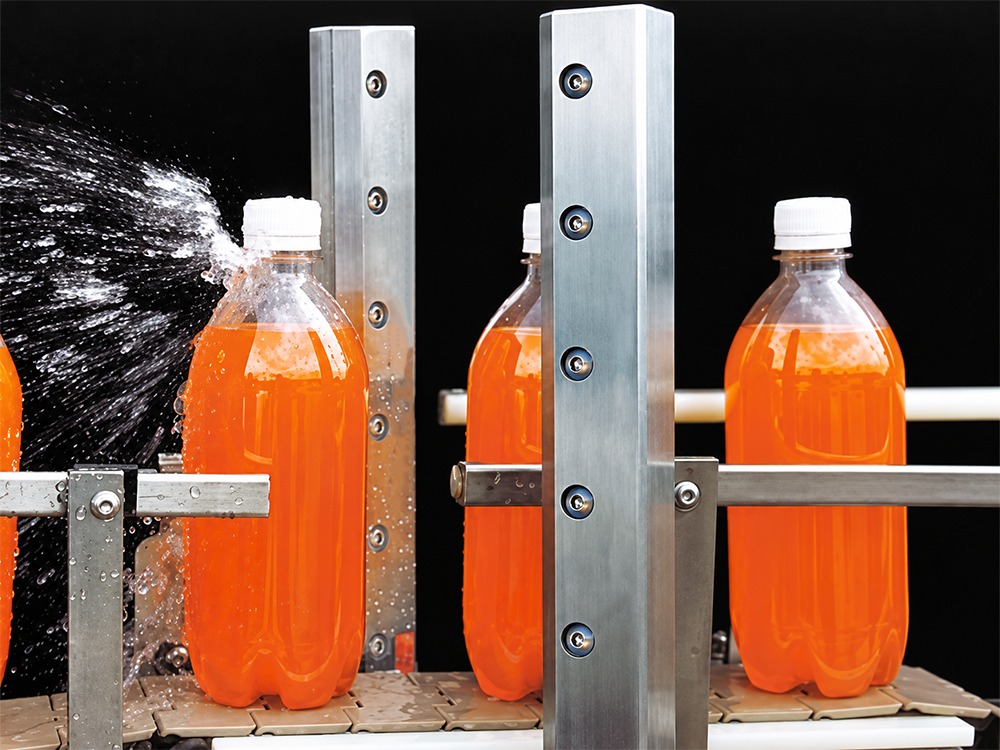
Water carried from a washer can drip onto a cleaner conveyor, floor, case packer, or manual work area. The goal here is not cosmetic drying. It is controlling where liquid crosses a boundary. Aim the air knife so removed water returns to the washer or reaches a defined drain. Add splash guards or extraction if the jet creates mist.
This use is common after exterior package rinsing, before an incline conveyor, and where closed packs enter secondary packaging. It can also reduce water carried on belt surfaces. Do not use airflow to move dirty water toward exposed product or a higher-care area.
Reusable dairy items often contain ribs, handles, feet, and blind pockets. A single straight jet may clear the open face while leaving pooled water underneath. Gravity drain time should come first. Then use several air angles, part rotation, or an indexing pause to reach trapped areas.
Define which surfaces must be dry for stacking, storage, or return to production. For cheese molds, filler parts, or other product-contact items, the cleaning method and air exposure need formal review. Air blow-off must not re-contaminate a cleaned and sanitized surface.
Cold rooms and chilled products can produce recurring condensation. An air knife may clear water from a specific rail, closed package, or transfer surface, but it is not a substitute for ventilation, insulation, dew-point control, or repair of a dripping overhead source. Treat the source before adding airflow.
Local blow-off can help where water reforms on a predictable, cleanable surface and the removed liquid has a safe destination. Avoid sending aerosols toward open vats, cheese, fillers, or sanitized equipment. Condensation control belongs in the sanitation program when it could affect product or sanitary conditions.
FDA dairy inspection guidance calls for pressurized air contacting product or a product-contact surface to be properly filtered before compression, have oil and moisture removed after compression, use a final filter immediately before use, and include sanitary backflow protection. The exact current requirement must be confirmed for the facility and jurisdiction.
A blower-driven air knife is not automatically exempt. Its intake can draw room dust, moisture, or sanitation aerosol. Review the intake location, filter train, cleanability of ducting and plenum, point-of-use monitoring, and response to a failed filter. If the same result can be achieved on the outside of a closed package, that is usually a simpler exposure boundary.
Dairy equipment is judged by more than alloy grade. USDA dairy equipment guidance and 3-A principles address material certificates, weld quality, surface finish, corner radii, cleanability, drainability, inspection access, crevices, and exposed threads. Apply those checks to the complete installation, including brackets, fasteners, shims, seals, ducts, and electrical accessories.
Grade 304 may suit moderate packaging zones. Grade 316 or 316L deserves review where chloride sanitizers, brine, protein soil, persistent wetness, or welded construction raise corrosion risk. A smooth air knife mounted against an inaccessible plate is still difficult to inspect. Leave working space for foam, rinse, visual checks, and swabbing where required.
Do not describe an air knife as 3-A compliant because it is stainless steel. The 3-A Symbol applies through a defined authorization process for specific equipment. Ask for current documentation when a project requires certification or conformance.
QXY Machinery can supply stainless steel air knives in 304, 316, and 316L configurations. For a blower-driven system, the following values provide a starting window for trials. They are not final dairy-process settings.
• Knife-to-product distance: commonly 20-50 mm.
• Impingement angle: commonly 15-45 degrees from the target surface.
• Blower pressure at the knife inlet: typically 2-6 psi (0.14-0.42 bar).
• Outlet slot: typically 0.5-2 mm, selected for the ordered duty.
• Lengths: 150, 300, 450, 600, 800, and 1,000 mm standard options; custom lengths up to 6 m.
• Inlet arrangement: evaluate dual inlets on knives longer than 600 mm and verify end-to-end removal.
Measure pressure at the air knife under operating flow. Long ducts, tight bends, filters, and split manifolds create loss. A larger slot can demand much more airflow and may increase mist or noise. Change one variable at a time during trials.
The first error is mounting too close. A narrow, aggressive jet may shake cups, drive water into a cap seam, or atomize the rinse. The second is aiming straight down, which can pin water to a horizontal surface instead of sweeping it toward an edge. The third is ignoring the far side of a round container.
Poor containment creates a different failure: the package looks dry, but water moves onto a camera, floor, or clean conveyor. Blocked filters and uneven slots cause gradual performance loss. Operators may raise blower speed, increasing noise while leaving the root cause in place.
Run the widest product mix at normal and maximum approved speeds. Include the coldest package condition because condensation may continue after blow-off. Record product spacing, water load, room temperature and humidity, knife angle, stand-off, slot, blower speed, and duct arrangement.
Choose a pass/fail result tied to the application: label peel, code readability, camera rejection data, water mass, drip count, or pooled-water inspection. Check where removed water lands. Repeat the test after sanitation and reassembly to confirm that the mounting position is reproducible.
Inspect the slot for milk film, scale, dents, and uneven gaps. Check the underside of the body and brackets for retained water. Maintain blower intake filters and compressed-air treatment to the approved schedule. Where air reaches a critical surface, keep point-of-use test records and define action limits.
A falling drying result should trigger checks for filter loading, duct leaks, condensate, slot blockage, moved brackets, and product-height changes. Cleaning the outlet and restoring the recorded position often solves more than simply raising pressure.
QXY Machinery (Shenzhen Qixingyuan Machinery Equipment Co., Ltd.) is based in Shenzhen, China, and integrates R&D, design, production, and sales. The company has more than 10 years of focused experience in air knife systems for industrial drying, dust removal, and water blow-off.
For dairy and food-processing projects, QXY Machinery can provide 304, 316, and 316L stainless steel air knife options, custom lengths, slot widths, and inlet arrangements. The engineering team can review package geometry, conveyor width, line speed, water load, cleaning exposure, air source, and drainage direction. Hygienic and compliance requirements should be agreed for the exact configuration before purchase.
Q: Where are air knives most commonly used in dairy processing?
A: Common positions include after exterior package rinsing, before labeling or coding, before machine vision, at drip-control boundaries, and after washing crates or trays. Direct product or product-contact use needs a separate air-quality review.
Q: Can an air knife dry milk bottles before labeling?
A: Yes. It can clear water from the label band on sealed bottles. Round containers often need opposed or staged airflow, and the final result should be checked with label-adhesion tests at production speed.
Q: Are air knives suitable for yogurt cup lines?
A: They can dry closed cup exteriors and help stabilize lid or code inspection. Jet force must not tip, deform, or shake lightweight cups, and droplets must be contained away from the camera and filler area.
Q: Can an air knife blow directly on cheese or another dairy product?
A: Only after the plant has reviewed product exposure, hygienic construction, air treatment, filtration, monitoring, and applicable requirements. A standard packaging blow-off setup should not be assumed suitable for direct product contact.
Q: Should dairy plants choose 304 or 316 stainless steel?
A: Grade 304 can suit moderate packaging zones. Grade 316 or 316L deserves review for chloride cleaners, brine, persistent wetness, protein soil, and welded assemblies. Confirm the full cleaning chemistry and fabrication details.
Q: How far should an air knife be from a dairy package?
A: QXY uses 20-50 mm as a common starting range, with a 15-45 degree angle. Test the real package at line speed because container shape, spacing, cold-surface condensation, and allowable mist affect the final setting.
Q: Does an air knife replace a dairy sanitation step?
A: No. It moves free liquid and sometimes loose debris. It does not wash, sanitize, pasteurize, or provide a microbial kill. Cleaned product-contact surfaces must remain protected from re-contamination.
Need a custom air knife solution? Send us your application details, material requirement ,or air source type . Our engineering team will help you select the right model.

Shenzhen Qixingyuan Machinery Equipment Co., Ltd.
info@airknifecn.com
Building 8, Wanfeng Third Industrial Zone, Xinqiao Street, Bao'an District, Shenzhen, Guangdong, China


