
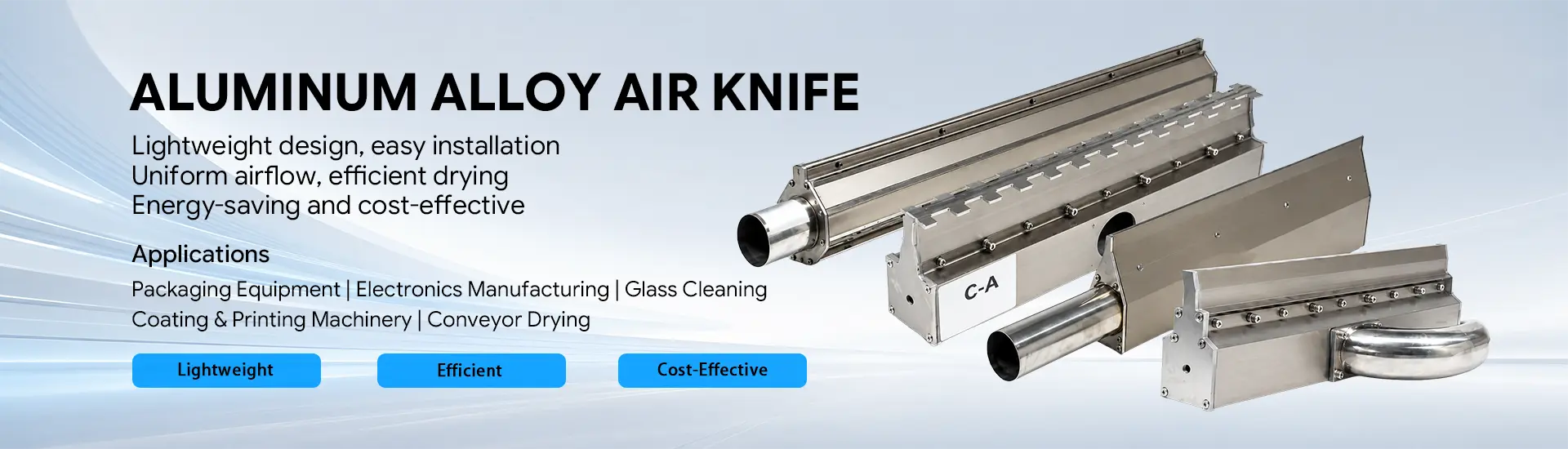
QXY aluminum alloy air knives offer a strong balance of performance, weight and cost for industrial drying, cleaning and blow-off systems. Compared with stainless steel, aluminum alloy has a much lower density, typically around 2.7 g/cm³, which is about one-third the weight of steel. This makes the air knife easier to install on conveyor frames, PCB cleaning lines, compact machines and automated equipment, while reducing the load on brackets and machine structures.
From a cost-performance perspective, aluminum alloy is also highly practical. It is generally more economical and easier to machine than stainless steel or titanium, allowing customized lengths, inlet positions and adjustable outlet gaps at a competitive cost. For most general industrial applications, it provides enough strength, stable airflow performance and long service life without unnecessary material expense.
In terms of corrosion resistance, aluminum alloy naturally forms an oxide layer that helps protect the surface in many standard factory environments. It is suitable for drying water, coolant, dust, chips, mist and general surface residue. However, for strong acid, alkali, salt spray or highly corrosive processes, stainless steel, titanium alloy or PVC air knives may be better choices depending on the chemical conditions.
For PCB cleaning, LCD and glass production, precision components, bottles, panels and automated conveyors, aluminum alloy air knives provide a lightweight structure, good corrosion resistance, flexible customization and excellent overall value.
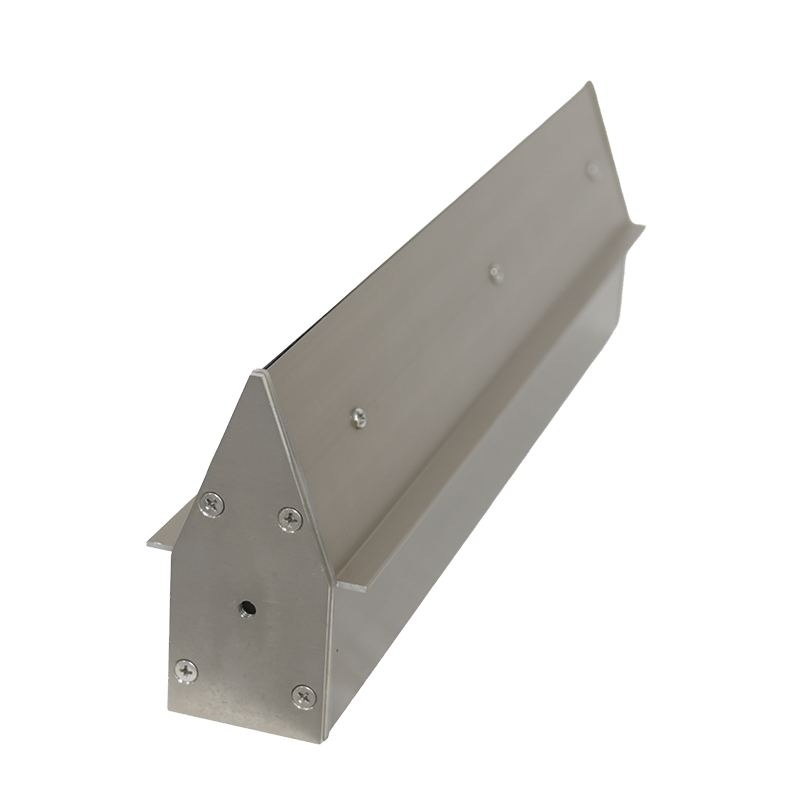
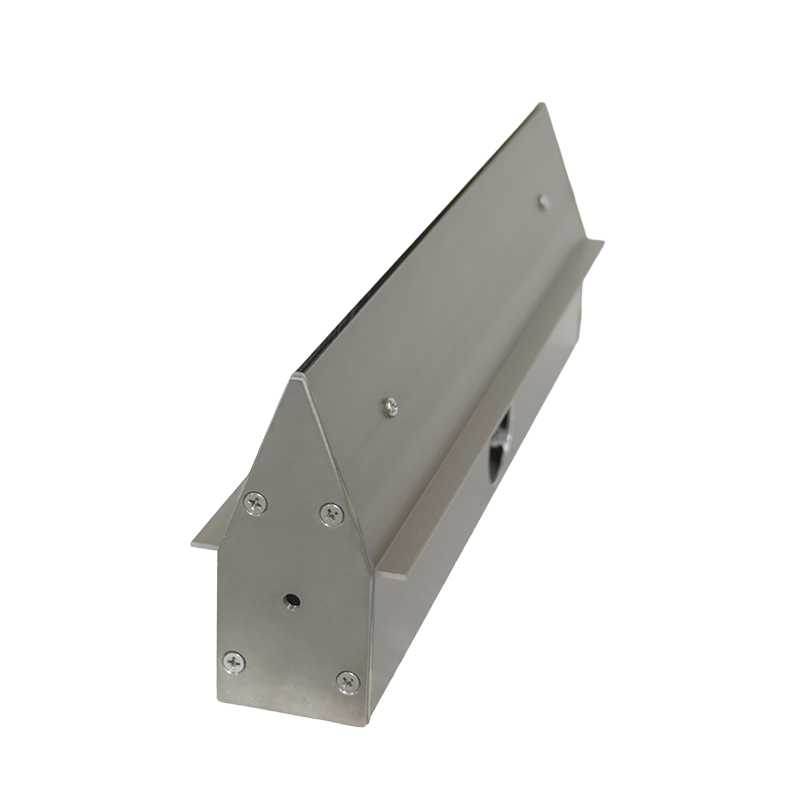
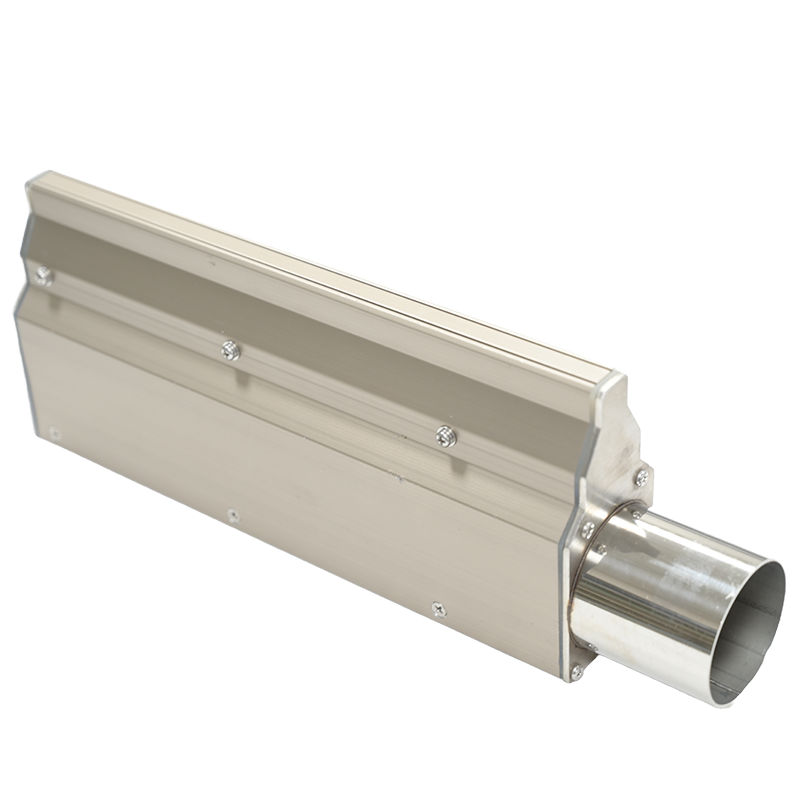
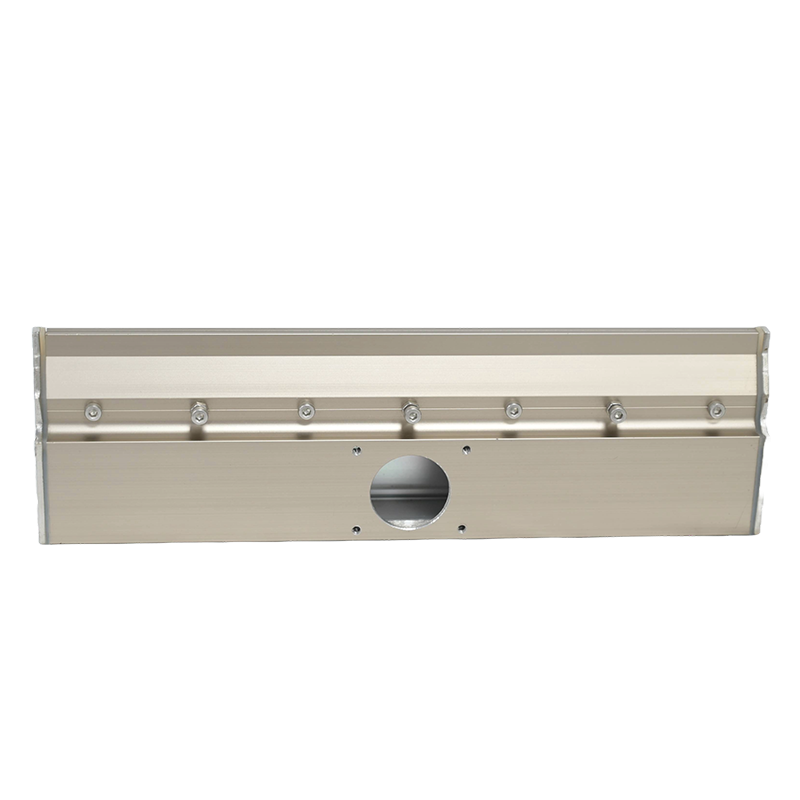
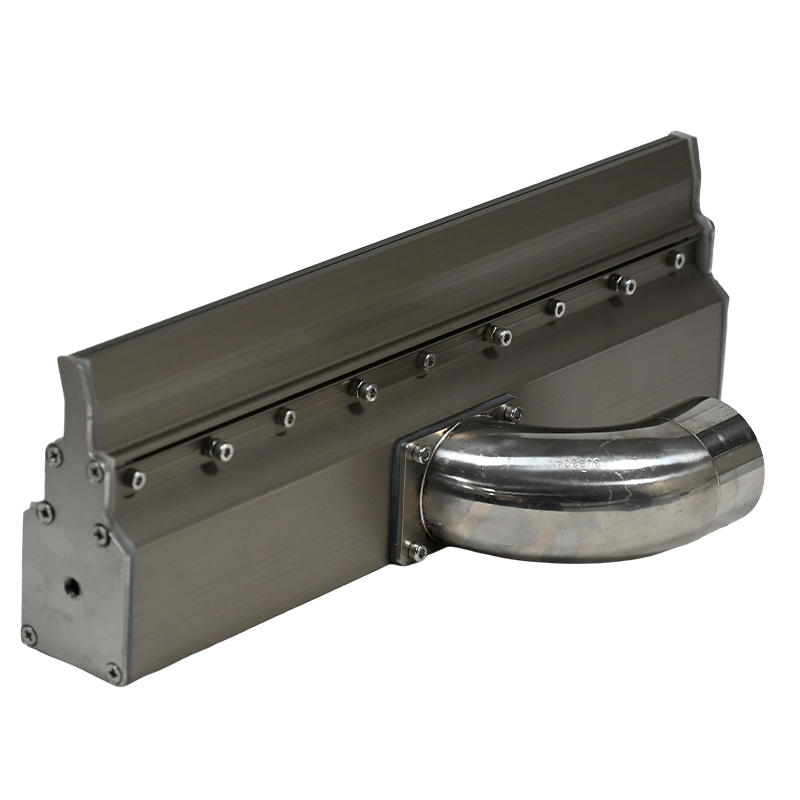
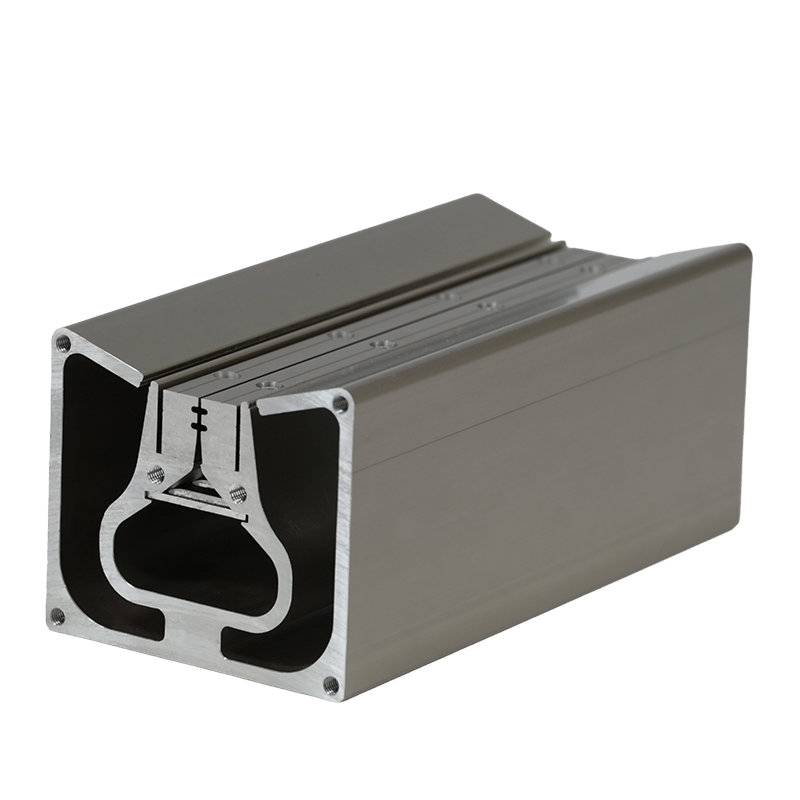


· Lightweight for easier installation on conveyors, frames, cleaning machines and compact equipment.
· Good strength and dimensional stability for long air knife bodies and customized lengths.
· Good corrosion resistance for many general industrial drying and cleaning environments.
· Excellent cost performance compared with stainless steel or titanium alloy in standard working conditions.
· Suitable for precision machining and consistent outlet slot control, supporting stable airflow distribution.
The following table helps customers compare common air knife materials. Actual selection should be based on the working environment, chemical exposure, temperature, installation structure and cleaning requirements.
Material | Hardness / Strength | Corrosion Resistance | Cost Performance | Density / Weight | Heat Resistance and Best Use |
6063-T6 Aluminum Alloy | Medium. Good structural strength for most industrial air knife bodies. | Good in general industrial environments; better surface protection can be achieved with proper finishing. | Excellent. A strong balance of performance, weight and price. | Low. Approx. 2.70 g/cm3, much lighter than stainless steel. | Moderate. Suitable for general drying and blow-off; confirm details for continuous high-temperature conditions. |
Stainless Steel 304 | Higher than aluminum alloy; durable for wet and hygienic production areas. | Good. Suitable for water, food, packaging and many clean production lines. | Medium. Higher cost than aluminum, but strong durability. | High. Approx. 7.93 g/cm3, heavier installation load. | Good. Suitable for demanding wet or hygienic lines where cleaning is important. |
Stainless Steel 316 | Similar to 304 with strong industrial durability. | Very good to excellent. Better than 304 in chloride, chemical or coastal environments. | Medium to low. Higher material cost, but valuable in corrosive conditions. | High. Approx. 8.00 g/cm3, heavy but robust. | Good. Recommended for stronger corrosion resistance and tougher process environments. |
Titanium Alloy | High strength-to-weight ratio; suitable for demanding applications. | Excellent. Strong resistance in many aggressive chemical environments. | Low. Higher material and processing cost, used when corrosion resistance is critical. | Medium. Approx. 4.50 g/cm3, lighter than stainless steel but heavier than aluminum. | High. Suitable for high-value lines with strong corrosion or special material requirements. |
PVC | Lower. Not suitable for heavy impact or high-load structures. | Excellent for many acid and alkali washing environments. | High. Cost-effective for chemical wet lines at normal temperature. | Low. Approx. 1.38-1.45 g/cm3, lightweight and easy to handle. | Low. Not recommended for hot air or high-temperature areas; best for normal-temperature chemical rinsing lines. |
Uniform airflow: A continuous air curtain helps cover the full working width and improves drying consistency.
Energy-saving operation: When matched with the right blower or compressed air source, the air knife can reduce unnecessary air consumption while maintaining strong blow-off performance.
Flexible customization: Length, inlet position, inlet size, outlet gap and mounting style can be adjusted according to the production line layout.
Easy installation: The lightweight 6063-T6 aluminum alloy body reduces installation load and is convenient for machine frames and retrofits.
Wide industrial compatibility: Suitable for drying, cooling, cleaning, dust removal and surface blow-off in many automated production lines.
Packaging and Bottling Lines: Remove water droplets from bottles, cans, caps, labels and packaging surfaces before coding, labeling or packing.
Electronics and PCB Cleaning: Blow off moisture after washing or rinsing and help reduce water residue on surfaces, holes and edges.
Glass and Panel Cleaning: Provide wide and even air coverage for glass sheets, panels and flat materials after washing processes.
Coating and Printing Machinery: Remove dust or residual moisture before coating, printing, lamination or surface treatment.
Conveyor Drying and General Automation: Support continuous drying, cooling and chip removal for plastic parts, metal parts, sheets and components.
· Air knife length can be selected according to product width and conveyor coverage requirements.
· Inlet position can be configured to match the available pipe route and machine layout.
· Outlet gap can be selected or adjusted according to droplet size, airflow volume and drying target.
· Mounting holes, brackets and installation direction can be customized for new equipment or retrofit projects.
· Surface finishing and sealing design can be discussed according to the operating environment.
1. Confirm the product width and required air coverage.
2. Identify the target: drying, water blow-off, dust removal, cooling, chip removal or surface cleaning.
3. Check the conveyor speed and the distance between the air knife outlet and product surface.
4. Confirm the available air source, air pressure or blower capacity.
5. Review the working environment, including water, chemicals, dust, heat and cleaning requirements.
6. Choose the inlet direction, installation angle and mounting method according to the machine structure.
7. Share drawings, photos or line layout information so the most suitable model can be recommended.
What is the main material of QXY aluminum alloy air knives?
The main body is made from 6063-T6 aluminum alloy, which provides a good balance of light weight, strength, corrosion resistance and cost performance for general industrial applications.
Why is 6063-T6 aluminum alloy suitable for air knives?
6063-T6 is suitable for extruded and machined structures. It supports stable air knife body design, accurate outlet slot control and convenient customization.
When should I choose aluminum alloy instead of stainless steel?
Choose aluminum alloy when light weight, flexible customization and cost performance are important. Choose stainless steel if the line requires stronger hygiene performance, frequent cleaning or higher corrosion resistance.
When should I choose PVC or titanium alloy?
PVC is suitable for many normal-temperature acid and alkali washing environments. Titanium alloy is recommended for highly corrosive or high-value production lines where material reliability is critical.
Can the air knife be customized?
Yes. Length, inlet direction, outlet gap, mounting style and connection requirements can be customized according to the production line.
What information is needed for a quotation?
Please provide product width, conveyor speed, application purpose, available air source, working distance, temperature, installation space, inlet direction and any machine drawings or photos.
Need a custom air knife solution? Send us your application details, material requirement ,or air source type . Our engineering team will help you select the right model.

Shenzhen Qixingyuan Machinery Equipment Co., Ltd.
info@airknifecn.com
Building 8, Wanfeng Third Industrial Zone, Xinqiao Street, Bao'an District, Shenzhen, Guangdong, China


