

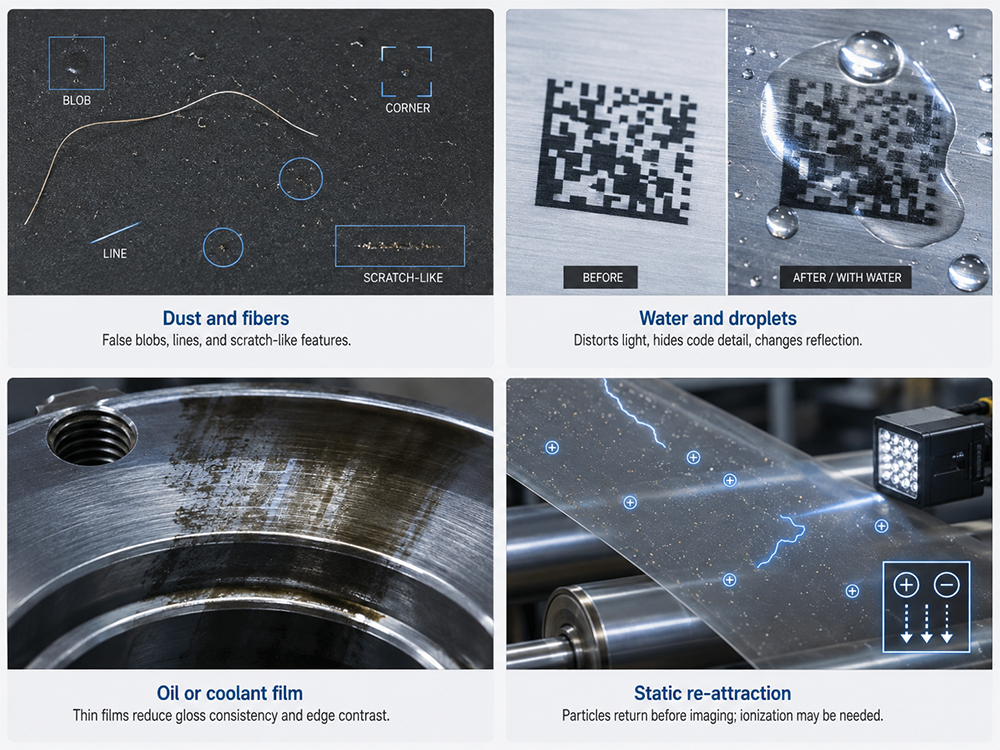
A camera does not decide whether a surface looks clean to a person. It decides whether the pixels match a trained or programmed rule. A faint particle may create a sharp spot under directional light. A thin wat...
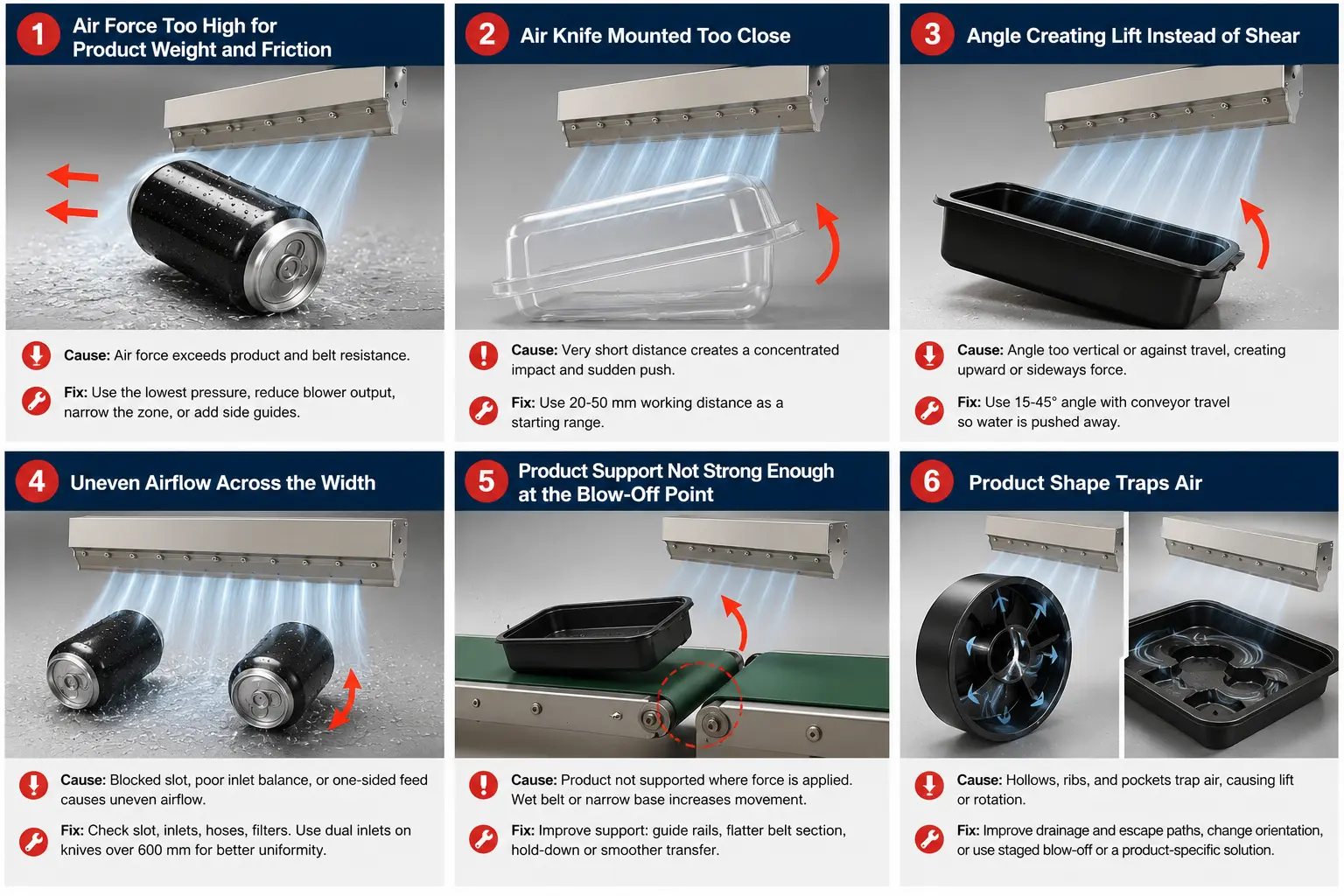
Product movement under an Air Knife is easy to misread. Operators may say the air knife is too strong. Sometimes that is true. More often, the problem is a mix of air force, direction, distance, product shape, ...
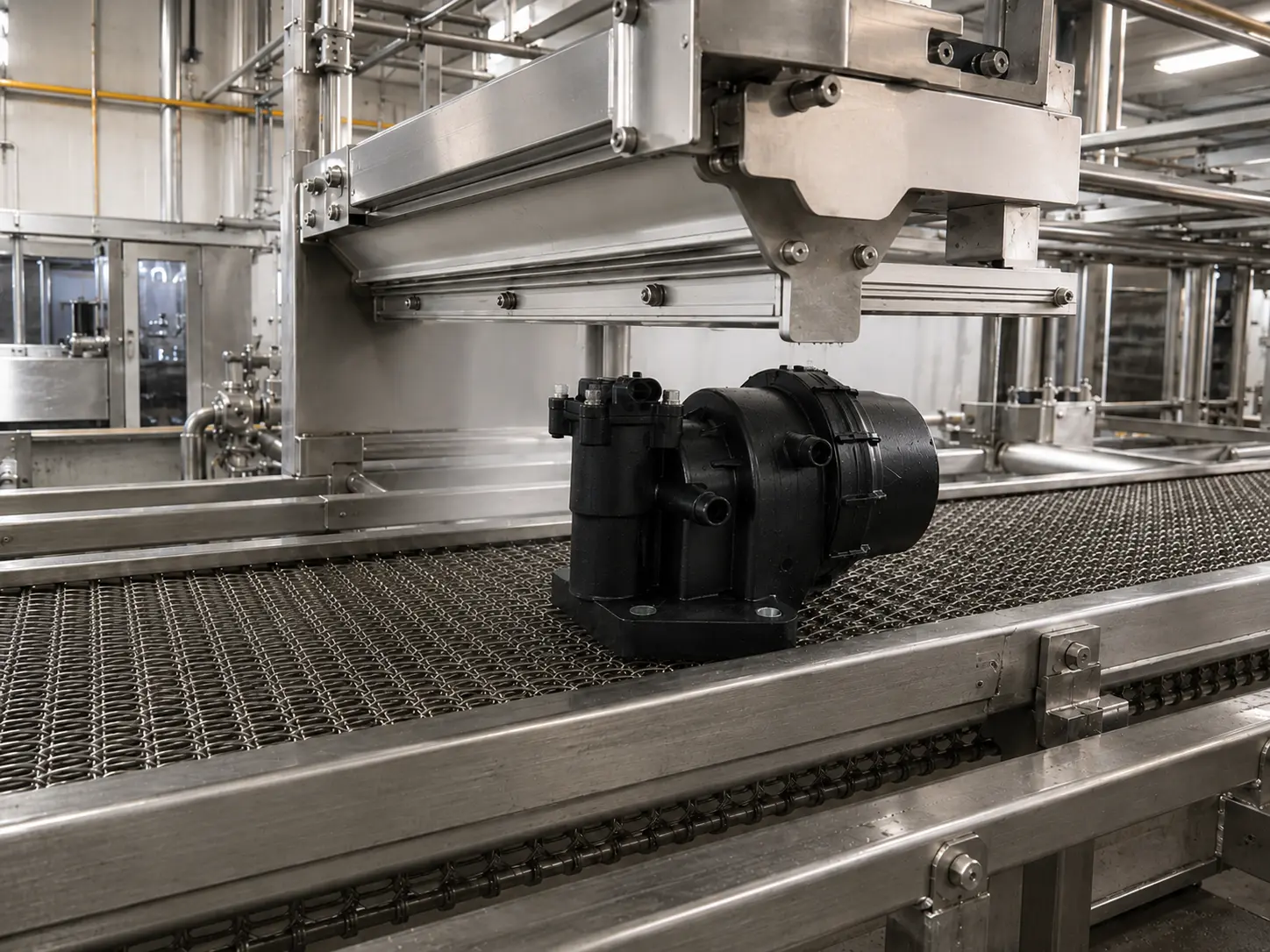
Flat surfaces are the easy case for Air Knife drying. The air curtain hits the surface, breaks the water film, and pushes liquid toward an edge or drain. Uneven, ribbed, or recessed products behave differently....
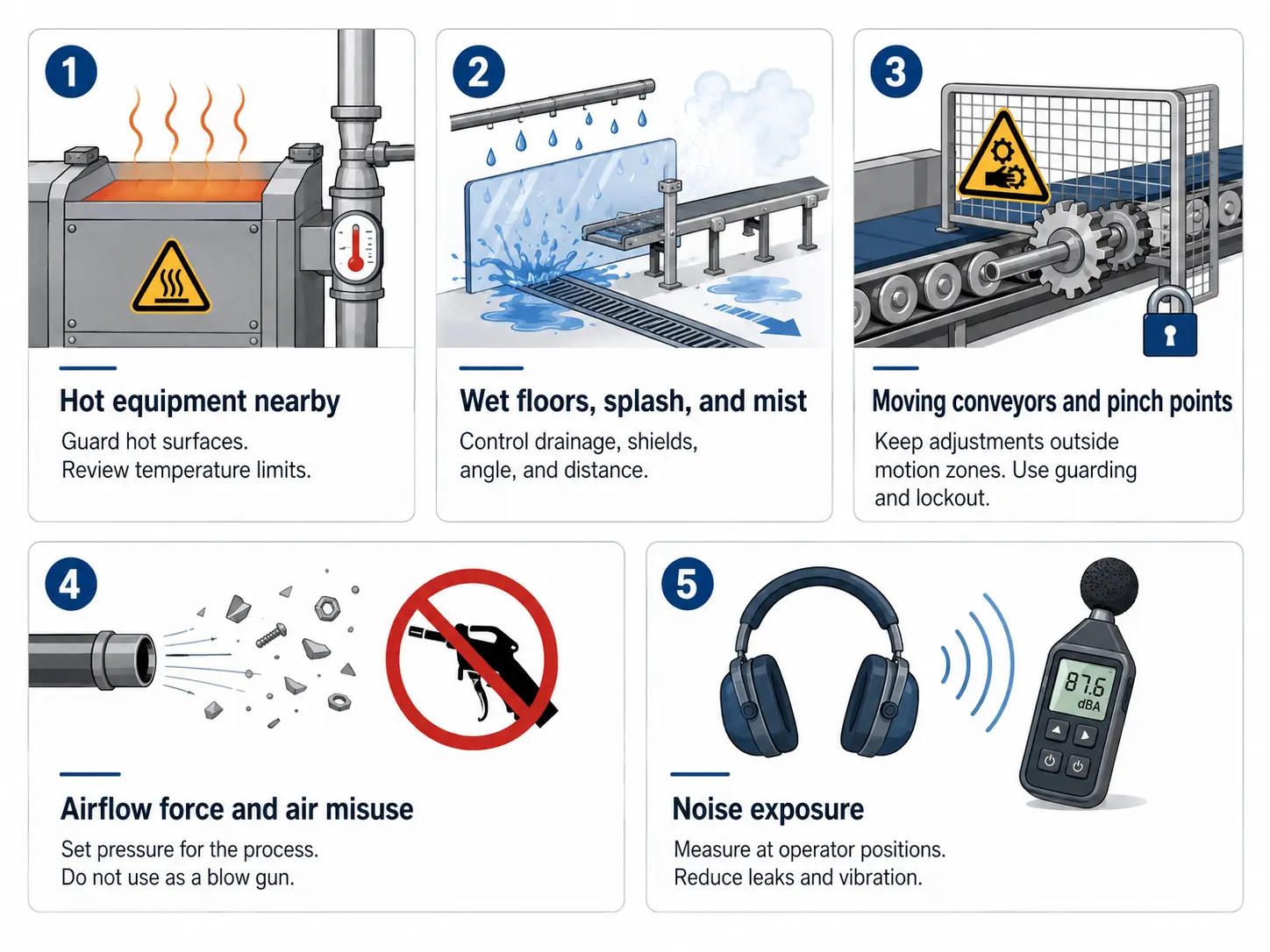
An air knife is often installed in a busy part of the production line. It may be close to a conveyor, washer, dryer, bottle rinser, PCB wet process, hot product, labeling area, food washdown zone, or moving fix...
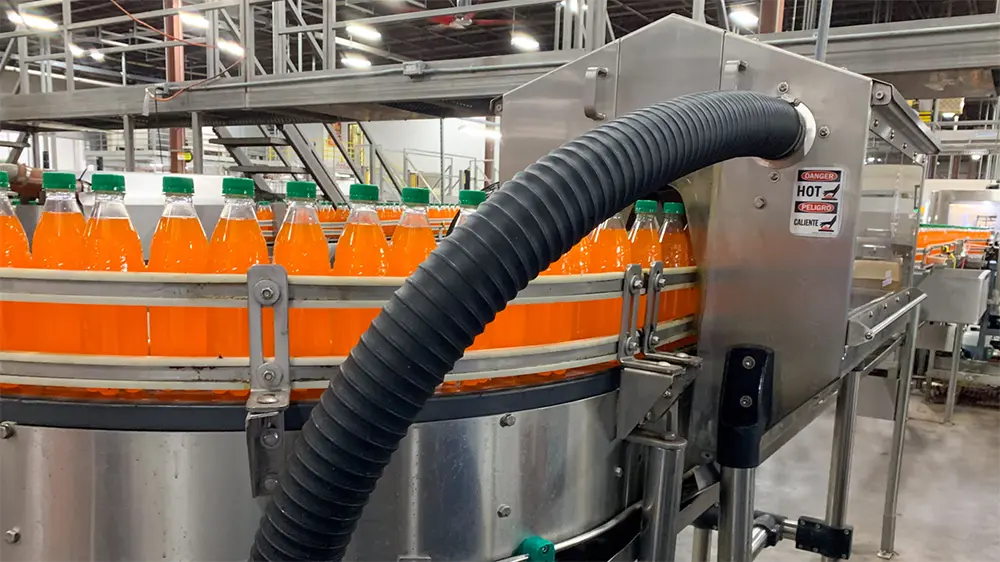
Many production lines run more than one product size. A bottle line may switch between short and tall containers. A tray line may run several widths. A PCB washer may process different panel sizes. A packaging ...
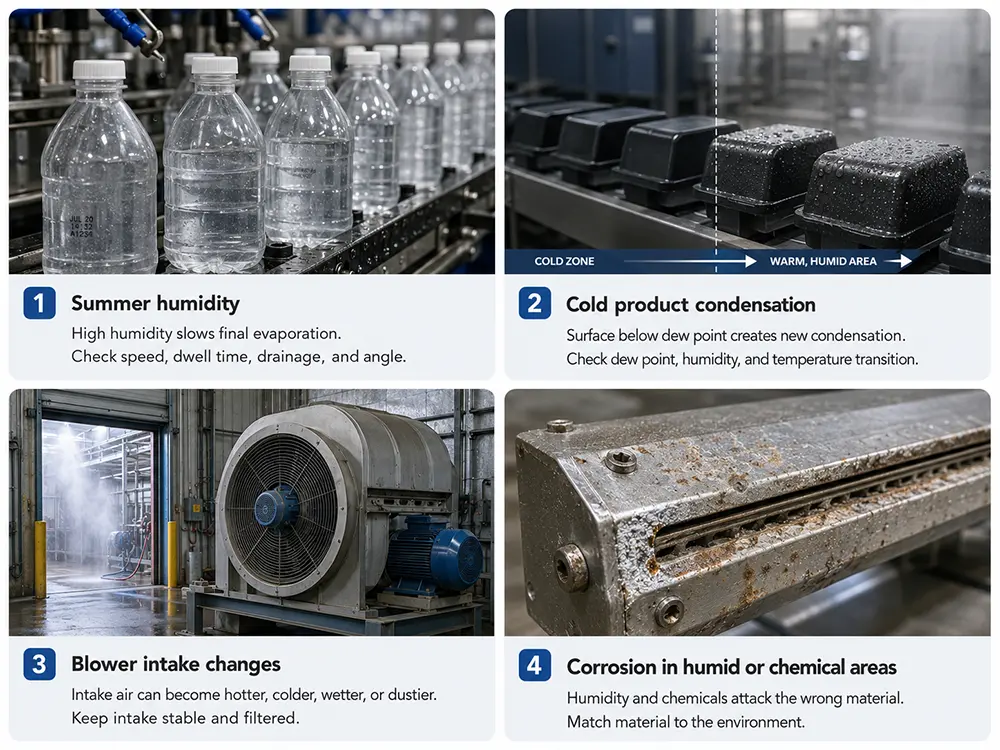
An air knife can work well in spring and still leave water behind in summer. The same line can dry cleanly during a dry winter shift and then show mist, water marks, corrosion, or label problems when the rainy ...
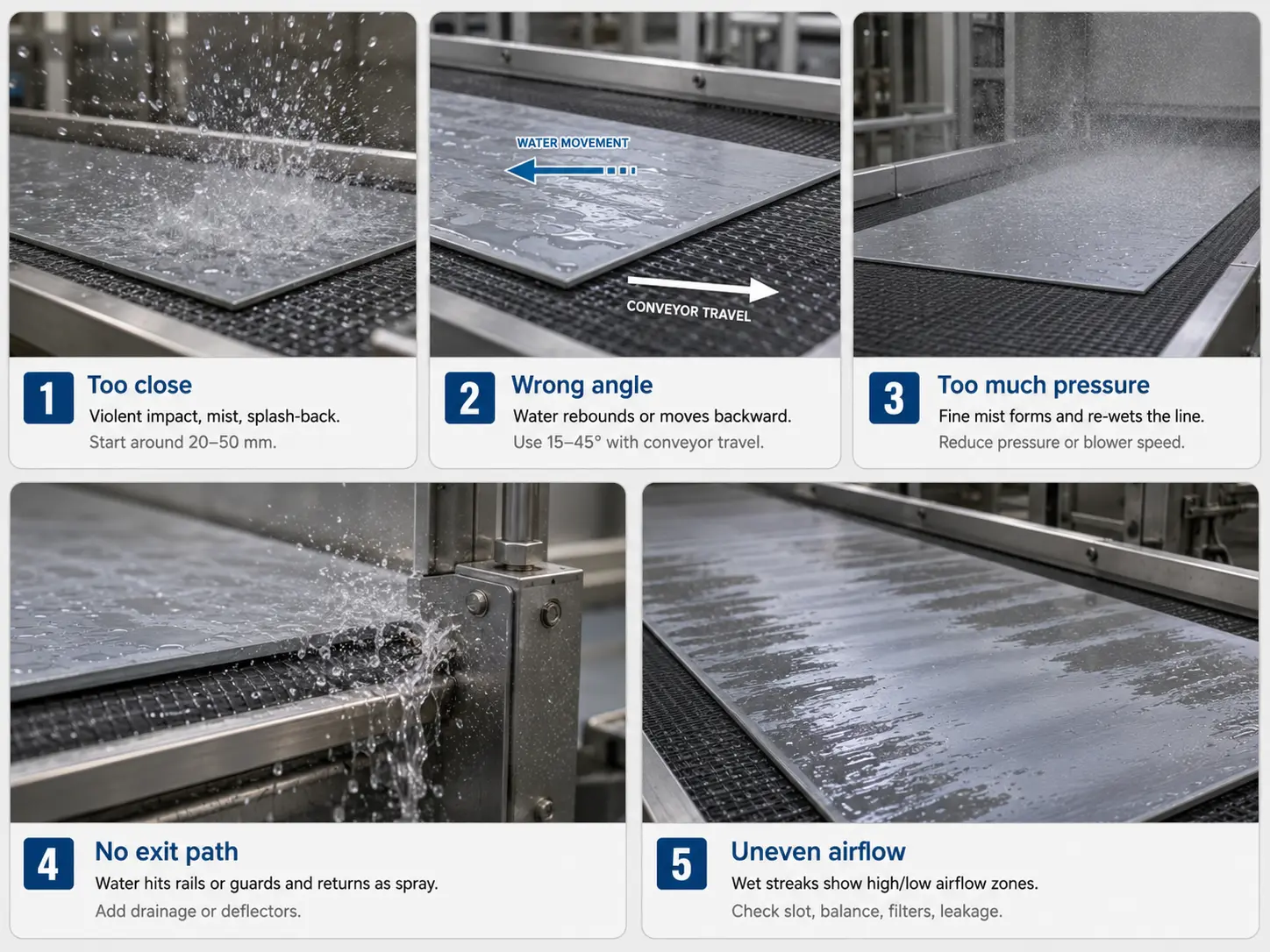
Splash-back is one of the most frustrating air knife problems on a wet production line. The air knife is strong enough to move water, but the water does not leave the process cleanly. It bounces back onto the p...
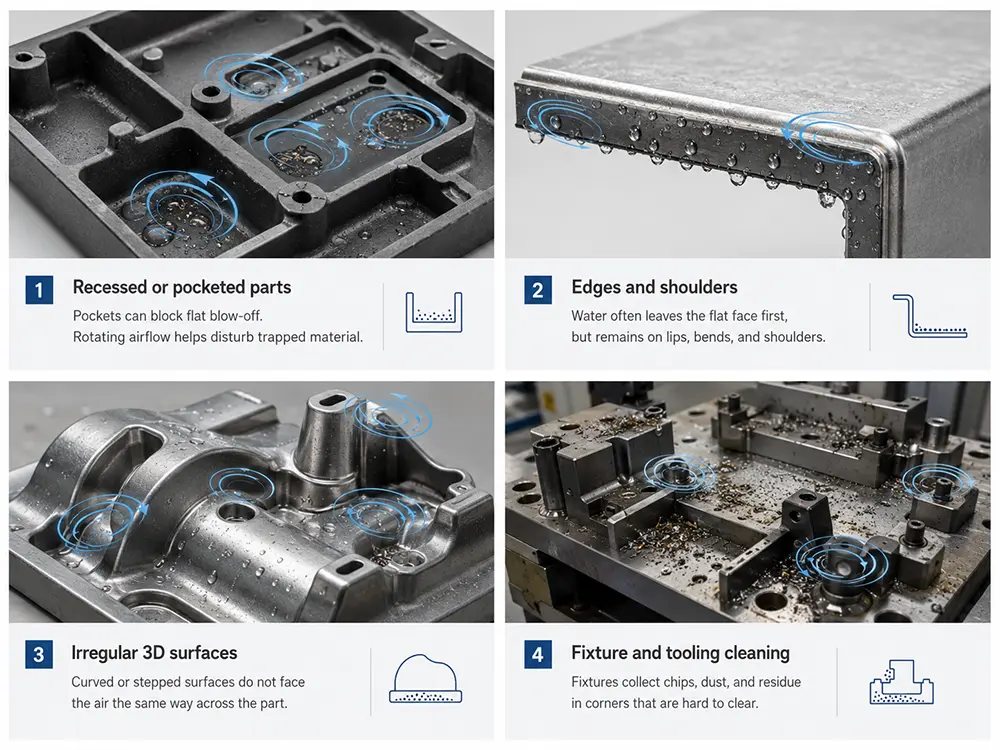
A standard straight air knife is often the first choice for industrial drying and blow-off. It gives a continuous sheet of air across a product path. For flat panels, sheets, bottles in a stable position, conve...

Shenzhen Qixingyuan Machinery Equipment Co., Ltd.
info@airknifecn.com
Building 8, Wanfeng Third Industrial Zone, Xinqiao Street, Bao'an District, Shenzhen, Guangdong, China


