

An air knife is often installed in a busy part of the production line. It may be close to a conveyor, washer, dryer, bottle rinser, PCB wet process, hot product, labeling area, food washdown zone, or moving fixture. The air knife itself may look simple, but the area around it can have several risks at the same time.
The main safety question is not only whether the air knife can dry the product. It is also whether the drying station can do this while keeping operators, maintenance teams, nearby sensors, guards, floors, and downstream equipment safe.
Air knife safety is really important. It depends on how you set it up. The distance between things, the angle, the air pressure, how wide the slot is which way the water drains what the air knife is made of, how loud it's if it has a guard and if you can get to it to clean it all make a big difference. If you pick the air knife it can really help cut down on wiping things by hand and touching them to dry them.. If you do not put it in correctly it can make a mess with mist and water splashing back make a lot of noise move the products around make people touch hot surfaces or make people clean, in ways that are not safe. Air knife safety is crucial because air knives can be very useful or very dangerous depending on the setup and how well you maintain the air knife.
An Air Knife should be reviewed as part of the whole machine area. The air stream interacts with water, parts, fixtures, guards, rails, labels, heat, and moving belts. A setup that looks safe when the conveyor is stopped may behave differently when wet products arrive at full speed.
Before installation, review these conditions together:
· Product temperature and nearby hot surfaces.
· Water volume, chemical carryover, mist, and drainage path.
· Conveyor speed, pinch points, product stability, and moving fixtures.
· Operator access during normal running, inspection, and cleaning.
· Noise exposure near the blower, air knife, and impact point.
· Lockout/tagout steps for adjustment, cleaning, or slot inspection.
· Material compatibility with washdown, chemicals, chloride, heat, and corrosion.
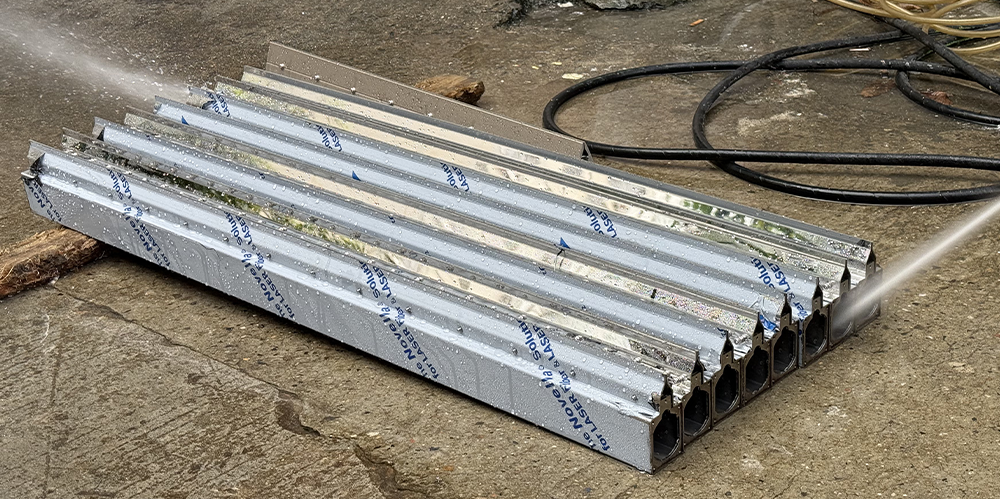
Hazard 1: Hot equipment near the air knife
Operators may need to reach near hot products, heated tanks, drying ovens, steam, hot water, or heated metal parts when checking the air knife. This is common because air knives are often installed after washing, heating, cooking, drying, or hot rinse stages. The airflow may also carry hot droplets or vapor toward nearby access points. Hot surfaces should be guarded wherever operators can reach them. Before specifying the air knife, confirm the material temperature limits. QXY’s standard plastic shim reference is up to 82°C. Hotter locations need a design review.
Hazard 2: Wet floors, splash, and mist
Water may return to the product, fall onto the floor, reach sensors, or create mist around the operator side of the line. This usually happens when the angle, distance, or pressure sends water into guards, rails, or nearby structures instead of toward a drain. A heavy wet load can also break into mist. The setup should give water a controlled path to leave the area. Shields, drip trays, and the correct air knife angle can help. For many QXY applications, 20-50 mm distance and 15-45 degrees from the surface are useful starting references.
Hazard 3: Moving conveyors and pinch points
Operators may adjust brackets, hoses, or the air knife body close to belts, rollers, chains, fixtures, or indexing mechanisms. Air knives are often mounted close to the product path, so adjustment points can end up inside the guarded machine area if the bracket design is not planned well. When possible, adjustment handles and inspection points should stay outside hazardous motion zones. Use machine guarding and lockout/tagout procedures for any work that requires access near moving parts.
Hazard 4: Airflow force and compressed air misuse
Loose labels, light products, chips, dust, liquid, or debris can be blown toward people or sensitive equipment. A narrow air slot can create strong local force. Compressed air systems can also create higher pressure risks if people use them casually for cleaning clothing, skin, or open work areas. Pressure and slot width should be set for the process, not for maximum force. For compressed-air cleaning tasks, use approved nozzles and follow site rules. Do not use air knives as handheld blow guns.
Hazard 5: Noise exposure
Operators may avoid the area, complain about high sound, or need hearing protection near the drying station. Noise can come from the blower inlet, duct leakage, compressed air, air impact on the product, splash shields, or poor mounting. Sound level should be measured at operator positions. Leaks should be reduced, ducting should be improved, vibration should be isolated, and quieter air supply should be used where possible. Follow site hearing conservation rules when the exposure level requires it.
Most air knife injuries or near misses do not happen during normal drying. They happen during adjustment, cleaning, or troubleshooting. Someone reaches past a guard to change the angle. Someone wipes a slot while the blower is still running. Someone loosens a bracket near a moving conveyor.
Maintenance procedures should cover:
1. How to stop and isolate the blower or compressed air source.
2. How to isolate moving conveyors, rollers, fixtures, and nearby machines.
3. How to relieve stored air pressure before opening hoses or manifolds.
4. How to clean the slot without damaging the calibrated gap.
5. How to check hot surfaces before touching brackets, pipes, or stainless parts.
6. How to restart the line and confirm the air knife angle, distance, and drain direction.
QXY air knife slot width is often set at the factory. If adjustment is needed, use controlled methods such as feeler gauges and supplier guidance. Random field adjustment can create uneven airflow, product movement, splash-back, or noise.
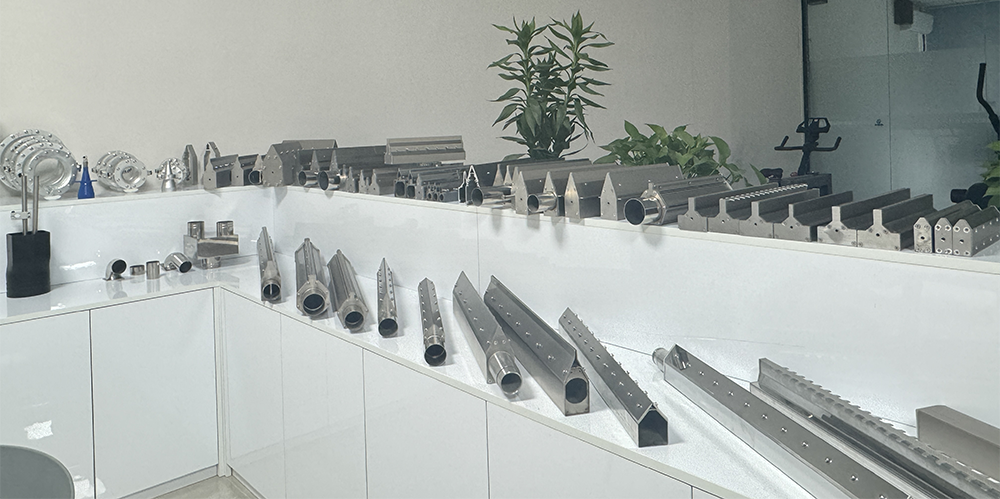
The material of an air knife is not about how long it will last. The material of an air knife can also affect how safe it is to clean the risk of corrosion the condition of the surface and how often it needs to be maintained.
Air knives made of aluminum alloy are good for a lot of applications that are dry or not too harsh.. For places that deal with food, drinks, medicine or get washed down a lot or are, near chemicals, air knives made of stainless steel 304 or 316 are usually a better choice. PVC can be useful near acid or alkaline environments where temperature is not high. Titanium is reserved for highly corrosive conditions where stainless steel is not enough.
The mounting system also matters. A long air knife needs support so it does not sag, vibrate, or shift toward the product. QXY standard lengths include 150, 300, 450, 600, 800, and 1000 mm, with custom lengths up to 6 m. Knives over 600 mm commonly need dual inlets for balanced airflow; poor balance can create high-force zones and weak zones across the line.
Use this checklist before installing a new air knife or changing an existing station.
1. Map hot, wet, and moving hazards around the air knife position.
2. Confirm the product temperature, liquid temperature, chemical exposure, and washdown method.
3. Check whether operators can reach adjustment points without entering a moving hazard zone.
4. Review guarding, shields, drain direction, mist control, and floor drainage.
5. Confirm knife-to-product distance, normally starting around 20-50 mm for many drying jobs.
6. Set a practical angle, often 15-45 degrees from the product surface and angled with conveyor travel.
7. Review slot width, pressure, blower capacity, and whether compressed air is used.
8. Measure noise at operator positions after installation.
9. Document lockout/tagout steps for cleaning, adjustment, and hose work.
10. Train operators on what they may adjust during production and what requires maintenance support.
Review Item | Safety Meaning |
Knife-to-product distance | 20-50 mm is a practical range for many drying duties. Review clearance, product movement, guarding, and splash direction before locking the setting. |
Impingement angle | 15-45 degrees from the surface, usually angled with conveyor travel, helps move water away instead of rebounding toward operators or clean zones. |
Slot width | 0.5-2 mm standard for many industrial drying tasks. Field adjustment should be controlled because wider gaps can increase force, noise, mist, and air demand. |
Working pressure | 2-6 psi (0.14-0.42 bar) for many blower-driven systems. Compressed-air systems need additional pressure and safety review. |
Temperature rating | Standard plastic shim reference is up to 82°C. Hotter or heat-adjacent areas should be reviewed with QXY before specification. |
Material selection | Aluminum for many dry/mild duties; 304/316 stainless, PVC, or titanium where washdown, chemicals, chloride, heat, or corrosion risk exists. |
QXY Machinery (Shenzhen Qixingyuan Machinery Equipment Co., Ltd.) is a high-tech enterprise integrating R&D, design, production, and sales, specializing in drying, dust removal, and water-blowing solutions for industrial applications. With over 10 years of focused expertise in the air knife field, QXY Machinery has developed a mature technical foundation and a complete in-house R&D system.
QXY Machinery produces over 15 standard air knife types, including aluminum alloy, stainless steel 304/316, PVC, titanium alloy, small hole PCB air knives, ring air knives, tornado air knives, and air-to-air configurations. For hot, wet, moving, washdown, or chemical-proximity production lines, QXY can help review material, length, slot width, inlet layout, mounting distance, angle, and application conditions before specification.
Based in Shenzhen, China, QXY Machinery supports standard lengths from 150 mm to 1000 mm and custom lengths up to 6 m. The company also supports custom hole patterns, custom slot widths, inlet layout adjustments, and material selection for PCB, LCD glass, food processing, beverage, pharmaceutical, printing, textile, and hardware production lines.
Q: What are the main safety risks around an air knife?
A: The main risks are moving conveyors, pinch points, hot surfaces, splash, mist, wet floors, chemical exposure, product movement, flying debris, noise, and unsafe maintenance access.
Q: Can an air knife be used near hot production equipment?
A: Yes, but temperature and material limits must be reviewed. QXY's standard plastic shim reference is up to 82°C. Higher-temperature or heat-adjacent positions should be reviewed before specification.
Q: How can splash and wet floors be reduced?
A: Set the air knife angle and distance so water moves toward a drain or collection area. Add shields, drip trays, and floor drainage where needed. Do not point airflow into rails, guards, or operator walkways.
Q: Does air knife noise need to be measured?
A: Yes. Noise should be checked at operator positions after installation. Blower intake, compressed air, duct leaks, and air impact can all contribute to sound exposure.
Q: Should operators adjust air knives while the conveyor is running?
A: Only if the adjustment point is designed for safe access and site procedures allow it. Work near moving parts, hoses, hot surfaces, or guarded zones should follow the site's lockout/tagout process.
Q: Which air knife material is safer for washdown lines?
A: Stainless steel 304 or 316 is often preferred for food, beverage, pharmaceutical, and frequent washdown areas. PVC, titanium, or other materials may be needed for specific chemical conditions.
Q: What information should I send QXY Machinery for a safety-focused review?
A: Send product type, temperature, liquid or chemical exposure, line speed, conveyor layout, available mounting space, air source, cleaning method, photos, and known safety concerns around the station.
Need a custom air knife solution? Send us your application details, material requirement ,or air source type . Our engineering team will help you select the right model.

Shenzhen Qixingyuan Machinery Equipment Co., LTD.
info@airknifecn.com
Building 8, Wanfeng Third Industrial Zone, Xinqiao Street, Bao'an District, Shenzhen, Guangdong, China


