

Product movement under an Air Knife is easy to misread. Operators may say the air knife is too strong. Sometimes that is true. More often, the problem is a mix of air force, direction, distance, product shape, surface friction, and conveyor support. A wet part can slide. A light tray can lift at the leading edge. A narrow product can rotate when one side receives more air than the other. The air knife is only one part of that force balance.
This issue matters because unstable products create more than a drying defect. They can miss the next sensor, jam at a guide rail, turn sideways before labeling, fall into a reject bin, or damage a freshly cleaned surface. In food, electronics, packaging, hardware, printing, and plastic part lines, even a small shift can cause repeated downtime.
A good review starts with a simple question: is the air stream removing water, dust, chips, or coolant, or is it also pushing the product beyond what the belt, fixture, or guide system can hold? Once that is clear, the fix is usually practical. You may not need a larger air knife. You may need lower pressure, a different angle, better product support, two lighter drying stages, or a more suitable air knife design.
An Air Knife Produces a thin, high-velocity sheet of air. When that air hits the product, it creates a reaction force. If the force is aimed mostly along the surface, it can shear water away cleanly. If it is aimed under an edge, into a hollow area, or against one side of a light product, it can slide, rotate, or tip the part.
The same air knife can behave very differently on different products. A heavy metal stamping may stay stable at a setting that knocks over a small plastic cap. A flat PCB panel may travel cleanly, while a tray with ribs, pockets, or a curled edge catches air and moves. Wet belts and product surfaces reduce friction, so the part may start moving at a lower force than expected.
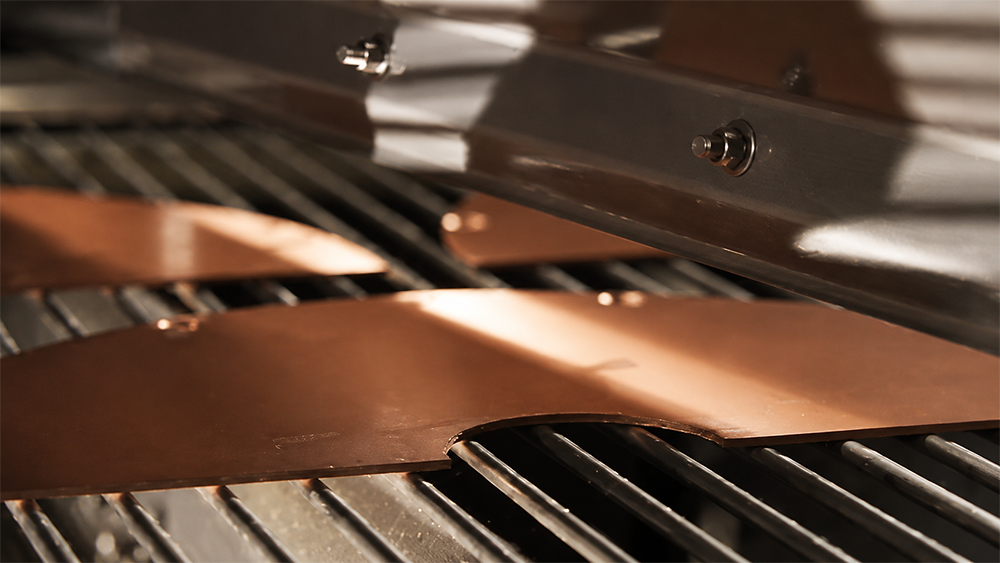
Problem 1: Air Force Is Too High for the Product Weight and Friction
Cause: The air pressure, slot opening, or blower output creates more horizontal force than the product and belt can resist. This is common with thin plastic parts, light cans, small cartons, caps, shallow trays, films, labels, and parts with smooth bases.
Fix: Start with the lowest pressure that still removes water. Reduce blower speed or supply pressure in small steps, narrow the effective blow zone, or split the task into two lighter passes instead of one aggressive hit. If the product is very light, add controlled side guides or a hold-down method before increasing air force.
Problem 2: The Air Knife Is Mounted Too Close
Cause: A very short knife-to-product distance can create a concentrated impact zone. The water moves, but the part also receives a sudden push. The effect is stronger on flexible, hollow, or low-mass products.
Fix: Use the working distance as a controlled setting, not a guess. For many QXY drying duties, 20-50 mm is a practical starting range. Moving the knife slightly farther away can soften the impact while keeping enough velocity for drying. Avoid moving so far away that the air loses useful energy before it reaches the surface.
Problem 3: The Air Knife Angle Is Creating Lift Instead of Shear
Cause: The air stream may be aimed too close to vertical, too far against conveyor travel, or directly under an exposed edge. Instead of wiping water across the surface, it creates an upward or sideways component.
Fix: Adjust the impingement angle so the air pushes water away without lifting the product. A 15-45 degree angle with conveyor travel is a useful review range for many QXY air knife stations. Test small angle changes while watching the first contact point and the direction of water discharge.
Problem 4: Airflow Is Uneven Across the Width
Cause: Uneven airflow can come from blocked slot areas, a damaged shim, poor inlet balance, undersized hoses, pressure loss, or a long air knife fed from only one side. The product receives different force on the left and right sides.
Fix: Inspect the slot, inlet, hose routing, filters, and air supply. For long QXY standard aluminum air knives, lengths over 600 mm normally use two inlets to support better distribution. QXY's standard aluminum design targets about +/-5% airflow uniformity when specified and installed correctly.
Problem 5: Product Support Is Not Strong Enough at the Blow-Off Point
Cause: The air knife may be correctly selected, but the product is not supported where the force is applied. A wet belt lowers friction. A narrow base makes the part easier to tip. A transfer gap can let the front edge drop or rise at the same moment the air hits.
Fix: Review the product support at the exact air impact zone. Add guide rails, side restraint, a flatter belt section, improved fixturing, a hold-down bar, or a smoother transfer. Make sure the guide does not trap water, scratch the product, or create a new jam point.
Problem 6: Product Shape Traps Air
Cause: Hollows, ribs, pockets, and curved surfaces can trap the air stream. The air has to escape somewhere. If it exits under the part or against one side wall, it can create lift, rotation, or sudden sideways movement.
Fix: Change product orientation, improve drainage before the air knife, use a staged blow-off pattern, or choose a product-specific design. A tornado air knife can help with complex 3D surfaces and recesses; a ring air knife may suit cylindrical products; small local knives may work better than one wide aggressive sheet.
For shaped products, the best answer is often not maximum pressure. It is better air access and better escape paths. Let bulk water drain first, then use air to remove the remaining film and trapped droplets.
Before replacing the air knife, run a short stability review at normal production speed. The goal is to separate airflow problems from product handling problems.
· Product weight, footprint, center of gravity, and base friction when dry and wet.
· Exact movement type: sliding, rotating, fluttering, bouncing, lifting, or tipping.
· Knife-to-product distance at the tallest and shortest product tolerance.
· Air knife angle, air direction, and where water leaves the product.
· Pressure, blower speed, slot width, and whether operators have adjusted the slot in the field.
· Airflow balance across the width, especially on long knives or multi-inlet systems.
· Conveyor gaps, transfer points, guide rail contact, fixture height, and belt wetness.
· Product spacing and line speed, because close spacing can cause rebound water and disturbed airflow between parts.
Record the first point where the part moves. That point usually tells you the cause. If it moves at first impact, check force, angle, and distance. If it moves after water collects at one side, check drainage and angle. If it moves only at a transfer, review support before changing the air knife.
QXY Reference | Why It Matters for Movement or Tipping |
Working distance | 20-50 mm is a common starting range. More than about 60 mm can lose useful velocity; too close can create a hard local impact on light parts. |
Impingement angle | 15-45 degrees with the conveyor direction is often used to shear water away while reducing lift and back-blast. |
Standard slot range | 0.5-2 mm. A wider slot or large field adjustment can increase air volume, reaction force, noise, and product disturbance. |
Blower-driven pressure | 2-6 psi (0.14-0.42 bar) for many QXY standard air knife systems. Start low on small, thin, or low-friction parts. |
Airflow uniformity | QXY standard aluminum air knives are designed for about +/-5% airflow uniformity. Long knives over 600 mm normally use dual inlets. |
Useful design choices | Standard straight knives for stable linear drying; tornado knives for complex 3D parts; ring knives for cylindrical products; custom length up to 6 m. |
For a custom or sensitive drying station, QXY Machinery can review the product size, weight, material, wet load, conveyor speed, available space, blower or compressed-air source, and cleanliness requirements before recommending an air knife design. This is useful when products are light, tall, narrow, hollow, curved, ribbed, or easily scratched.
A standard straight aluminum air knife may be enough for stable flat products. Stainless steel may be better for washdown, food, beverage, pharmaceutical, or corrosive wet areas. PVC or titanium may be reviewed for chemical environments. Tornado, ring, small hole, and air-to-air designs should be considered when the product shape or drying direction makes a standard straight design unstable.
QXY Machinery (Shenzhen Qixingyuan Machinery Equipment Co., Ltd.) is a high-tech enterprise integrating R&D, design, production, and sales, specializing in drying, dust removal, and water-blowing solutions for industrial applications. With more than 10 years of experience in air knife and drying system design, QXY Machinery supports customers in electronics, food and beverage, packaging, printing, hardware, glass, automotive parts, and other production environments.
Relevant products include standard aluminum alloy air knives, stainless steel air knives, small hole PCB air knives, tornado air knives, ring air knives, air-to-air knives, PVC air knives, titanium air knives, and customized air knife assemblies. For applications where products move or tip under the air stream, QXY can help review slot width, air volume, distance, angle, inlet configuration, product support, and whether a staged or custom design is more suitable.
Q: Why do products move under an air knife?
A: Products move when the air force is greater than the product's weight, friction, and mechanical support can resist. Wrong angle, close distance, wet surfaces, low product weight, uneven airflow, and unstable product shape can all contribute.
Q: Is high pressure always the reason for product tipping?
A: No. High pressure is a common cause, but tipping can also come from air aimed under a leading edge, poor conveyor support, a wet low-friction belt, or uneven airflow across the product width.
Q: What air knife distance is safer for lightweight products?
A: For many QXY air knife drying duties, 20-50 mm is a useful starting range. Lightweight products often need testing within that range because a very close air knife can hit too hard, while an overly distant air knife may lose drying performance.
Q: What angle helps prevent product lifting?
A: A 15-45 degree angle with the conveyor direction is often a good review range. The goal is to shear water away from the surface rather than push air under an edge or directly against the product side.
Q: Can uneven airflow make products rotate?
A: Yes. If the left and right sides receive different air force, rectangular or narrow products can rotate. Check the slot, shim, inlet balance, hose sizing, filters, and whether a long air knife needs dual inlets.
Q: Should I reduce pressure or change the air knife first?
A: Reduce pressure or blower speed first if the drying result is still acceptable. If lower force cannot dry the product, review angle, distance, support, staged drying, or a different air knife design before buying a larger system.
Q: Which air knife design is better for products that catch air?
A: It depends on the shape. Straight air knives suit many flat and stable products. Tornado air knives can help with complex 3D surfaces and recesses. Ring air knives suit cylindrical products. Custom small or staged air knives may work better for light parts.
Q: What information should I send QXY Machinery for troubleshooting?
A: Send product dimensions, weight, material, photos, video of the movement, conveyor speed, air knife length, distance, angle, slot width, air pressure or blower data, wet load, and the exact point where movement starts.
Need a custom air knife solution? Send us your application details, material requirement ,or air source type . Our engineering team will help you select the right model.

Shenzhen Qixingyuan Machinery Equipment Co., LTD.
info@airknifecn.com
Building 8, Wanfeng Third Industrial Zone, Xinqiao Street, Bao'an District, Shenzhen, Guangdong, China


