

Semiconductor cleaning removes particles, organic material, metals, process chemicals, and other residues from a sensitive surface. Drying is not a separate housekeeping step. It is the final part of that contamination-control sequence. An Air Knife that sheds particles, drives mist back onto the product, leaves a repeatable wet band, or changes the local environment can undo the work performed upstream.
Precision air knife design means controlling the complete airflow path, not only machining a straight outlet. The air source, purification, blower or gas supply, duct, plenum, slot, mounting, liquid exit, chamber exhaust, materials, controls, and verification method must operate as one process. A small variation can become a watermark, particle excursion, corrosion spot, handling error, or false inspection result.
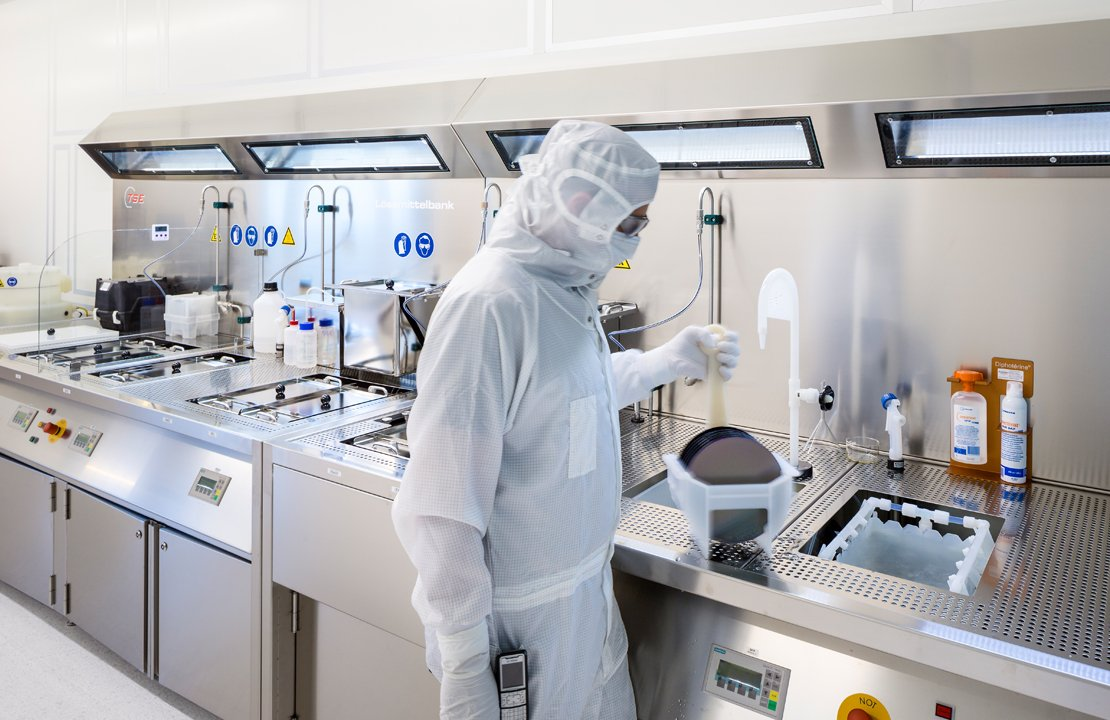
Not every semiconductor surface should be dried with a conventional industrial air knife. Critical front-end wafer cleaning often uses spin drying with filtered nitrogen, controlled chamber atmospheres, or Marangoni drying. NIST describes programmable spin-rinse equipment that uses deionized water and heated nitrogen, while SCREEN documents single-wafer systems that control airflow, mist, humidity, and the air-liquid interface.
Air knives may still be useful in semiconductor cleaning equipment for carriers, trays, cassettes, fixtures, equipment parts, selected masks or substrates, panel-level products, and qualified rinse exits. Direct use on a patterned wafer requires approval by the process owner and evidence that the method meets particle, residue, damage, and uniformity limits. The product name alone does not establish suitability.
A clean surface can only stay clean if the drying gas is cleaner than the risk it is meant to remove. Ambient blower air may carry particles, moisture, oil mist, volatile material, or chemical vapor from the wet bench area. Plant compressed air may add compressor oil, pipe scale, condensate, or particles unless the system is designed and monitored for the duty.
Specify the gas and its acceptance limits before selecting the knife. The requirements may include particle filtration, dew point, oil or hydrocarbon control, point-of-use filtration, compatible tubing, and pressure monitoring. Nitrogen may be required for some processes, but using nitrogen does not automatically make a system clean. Every wetted or gas-contact component between the source and the outlet remains part of the contamination path.
Pressure measured with the valve closed says little about performance at the outlet. Filters load, hoses flex, ducts leak, valves add restriction, and branch manifolds divide flow unevenly. These effects change both air volume and velocity across the working width.
Measure pressure and flow while the equipment runs at the qualified recipe. Size the blower or regulated gas supply from total outlet area and circuit loss, then check each branch. Avoid dead legs and internal surfaces that trap condensate or shed material. If several knives share one source, balancing hardware and diagnostic points should make a weak branch visible before it creates a product excursion.
A nominally straight slot can still deliver a stronger center, weak ends, or local streaks. Inlet position, plenum volume, internal flow distribution, lip straightness, gap tolerance, fastener spacing, thermal change, and deposited residue all affect the outlet. On a sensitive surface, the wet pattern often reproduces these errors.
Specify useful-width uniformity, not only total airflow. The knife should cover the full product path plus the approved edge margin without directing dirty chamber air back toward the surface. Long knives may need dual inlets or a balanced manifold. A removable shim or adjustable slot must return to a controlled dimension after service; casual field adjustment is not a precision process.
Drying succeeds when airflow moves the liquid boundary toward a defined exit. A near-normal jet may atomize rinse water and create mist. Too shallow an angle may leave a film. Excess distance spreads the air sheet and can pull surrounding chamber air into the jet. Too little clearance raises collision and local-impact risk.
The correct angle and distance depend on product shape, surface energy, rinse load, travel direction, and support. Edges, bevels, holes, pockets, carrier contact points, and back sides need their own water path. Where fragile patterns or sensitive films are present, confirm that aerodynamic force, droplet motion, and any local drying gradient do not cause damage or residue concentration.
Removed liquid must leave the process zone. If it hits a guard, pools in a tray, rides on a roller, or enters a turbulent exhaust stream, it can return as droplets or aerosol. The result may appear as random air-knife failure even though the outlet is stable.
Use sloped collection surfaces, separated clean and wet zones, controlled exhaust, and access for inspection. Avoid placing the blower intake near chemical exhaust or drying mist. Chamber airflow should carry vapor and droplets away from the cleaned surface without pulling contaminants across it. SCREEN cleaning-system literature makes the same broader point: atmosphere control and prevention of mist adhesion are part of drying performance.
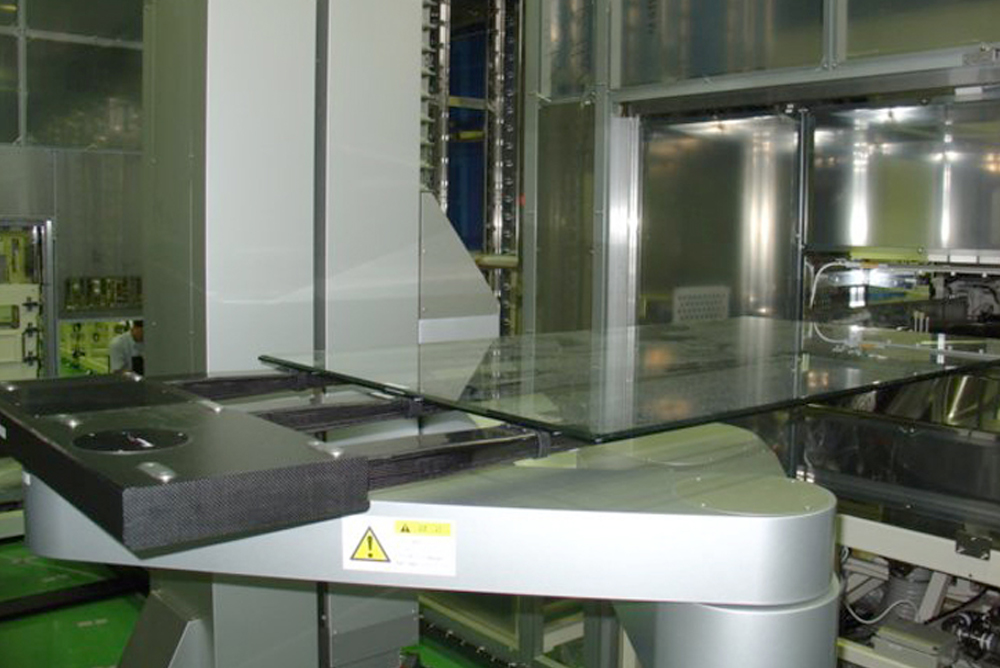
Material selection must address corrosion, extractables, particle shedding, and service method. Aluminum may suit separated or less aggressive positions. Stainless steel, PVC, or titanium may be considered near different chemical environments, but grade names alone are not a compatibility study. Acids, alkalis, oxidizers, fluorides, chlorides, solvents, temperature, and vapor exposure all matter.
Review the knife body, shim, fasteners, seals, hose, duct, brackets, filter housing, and drain hardware. Surface finish and crevice control affect cleaning. Maintenance tools and wipes can also introduce particles. For semiconductor service, document approved materials and cleaning procedures for the actual zone instead of relying on a general “cleanroom compatible” label.
Precision disappears when technicians cannot see the slot, measure its position, or restore the qualified setup. Provide access to inspect the lip, verify the gap, replace filters, drain condensate, and clean guards without touching critical surfaces. Use hard stops, scales, keyed brackets, or recorded coordinates for angle and distance.
Maintenance triggers should come from process data as well as time. Rising pressure drop, a fixed wet stripe, more particles, longer drying time, or changed exhaust behavior may indicate filter loading, outlet deposits, duct leakage, or bracket movement. After work is completed, run a defined release check before returning the module to production.
A recipe should include source type, pressure and flow under load, knife gap, distance, angle, product speed or dwell time, exhaust state, temperature, filter status, and product format. Interlocks should address loss of airflow, blocked exhaust, open access panels, stopped transport, abnormal pressure, or a product held under a high-impact jet.
The verification plan must match the risk. Useful evidence may include dry-surface mapping, particle counts, residue or ionic tests, contact-angle checks, watermark inspection, temperature, electrostatic measurements, and downstream yield or inspection data. NIST cleaning guidance separates organic, metallic, and particulate contamination; one visual dry check cannot represent all three.
QXY Machinery lists 0.5-2 mm as a general blower-air-knife slot range and 0.5-1.5 mm as a PCB surface-drying reference. General starting ranges include 2-6 psi (0.14-0.42 bar) at the knife inlet, 20-50 mm working distance, and a 15-45 degree angle. QXY also targets plus or minus 5% airflow uniformity across its standard aluminum knife length and commonly evaluates dual inlets above 600 mm.
These figures help begin mechanical sizing. They are not semiconductor process specifications and do not prove wafer compatibility, gas purity, particle performance, or acceptable defectivity. The final design must be qualified on the actual product, chemistry, chamber, gas supply, cleanliness class, and downstream requirement.
Run clean and worst-case incoming liquid loads at normal and maximum throughput. Include the full product-width range, start-up, line stops, filter life, warm equipment, maintenance recovery, and the longest approved interval between cleaning. Sample the center, edges, back side, carrier contact areas, and the downstream point where delayed droplets or particles become visible.
Change one factor at a time and keep the evidence. If a defect repeats in one lane, inspect the slot and supply balance. If random particles rise after drying, trace the intake, filter, duct, chamber, static condition, and maintenance history. If watermarks appear while the surface is visibly dry, review rinse quality, liquid-boundary motion, and evaporation rather than only increasing pressure.
A precision air knife design does more than produce a fast air sheet. It prevents the drying module from becoming a new contamination source, sends liquid to a controlled exit, protects the substrate, and gives operators measurable limits. In semiconductor cleaning equipment, repeatability and traceability matter as much as initial drying speed.
QXY Machinery (Shenzhen Qixingyuan Machinery Equipment Co., Ltd.) is based in Shenzhen, China, and integrates R&D, design, production, and sales. The company has more than 10 years of focused experience in air knife systems for industrial drying, cleaning, and water blow-off.
QXY Machinery supplies aluminum, stainless steel, PVC, titanium, small-hole PCB, and air-to-air knife configurations, with custom slot widths, lengths, inlet arrangements, blowers, supports, splash control, and collection systems. For semiconductor-related equipment, the engineering review should identify the exact product, chemical zone, gas-purity requirement, cleanliness target, working width, flow path, and qualification method. QXY reference products must be assessed against the customer’s process specification.
Q: Are air knives used directly on semiconductor wafers?
A: They can be used only where the process owner has qualified the method. Critical wafer cleaning commonly uses spin drying, filtered nitrogen, controlled atmospheres, or Marangoni drying. Air knives are also used for carriers, fixtures, trays, panels, and other equipment duties.
Q: What makes an air knife design precise?
A: Precision comes from controlled gas purity, stable flow, outlet uniformity, repeatable position, defined liquid drainage, compatible materials, chamber airflow, monitored recipes, and testable acceptance limits.
Q: Is clean dry air always suitable for semiconductor drying?
A: No. Its particle, moisture, oil, hydrocarbon, and material-contact limits must match the process. Some applications require nitrogen or another approved gas, and the full delivery path must be qualified.
Q: Why can higher pressure make semiconductor drying worse?
A: It can atomize liquid, increase mist, draw dirty chamber air into the jet, move a fragile product, concentrate residue, or over-dry one zone while another remains wet.
Q: Which air knife material is best for semiconductor cleaning equipment?
A: There is no universal material. Selection depends on chemical splash and vapor, temperature, corrosion, extractables, particle shedding, cleaning method, and the process owner’s approved-material list.
Q: What information is needed for precision air knife design?
A: Provide the product and carrier, working width, liquid and chemistry, gas-purity limits, required dryness and cleanliness, throughput, chamber and exhaust layout, utilities, materials restrictions, and acceptance tests.
Need a custom air knife solution? Send us your application details, material requirement ,or air source type . Our engineering team will help you select the right model.

Shenzhen Qixingyuan Machinery Equipment Co., Ltd.
info@airknifecn.com
Building 8, Wanfeng Third Industrial Zone, Xinqiao Street, Bao'an District, Shenzhen, Guangdong, China


