

PCB wet processing can place an air knife beside developers, etchants, strippers, desmear chemistry, plating solutions, micro-etches, cleaners, and multiple rinses. The Air knife may see direct splash at one station, warm acidic vapor at another, and only clean final-rinse water at the line exit. Calling all three locations a “wet area” hides the information needed for material selection.
A useful specification for corrosion-resistant air knives for PCB wet processing starts with service conditions, not a preferred material. The buyer defines the chemical and mechanical duty. The supplier then proposes a body, seals, fasteners, shim, inlet, support, and manufacturing method that can hold the outlet geometry through the required service interval.
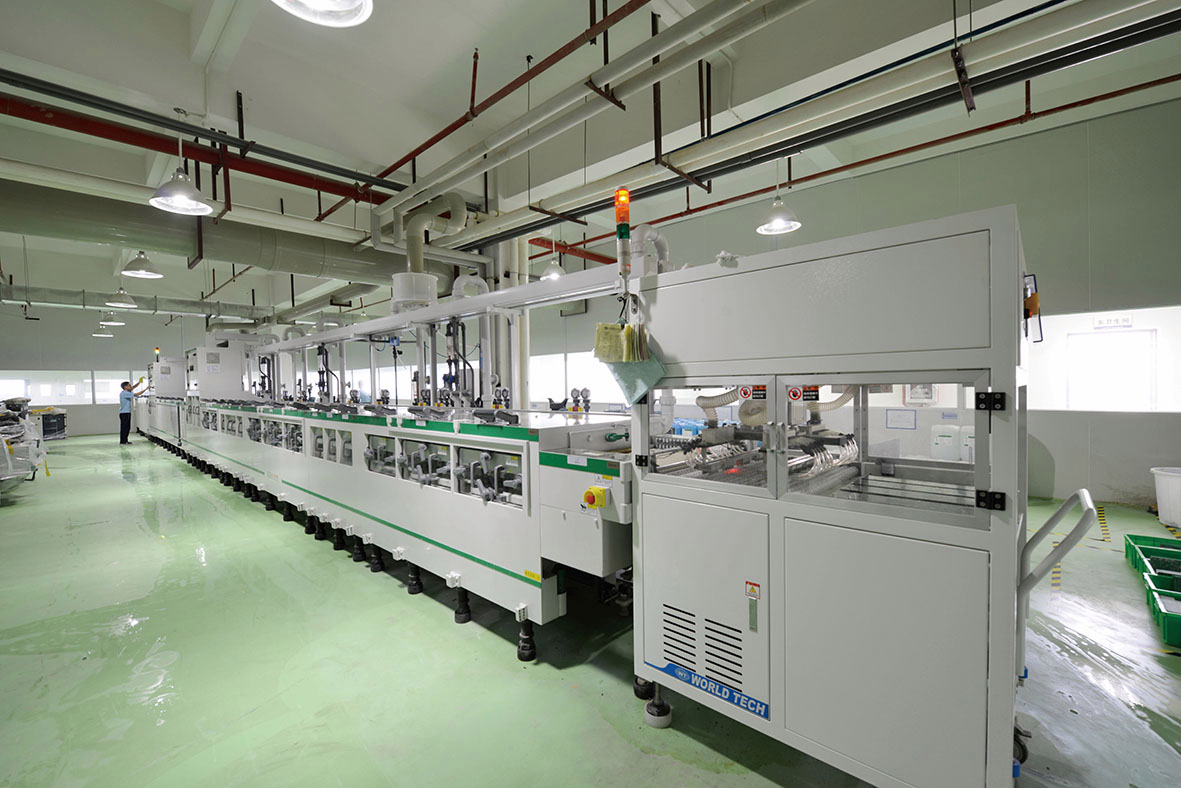
Air knife corrosion is not only a durability issue. Pitting at the lip can create wet stripes. Swelling or creep can change the slot gap. Deposits can block a small-hole pattern. Corroded fasteners may release particles or make adjustment impossible. A distorted plenum can change pressure distribution across the PCB width.
The first signs may appear as inconsistent drying, stains, particle defects, or rising blower demand rather than an obvious leak. This is why the purchasing specification should connect material condition to airflow performance and product quality.
The knife receives mainly clean water and limited chemical vapor. Hard-anodized aluminum may be practical when the enclosure and exhaust keep aggressive carryover away. The approval still needs the cleaning agent, rinse quality, temperature, and any nearby acid or chloride vapor.
The liquid is diluted but not chemically neutral. Repeated wet-dry cycling can concentrate residue on the lip and at crevices. Material selection must use the worst credible rinse composition, not the label “water rinse.”
The knife is close to an active process module, receives droplets, or collects vapor condensate during stops. PVC, a suitable stainless grade, titanium, or another engineered material may be considered only after the exact chemistry is reviewed.
A flooded drain, failed exhaust, spray fault, or maintenance wash can expose the assembly more severely than normal production. If this event is credible, it belongs in the specification. Moving the knife, adding a partition, or improving drainage may be safer than buying a more expensive material.
List every product that can contact the knife as liquid or vapor. Include trade name and known constituents, normal and maximum concentration, pH, temperature, chloride or fluoride content, oxidizing or reducing condition, and exposure time. Mixed chemistry must be evaluated as a mixture.
Add startup, bath makeup, replenishment, line stop, drag-out, end-of-bath, maintenance cleaner, disinfectant if used, and abnormal rinse conditions. Dry-on residue can be more aggressive than the bulk rinse because evaporation raises local concentration. Ask who owns compatibility approval and which source or test supports it.
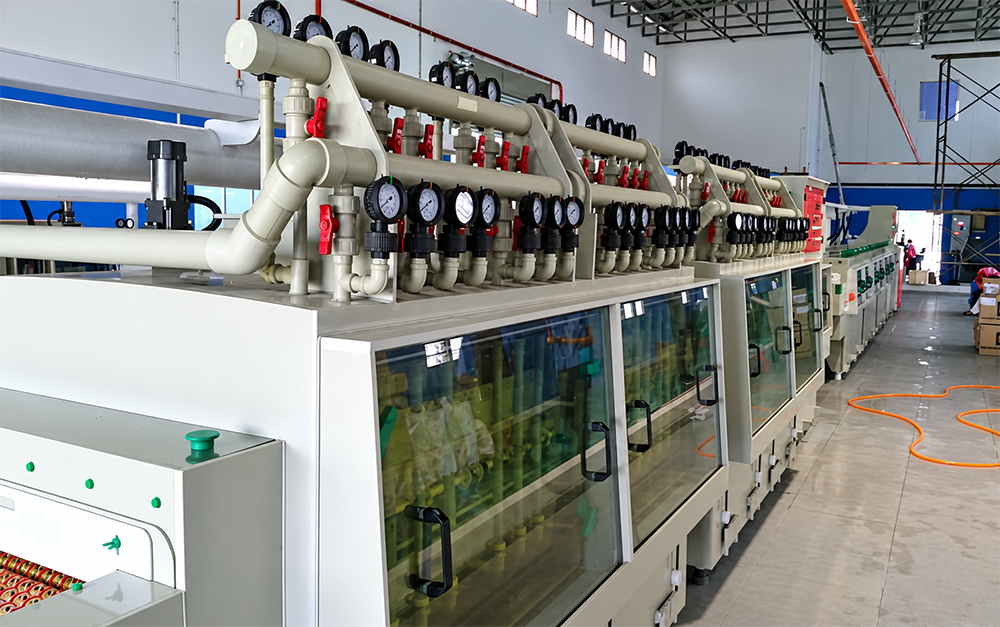
Aluminum is light, stiff for its mass, and economical. It fits many final-rinse and separated drying positions. It is not the default for strong acids, alkalis, or persistent chemical vapor. A hard-anodized surface is a useful finish, not permission to ignore chips, threaded interfaces, cut edges, and long-term attack.
PVC is often considered for low-temperature acidic or alkaline PCB wet zones. QXY offers a PVC model with a 55 × 125 mm body, multiple inlet positions, a product-specific 0.1-4.0 mm adjustable edge, and lengths from 100 to 3,000 mm. Those dimensions describe that product family, not every PVC knife.
The approval must also cover solvent exposure, air and ambient temperature, pressure, impact, mounting load, and long unsupported spans. PVC can resist the chemistry yet fail the mechanical duty through creep or distortion. IPEX chemical-resistance data are useful screening information, but the final check must use the actual compound and service conditions.
Stainless steel provides strength, temperature capability, and cleanable surfaces. Grade 316 or 316L can outperform 304 in many chloride-bearing wet environments, but it is not universal. Outokumpu and Nickel Institute guidance shows that standard 304L and 316L have limited use in hydrochloric acid because both uniform and localized corrosion can occur.
The “L” in 316L helps welded construction resist sensitization; it does not turn 316 into an all-acid alloy. Ask for the exact grade, weld procedure, weld cleanup, surface condition, fastener grade, and crevice details.
Titanium can be valuable in selected chloride and oxidizing environments where stainless steel is inadequate. It is also expensive and chemistry-specific. TIMET data show rapid attack in some fluoride-containing media, including fluoroboric and fluorosilicic acid conditions. PCB processes involving fluoride species require explicit review rather than a blanket “titanium is best” decision.
The weakest exposed part sets the assembly life. The purchase document should identify the shim, gasket, O-ring, adhesive, end plate, fastener, threaded insert, inlet fitting, hose, duct, bracket, coating, and any internal flow distributor. A PVC body with an unknown gasket or carbon-steel fastener is not a defined corrosion-resistant assembly.
Require a bill of materials for process-exposed and gas-contact parts. Mark which items see direct liquid, splash, vapor, condensate, cleaning solution, or only clean air. If substitution is allowed, require written approval before the supplier changes the material or manufacturing route.
A compatible alloy can fail early when liquid sits under a clamp or dries inside a thread. Slope horizontal surfaces, protect or remove exposed threads, give end plates a drain path, and prevent condensate from running into the plenum. Mounting should not create a galvanic couple or trap solution between dissimilar materials.
The outlet must remain accessible for inspection and cleaning. Do not use a cleaning tool that scratches the lip or removes a protective surface. If the air knife is adjustable, define the gap-setting method and how the qualified dimension is restored after service.
Chemical resistance does not excuse poor airflow. State useful width, slot or hole pattern, inlet configuration, required uniformity, working distance, blower pressure, product speed, and liquid load. Confirm deflection at operating pressure and at the highest allowed temperature.
QXY general references for blower-driven systems include 2-6 psi (0.14-0.42 bar), a 20-50 mm working distance, and a 15-45 degree angle. PCB surface drying commonly starts within a 0.5-1.5 mm slot range. These are trial inputs, not corrosion or performance guarantees.
A useful quotation identifies the proposed material grades, exposed components, limits, excluded chemicals, temperature and pressure range, outlet geometry, fabrication method, inspection plan, and recommended cleaning procedure. It should state which service data came from a published compatibility source and which claims require a site trial.
For severe or mixed chemistry, use coupons or a sample assembly exposed to the real bath, vapor, rinse, wet-dry cycle, and cleaning method. Laboratory tables are screening tools. TIMET itself notes that service conditions can differ from laboratory tests and recommends testing under anticipated conditions.
Factory acceptance can include dimensional records, material certificates where required, slot or hole inspection, leak testing, pressure holding, flow or velocity mapping, and photographs of welds, end plates, and internal components. Define the acceptance limits before the purchase order is released.
Site acceptance should run the actual product and chemistry at normal and worst approved conditions. Check liquid removal, splash, mist, surface marks, product stability, pressure under flow, and the downstream quality test. Establish baseline photographs and measurements so future corrosion inspections have a reference.
Calendar replacement alone can waste good equipment or miss an early failure. Inspect the outlet lip, slot gap, holes, end joints, fasteners, inlet, brackets, drainage, and surface condition. Trend wet stripes, particles, pressure, blower setting, cleaning frequency, and adjustment drift.
Define reject conditions such as pitting at the outlet, measurable gap change, swelling, cracks, loose inserts, damaged coating, persistent deposits, or corrosion products in the air stream. Keep compatible spares and record the material revision so a replacement does not quietly change the approved assembly.
Selecting corrosion-resistant air knives for PCB wet processing means approving a complete assembly that survives the defined chemistry while holding its airflow geometry, cleanliness, and maintenance limits.
QXY Machinery (Shenzhen Qixingyuan Machinery Equipment Co., Ltd.) is based in Shenzhen, China, and integrates R&D, design, production, and sales. It has more than 10 years of air knife experience.
For PCB wet equipment, QXY can supply aluminum, 304/316 stainless steel, PVC, titanium, small-hole PCB, and air-to-air configurations. Custom work covers length, outlet, inlets, supports, blower matching, and line integration. Material approval remains tied to the customer’s chemical schedule and validation plan.
Q: Is PVC always the best air knife material for PCB wet processing?
A: No. PVC suits many low-temperature acidic and alkaline wet zones, but solvents, heat, pressure, impact, mounting load, and long spans can require another material.
Q: Is 316L stainless steel resistant to all PCB chemicals?
A: No. It performs well in many wet environments, but standard 316L has limited resistance to hydrochloric acid and can suffer pitting or crevice corrosion under some conditions.
Q: Can titanium air knives be used with fluoride-containing chemistry?
A: Do not assume so. Titanium can be attacked rapidly by some fluoride-containing media. Review the exact chemistry and test under anticipated service conditions.
Q: What information should be included in a chemical schedule?
A: List every production and maintenance chemical, constituents, concentration range, pH, temperature, chlorides or fluorides, exposure time, vapor and condensate, mixtures, wet-dry cycles, and upset conditions.
Q: Which parts of an air knife need compatibility review?
A: Review the body, shim, seals, gaskets, fasteners, inserts, end plates, fittings, hose, duct, brackets, coatings, adhesives, and internal flow components.
Q: What should buyers request when selecting corrosion-resistant air knives for PCB wet processing?
A: Request the full bill of materials, service limits, excluded chemicals, fabrication details, outlet inspection, compatibility evidence, cleaning method, sample-test plan, and factory and site acceptance criteria.
Need a custom air knife solution? Send us your application details, material requirement ,or air source type . Our engineering team will help you select the right model.

Shenzhen Qixingyuan Machinery Equipment Co., Ltd.
info@airknifecn.com
Building 8, Wanfeng Third Industrial Zone, Xinqiao Street, Bao'an District, Shenzhen, Guangdong, China


