

A wet film can leave a drying station with no visible droplets and still be unsuitable for converting. A fine scratch may cross the print area, a loose edge may rub against a guard, or a stretched section may no longer track correctly. These defects can cost more than the moisture problem the dryer was installed to solve.
Drying flexible packaging materials requires control of both water removal and material movement. For a roll-fed film or laminate, start by identifying what must leave the surface, what must remain on it, and which properties the next operation needs. An Air Knife is a candidate for removing free surface water. Its suitability depends on the material construction, support arrangement and demonstrated result.
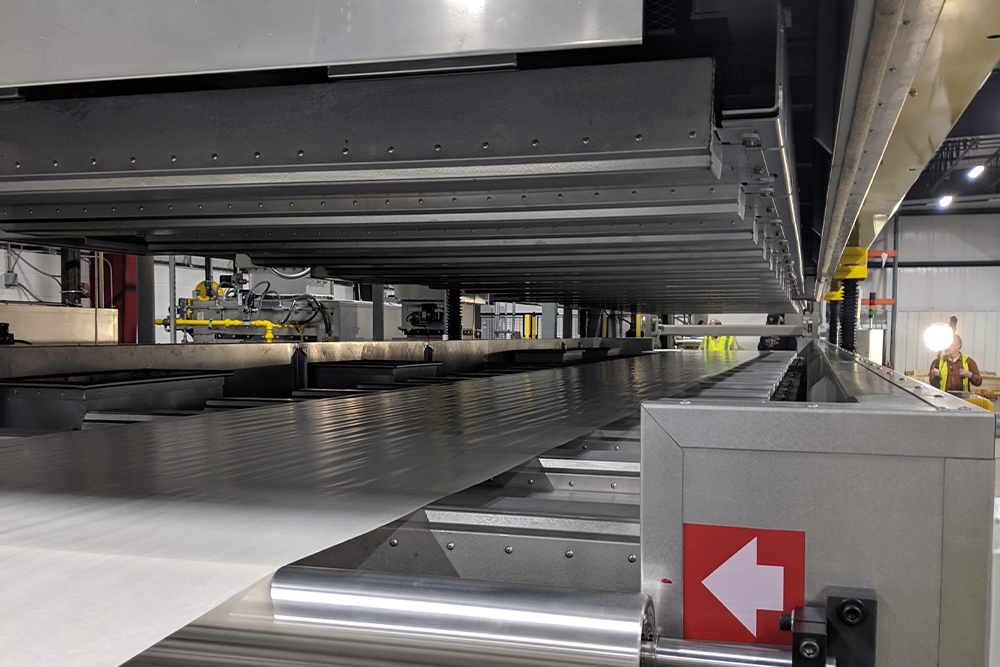
This guide focuses on free water on flexible webs where the production process includes an approved washing, rinsing or other wet operation. It does not assume that every packaging film should be washed. Introducing a wet step into an existing process needs separate material and process approval.
Distinguish removable droplets from a functional wet coating. Water in an ink or adhesive formulation is part of a drying process that must preserve the applied layer. Blowing that layer across the web could alter its thickness or appearance. Coating drying may require controlled evaporation, exhaust and a defined curing sequence; it cannot be qualified by the absence of visible drops alone.
Moisture trapped between bonded layers is a different issue again. External airflow has no direct path to remove it. Investigate the source and the laminate's condition with the material or adhesive supplier. Do not classify a dry outer face as proof that the internal construction is acceptable.
Build the equipment brief around the actual material grade. Identify the layer structure, thickness, web width, treated side, print location and any exposed coating. Ask the supplier for permitted tension and temperature conditions and for restrictions on wetting or contact. A generic description such as plastic film is not enough to select a safe operating range.
Retain an accepted reference sample before trials. Agree what counts as a defect under consistent lighting and handling: scratches, haze, print change, edge curl or dimensional change. Add a moisture acceptance method suited to the next operation. These become two separate requirements, so that improving dryness cannot conceal a loss of material quality.
An air knife provides noncontact treatment, but the web still travels through a mechanical system. Its rollers, guides and nearby machine surfaces can become contact points if the film moves. Check the intended path with the drying air isolated under the machine's approved setup procedure. Correct existing tracking or handling problems before evaluating the dryer.
A roller-supported arrangement can provide a defined path through the drying zone. Review which face touches each roller, whether the surface is clean and whether the roller turns as intended. Roller slip can abrade a sensitive film. Adding contact is not automatically acceptable when the supported face carries a print, coating or finish that must remain untouched.
A purpose-designed flotation dryer supports the web with controlled airflow. That is a different engineering task from placing two opposing air knives around an unsupported span. Opposed jets do not automatically provide stable support. If both faces must remain free of contact, ask for a web-handling design that addresses support and exhaust as well as drying.
Film stiffness, tension and span length all belong in that review. Poorly controlled tension can produce wrinkles, curl or registration problems. Raising tension to suppress movement may create a new defect. Use the material's approved conditions and involve the machine supplier when the proposed installation changes the tension zone or web path.
Pay particular attention to loose edges and transitions between supports. Allow for the web's actual movement when reviewing nozzle clearance. A static distance measured on a stopped, flat sample does not establish clearance during production. Observe from a safe position; never steady a moving web by hand to make a trial appear successful.
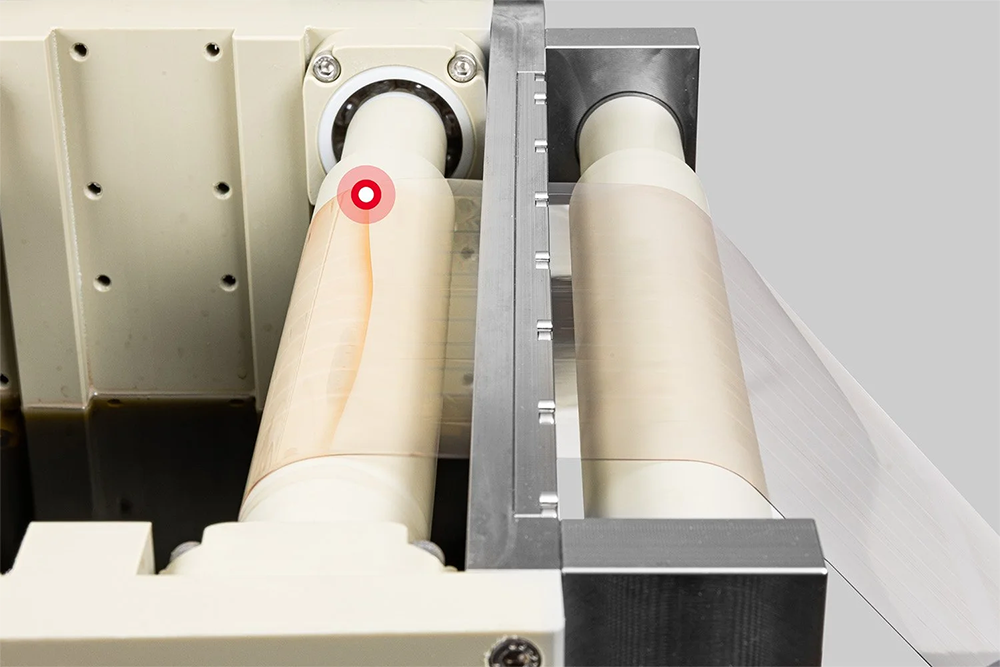
The airflow must treat the intended width without leaving wet strips or creating concentrated loads at particular locations. Review the working distance and outlet alignment across the web, including the edges. If several air knives are used, inspect their meeting points for differences in the drying result. Nominal knife length alone doesn't demonstrate coverage.
Ask the supplier to propose an initial direction that moves water toward a collection route. Compare the result within the agreed material limits, changing one setting at a time. Record whether droplets leave the web or travel to a different area. A center strip that looks dry is insufficient evidence if water collects at the edges and reaches the next roller.
The receiving space matters too. Provide a way for displaced liquid to drain without splashing onto the opposite face or a downstream support. Review exhaust or mist capture where the layout needs it. Avoid an enclosure arrangement that allows removed water to return to the web.
Specify the air supply for the exposed surface and end use. Check for particles, oil or liquid water that could be introduced through the supply. A blower and a compressed-air system have different conditioning requirements, and neither should be assumed suitable solely because it produces the required pressure. Confirm filtration and air quality against the plant's packaging requirements.
There is no universal air knife setting for all flexible webs. Begin within the equipment supplier's proposed range and evaluate removal and web stability together. If a setting clears the water but causes repeated edge movement, keep the material on hold and revise the layout or operating conditions before production approval.
During commissioning, compare samples taken before and after the station and note where a change first appears. Use the same material lot and record the settings. This gives the team a basis for investigating a defect instead of assuming that every downstream mark was made by the air knife.
A scratch following a fixed path calls for inspection of possible contact along that path. Check rollers, guides, deposited particles and nearby hardware under the appropriate isolation procedure. If the mark repeats at intervals, record the spacing and compare it with rotating contact surfaces. Treat the pattern as a diagnostic clue, not proof of a particular cause.
Wrinkles or changes in web position need a handling review. Observe whether they exist before the station, appear when airflow is enabled or develop at the next roller. An air-on comparison can help identify an interaction, but it should use approved trial material and controlled conditions. Check support and airflow distribution before compensating with higher tension.
Surface marks after evaporation may have a different origin. Inspect the incoming water and upstream contamination if a stain appears without evidence of rubbing. Removing droplets does not establish that dissolved residue has been removed. Review any proposed rinse change with the material supplier rather than adding an unapproved cleaning chemical during the trial.
If heat is proposed, obtain a permitted material-temperature range for the complete construction. Film properties can change with temperature, affecting handling and dimensions. Check the web temperature using an appropriate measurement method, not just the air temperature shown by the dryer. Include slow running and stopping behavior in the control review because exposure changes when the web slows.
The desired result is a usable operating range, not a single successful sample. Establish which combinations of speed, airflow and material conditions meet both requirements. When the process cannot remove enough water within those limits, reconsider incoming water load, support, available drying length or the drying method itself.
Run the approved trial material through the next intended converting step. Rewinding, printing, laminating and sealing place different demands on the web. The relevant test is whether the material remains suitable for that operation, using the product's established quality criteria.
For rewinding, examine sampled material after winding and unwinding rather than relying only on inspection at the dryer exit. Look for marks or deformation that were difficult to see while the web was moving. For printed or coated material, compare appearance with the accepted reference and complete any specified adhesion or surface checks.
Where sealing, bond strength or barrier performance is part of the product specification, retain the required tests. A visual dryness check cannot replace them. Equally, don't add arbitrary test limits: quality personnel should select the methods and acceptance values that apply to the supplied construction and intended use.
Document the settings and results for each qualified material family, including the usable width and speed range. Keep examples of accepted and rejected surfaces where practical. Record which changes trigger another trial, such as a new coating, thinner construction or altered support arrangement. A recipe for one laminate should not become the default for every roll that fits the machine.
QXY Machinery's air knife drying systems can combine blowers, air knives, adjustable supports, conveyor equipment, splash protection, water collection and controls. Configuration is based on the product dimensions, shape, production rate and required drying result.
For a flexible-web application, provide the material specification and a drawing of the existing web path alongside the moisture-removal requirement. Ask QXY to review the proposed air delivery and its interface with the converting equipment. Suitability for an unsupported film, a sensitive coating or a particular end use needs application-specific confirmation and representative material trials.
Do not transfer the settings automatically. A thickness change can alter how the web responds to airflow and tension, even when its nominal polymer type is unchanged. Confirm the new grade's limits and repeat the relevant handling, moisture and surface-quality checks.
No. Removing external water does not establish that an adhesive has completed its required cure. Follow the adhesive system's approved curing conditions and release tests independently of the surface-drying result.
Only after reviewing the actual construction. Absorbent layers and coatings can respond differently to wetting, and surface blow-off may leave moisture within the material. Confirm whether the wet process is permitted and whether a bulk moisture test or another drying method is required.
No. A stationary sample doesn't reproduce transport, changing tension, edge movement or contact with downstream equipment. Acceptance should include the moving web and the intended operating range, followed by the material checks required for its next use.
Need a custom air knife solution? Send us your application details, material requirement ,or air source type . Our engineering team will help you select the right model.

Shenzhen Qixingyuan Machinery Equipment Co., Ltd.
info@airknifecn.com
Building 8, Wanfeng Third Industrial Zone, Xinqiao Street, Bao'an District, Shenzhen, Guangdong, China


