

A can may look dry beside the blower and still leave a wet ring on a paperboard tray. Water can remain around the top end or base, or appear again while cold cans wait for packing. Before adding more airflow, establish which of these is happening and where the moisture first reaches the packaging.
Drying aluminum cans before secondary packaging means preparing the whole exterior of a sealed, filled can for its next handling conditions. An Air Knife can remove surface water after rinsing or other wet operations. It cannot repair a leaking container or guarantee that a cold surface will stay free of condensation. The useful specification is a dry can at packing, with a result that holds through the intended packing and storage conditions.
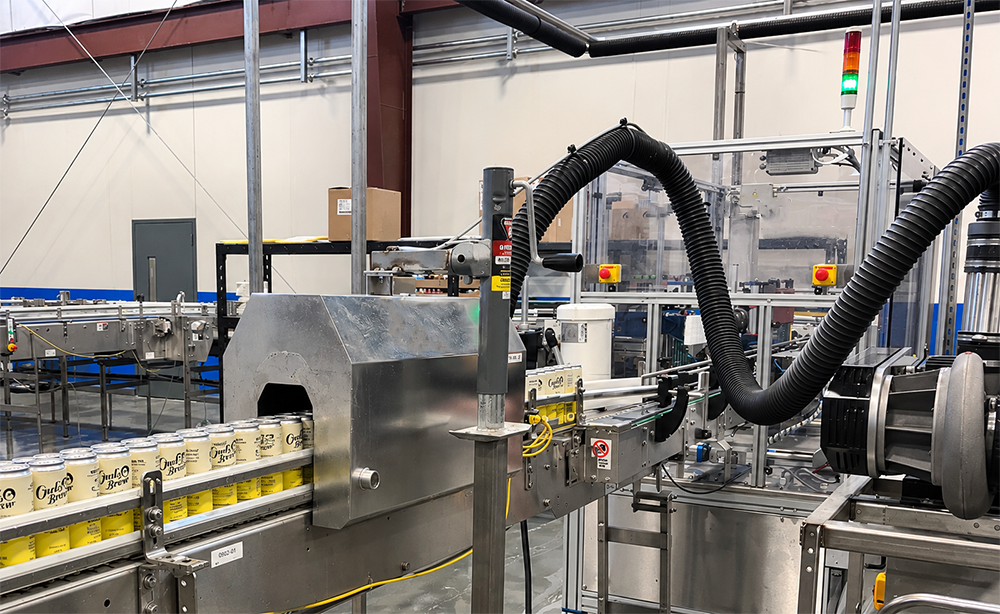
Start with the actual pack material and the way it touches the cans. A dry sidewall alone is a poor acceptance criterion when the base rests on paperboard or a carrier covers the can end. Agree the inspection method with quality personnel and the packaging supplier before comparing drying equipment.
For cartons and paperboard trays, examine the contact areas beneath the cans and around any dividers. Look for transferred droplets, damp patches and changes in the board after representative handling. Use production packaging for this check. An absorbent sheet can help locate water during setup, but it cannot establish how the specified carton will perform.
For shrink-wrapped multipacks, inspect a completed pack as well as loose cans. Residual liquid can become enclosed within the pack, where access for further drying is limited. Don't assume that a shrink tunnel will finish drying the cans. Its settings must suit the film and package, and a satisfactory film appearance doesn't establish that the enclosed surfaces are dry.
Open carriers leave more of the can visible, but their contact points still deserve attention. Check beneath any part that covers the top rim and inspect the base before placing the multipack in a shipping case. Changing from a carton to a carrier may change the inspection locations without removing the need for can drying.
Keep cleanliness in the acceptance requirement. Sticky product residue needs an effective upstream cleaning or rinsing process. Blowing away liquid doesn't prove that dissolved residue has been removed. Where residue or staining persists, check the rinse process and can supplier's requirements before increasing dryer output.
Two lines with identical cans can need different moisture-control arrangements. Establish the can surface temperature, local air temperature and humidity near the dryer and packer. Record how long cans spend between those positions, including accumulation. These observations help separate water left by processing from water forming afterward.
After a wet thermal process, cans may carry droplets even while their surfaces are warm. Bulk water removal and drainage are the first duties. Any contribution from evaporation depends on the actual temperature, exposure time and surrounding air. Don't assume that retained heat will remove water beneath a tab or around the base before packing.
Compare cans immediately before and after the drying station. Inspect the same surface locations using the agreed method. If a wet area persists at the outlet, investigate access, airflow direction and the incoming water load. A surface that stays wet in one location points toward a different adjustment from an entire can that becomes damp farther downstream.
Condensation can form when the can surface is below the dew point of the surrounding air. Removing the existing film doesn't change that condition by itself. Moisture may return during a delay at the packer, even after an apparently successful pass through the dryer.
If this pattern occurs, assess temperature management or humidity control with the process team. A can warmer may be appropriate where the product and process allow it; reducing humidity around exposed cans is another option to evaluate. Shortening the delay can help operationally, but it doesn't establish protection during later storage. Product requirements and the expected distribution conditions must guide the choice.
Use a temperature measurement method suitable for reflective aluminum. An unverified infrared reading can mislead the diagnosis. Record the measurement location and method alongside the ambient conditions so that later trials can be compared.
For a practical diagnostic comparison, keep sampled cans in the same environment as the production flow and observe them at the normal packing delay and a representative longer delay. This is a proposed troubleshooting check, not a universal acceptance test. If moisture returns after removal, investigate the thermal conditions before treating the result as insufficient air pressure.
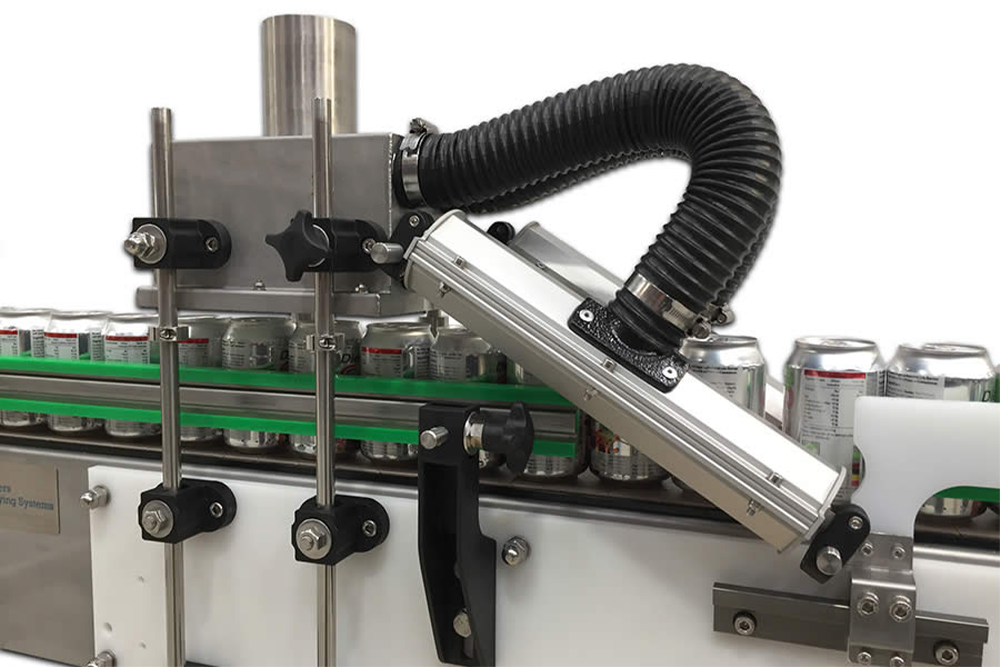
An air knife directs a sheet of moving air across the exterior to displace water. On a cylindrical can, coverage depends on the direction of that airflow and the surfaces it can reach. A broad blast against one side doesn't demonstrate removal from the top recess, far side or base.
Map the required drying areas on each can format. Include the sidewall, top end around the tab and seam, and the bottom dome and standing rim where relevant. Can geometry and nearby guides can shield liquid from the air stream. Ask the supplier to explain the escape path for water from each target area, then confirm it in a trial.
Top treatment needs a route for water to leave the end rather than collect against another part of the rim. Side treatment should carry displaced liquid toward a collection area. Bottom treatment needs physical access through or around the conveyor arrangement. Review any proposed transfer or opening with the conveyor supplier to preserve can support and stable movement.
Place the drying station where individual cans remain accessible. Tightly grouped cans can shield facing surfaces and limit the paths available for water removal. If the station must handle multiple lanes, test the inner lanes and the intended spacing. A result demonstrated on an isolated can doesn't validate the grouped arrangement.
Contain the displaced water. Provide drainage and splash control, and examine whether mist or runoff reaches cans that have already passed through the station. Keep the air intake away from wet exhaust and specify air quality and filtration for the actual application. Blower air should not be described as sterile without a validated basis.
Select the air supply with the complete layout in view. Blower-fed air knives are an option for continuous coverage; a targeted nozzle may be considered for a local pocket. Compare proposed combinations using demonstrated removal, utility demand, noise, maintenance access and available space. Pressure or motor power alone cannot tell the buyer whether the can will be dry.
Make adjustments repeatable across can heights and diameters. Record working positions and check clearances with guides and inspection equipment. More force is not automatically useful: verify that cans remain stable and that the arrangement doesn't create jams, excessive splash or contact damage.
A useful equipment trial should reproduce the conditions that make the production line difficult. Include the intended can formats, incoming moisture conditions, packaging materials and operating speeds. Agree the sampling method and acceptance criteria beforehand so that a supplier demonstration and a plant check measure the same result.
At steady operation, inspect matched samples at the dryer outlet and at the packer. Then inspect completed packs after an agreed holding period under representative conditions. Record the locations of any remaining moisture, rather than simply marking a can as wet. Top-end retention, a wet base and renewed sidewall condensation call for different follow-up work.
Run at the highest intended conveyor speed, while also checking normal slower operation. Specify both cans per minute and actual conveyor movement or spacing. The same output can pass through different lane arrangements, and the exposure of each can to the air stream can change. Confirm that all lanes and can formats receive the treatment demonstrated during setup.
Include a controlled stop and restart. Observe cans held between the dryer and packer and establish how the line handles them when production resumes. If the interruption leaves moisture outside the approved condition, define a hold, inspection or reprocessing action with quality personnel. Operators need a decision they can apply during a real stoppage.
Drying aluminum cans also needs checks beyond visible water. Inspect for scuffs, unstable movement and changes in code readability where coding is nearby. Have the responsible personnel assess noise and access for cleaning. A dryer that passes a moisture check but interferes with reliable conveying still needs adjustment.
Finish the trial with a record for each approved format: equipment positions, operating settings, observed conditions, sample results and the permitted process range. Define when to repeat the moisture check, including after a can-size change, maintenance work or a material change in packing-room conditions. This gives operators a reference for restoring performance rather than relying on remembered settings.
QXY Machinery offers air knife drying systems that combine blowers, air knives, conveyor equipment, adjustable supports, splash protection, water collection and controls. System layouts can be configured around product dimensions, surface shape, throughput and the required drying result.
For an aluminum can drying inquiry, provide the can formats, conveyor layout, wet-process sequence, temperatures and secondary packaging details. Include the proposed acceptance check and available installation space. The configuration and drying result should be confirmed against the actual application through technical review and representative trials.
Removing moisture supports corrosion control, but it is only part of the process. Residues, can-end condition and the storage environment also matter. Follow the can supplier's handling requirements and investigate leaks or end defects separately. Drying is not a repair or a guarantee against later corrosion.
No. A local drying stage may prepare the coding area while leaving moisture elsewhere. Check the whole exterior against the packaging requirement, including the top end and the surfaces that contact the secondary pack. Approve code quality and packing dryness as separate outcomes.
There is no single setting established by this article. The required operating point depends on the knife or nozzle arrangement, airflow, working distance, incoming water and conveyor conditions. Ask for a demonstrated setup and record its acceptable operating range for each approved format.
Use the plant's agreed hold and inspection procedure. Identify the affected production interval, inspect representative cans and packs, and determine whether reprocessing or packaging replacement is needed. Restoring the dryer does not establish that product already packed during the fault is acceptable.
Need a custom air knife solution? Send us your application details, material requirement ,or air source type . Our engineering team will help you select the right model.

Shenzhen Qixingyuan Machinery Equipment Co., Ltd.
info@airknifecn.com
Building 8, Wanfeng Third Industrial Zone, Xinqiao Street, Bao'an District, Shenzhen, Guangdong, China


