

A fabric web can reach a coating head with the “right” average moisture and still cause trouble. One edge may be wetter. A stripe may repeat with every squeeze-roll revolution. Once coating is applied, those differences can change dilution, penetration, wet pick-up, adhesion, drying load, or appearance.
Air knives before fabric coating can reduce part of that variation. They remove free water, break up heavy surface films, and create a more repeatable entry condition. They don’t replace a dryer, and they can’t prove that absorbed moisture inside the fibers has reached target. That boundary is the key to a useful design.
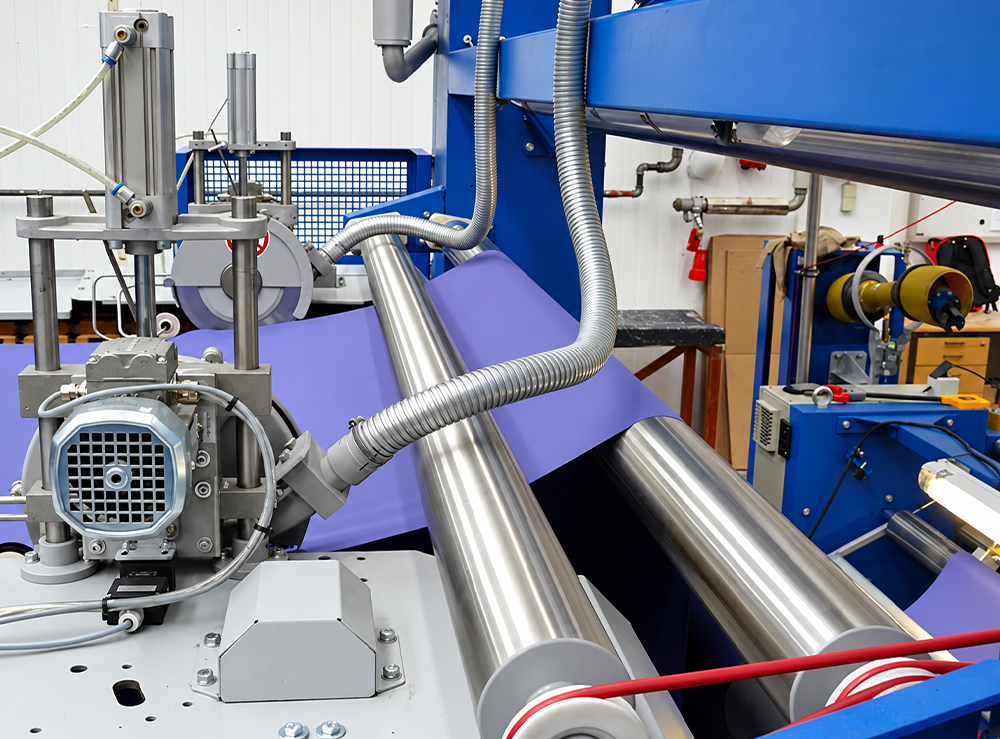
Imagine a moisture meter showing 7% across a roll. It may combine a 5% center with 9% edges. The coater sees both at once. A water-based formulation can spread or penetrate differently across that width, and the dryer receives an uneven evaporation load.
Don’t ask only “How wet is the fabric?” Ask where the water sits and how the pattern moves. A stable cross-web band points toward edge squeeze, drainage, slot uniformity, or fabric construction. A repeating machine-direction pulse points toward a roll, pump cycle, seam, batch join, or speed event.
Mahlo describes online systems that measure residual moisture and build cross-direction and machine-direction profiles on moving webs. That distinction matters here. A single fixed sensor can track a trend, but a scanning profile shows whether an air knife is smoothing the full working width or only improving the average.
This is the best target for a textile air knife. Droplets, beads, and a mobile film can be displaced without touching the fabric. The effect is fast. You can see the water front move toward a drain or collection zone.
Airflow may remove some water held near the surface of a woven, mesh, needled, or porous web, especially when both faces are accessible. Deep pockets are harder. A second direction, more drain time, or thermal drying may be needed.
Cotton, viscose, nylon, blends, and other materials hold moisture differently. Surface blow-off doesn’t set hygroscopic equilibrium. If the coating recipe needs a defined residual-moisture range, use a validated dryer and a material-appropriate sensor. Airflow can prepare the load; measurement confirms the result.
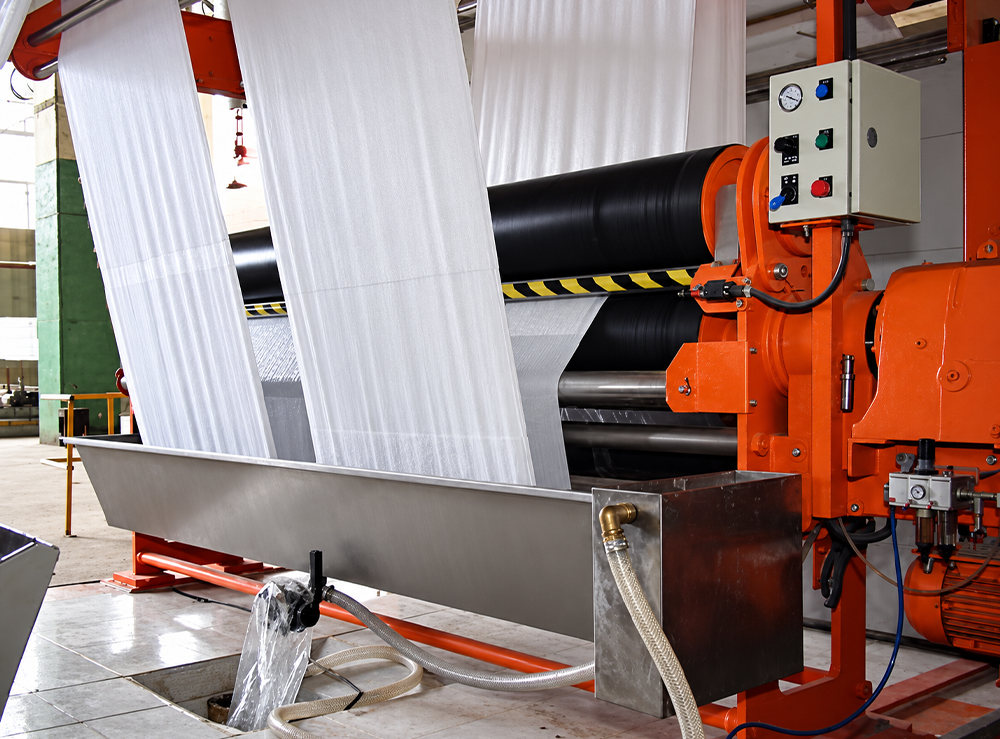
Edge-heavy coating or shade variation may begin upstream. Check cross-web moisture, selvedge construction, squeeze pressure, bowed rolls, drainage, and air-knife end effects. If only the edges stay wet, raising pressure across the full width can overdry the center and excite the web.
Longitudinal streaks deserve a different test. A fixed wet lane can trace to a blocked or damaged outlet, a weak zone in the plenum, a support shadow, or a crease that retains liquid. A streak that changes position with fabric tracking is more likely tied to the web than to the knife.
Periodic bands usually aren’t caused by a stationary slot. Compare their repeat distance with squeeze-roll circumference, pump timing, accumulator motion, or speed control. The defect leaves a rhythm. Follow it.
A common location is after washing, rinsing, padding, or another wet stage and before the coating entry section. Gravity drainage and squeeze rolls should do the cheap bulk work first. The air knife then removes the mobile film that those mechanical steps leave behind.
Don’t add an air knife after a deliberate chemical add-on unless the process owner has defined what may be removed. Blow-off can change finish pick-up, active concentration, foam structure, or face-to-back distribution. The same hardware that fixes an unwanted water film can damage an intentional application.
Aim displaced liquid toward a tray, hood, or wet-side return. If mist can land on the coater, measuring frame, guide roll, or conditioned web, the station is incomplete. More air won’t fix re-wetting.
A stable woven fabric may tolerate a broad air sheet across a short supported span. Lightweight knits and open nonwovens can flutter, neck in, curl, lift from a roll, or change width under the same jet. The coating head then receives a moisture change and a geometry change. Bad trade.
Keep the knife near a supported section, backed roll, perforated support, or controlled span. A shallow angle with travel usually creates less lift than near-normal impact. Opposed knives can balance some load, but their force lines must meet near the support. Equal pressure alone doesn’t guarantee balance.
Run the weakest and most elastic fabric during qualification. Include seams, starts, stops, speed ramps, and low-tension recipes. A setup that looks calm on heavy woven goods may become unstable on a light knit.
Wide textile lines expose end losses, duct imbalance, slot contamination, and frame deflection. The usable airflow width must cover the wet fabric plus expected tracking movement. The support and inlet arrangement must also keep the gap and pressure distribution stable from operator side to drive side.
QXY standard aluminum air knives use a dual-deflector internal structure and target +/-5% airflow uniformity across the knife length. Knives above 600 mm commonly use dual inlets, and custom lengths can reach 6 m. Those details make wide-web work possible, but they don’t correct an uneven incoming water profile by themselves. Measure the web.
QXY Blower Air Knife - Textile Trial References | |
Slot gap | 0.5-2 mm standard range for many industrial drying duties; set for the project |
Blower inlet pressure | 2-6 psi (0.14-0.42 bar) as a general blower-driven reference |
Working position | 20-50 mm distance and 15-45 degree angle as trial starting points |
Width and air distribution | Standard lengths from 150 to 1,000 mm; custom lengths up to 6,000 mm; dual inlets commonly used above 600 mm |
Uniformity reference | +/-5% airflow target across QXY standard aluminum air knives |
Place measurement where it answers a process question. A scanner before the knife maps incoming variation. One after it shows what airflow changed. A sensor near the coating head captures moisture return along the web path. If only one instrument is available, put it near the process decision and survey upstream during commissioning.
Near-infrared sensing can measure moisture without contact, while conductivity-based systems are used in textile drying control. Material, chemistry, color, basis weight, thickness, and calibration affect the choice. Validate readings against the plant method.
A control loop may adjust blower speed, dryer output, line speed, or an upstream squeeze setting. Avoid rapid corrections based on one noisy reading. Web travel time creates delay, and aggressive control can turn a small disturbance into a repeating moisture wave.
There is no universal moisture percentage for coating. The acceptable range depends on fiber blend, fabric structure, coating solids and rheology, desired penetration, add-on method, curing route, and final property. Set limits from product performance and process capability.
Use more than one output. Record moisture average, cross-direction range, machine-direction variation, coating weight, visual defects, adhesion or peel result where relevant, dryer load, line speed, and web stability. A lower average isn’t a win if edge variation grows or the coating becomes less uniform.
Begin with the air off and map moisture at normal conditions. Add the lowest stable airflow, then change one variable at a time: blower output, distance, angle, line speed, or support. Hold each condition until the material reaches the coater and dryer output.
Sample operator side, center, and drive side. Repeat on the lightest, heaviest, most open, and most elastic fabrics. Keep the wet-stage recipe fixed. If squeeze load changes too, you won’t know which adjustment helped.
Finish with disturbance tests: a seam, brief stop, speed ramp, roll change, and restart. Lock the accepted settings by fabric family. Then mark the knife position and record inlet pressure under flow, slot condition, filter state, moisture profile, coating result, and cleaning method.
Air knives before fabric coating work best as profile conditioners. They remove mobile water and reduce the size of the disturbance sent to the coater and dryer. They don’t own the entire moisture problem. Squeeze control, drainage, web handling, sensors, thermal drying, and coating acceptance still matter.
That division of work is useful. Let the air knife handle free water. Let measurement show what remains. Let the coating result define whether the web is ready.
QXY Machinery (Shenzhen Qixingyuan Machinery Equipment Co., Ltd.) is based in Shenzhen, China, and integrates R&D, design, production, and sales. The company has more than 10 years of focused experience in industrial air knife drying, water blow-off, cleaning, and airflow applications.
For textile and coating lines, QXY Machinery can review working width, fabric type, line speed, water load, tension limits, available support, air source, and installation space. Relevant options include aluminum alloy, stainless steel, blower-driven, compressed-air, air-to-air, and custom-length air knife configurations, together with blowers, ducts, supports, shields, and water collection.
Q: Can an air knife set the final moisture content of fabric before coating?
A: Not by itself. It can remove free surface water and reduce part of the moisture variation. Absorbed moisture still needs validated drying and online or offline measurement.
Q: Where should air knives before fabric coating be installed?
A: Place them after the last wet stage that creates unwanted free water and before the coating entry section, with enough drainage and mist containment to prevent re-wetting.
Q: Will stronger airflow always improve coating uniformity?
A: No. Too much force can flutter the web, curl edges, alter width, disturb tension, and overdry areas that were already within range.
Q: Are air knives suitable for knitted fabric and nonwovens?
A: Yes, when the layout controls web movement. Lightweight or elastic products often need a supported span, shallow angle, lower mechanical load, and separate recipes.
Q: How do we know whether the air knife is improving the moisture profile?
A: Measure before and after the station or scan near the coating head. Compare cross-direction range, machine-direction variation, coating weight, defects, web stability, and the required coating test.
Q: What causes a fixed wet stripe after the air knife?
A: Common causes include a blocked or damaged slot, weak plenum zone, uneven gap, support shadow, fabric crease, or incoming wet lane. Check position and pattern before raising pressure.
Q: What data does QXY need to select a textile air knife?
A: Provide fabric type, mass and permeability if known, width, line speed, tension range, wet-stage details, incoming moisture profile, desired coating condition, support geometry, utilities, and installation space.
Need a custom air knife solution? Send us your application details, material requirement ,or air source type . Our engineering team will help you select the right model.

Shenzhen Qixingyuan Machinery Equipment Co., Ltd.
info@airknifecn.com
Building 8, Wanfeng Third Industrial Zone, Xinqiao Street, Bao'an District, Shenzhen, Guangdong, China


