

Coolant reaching an inspection station can obscure a camera view, wet a sensor housing, or carry loose contamination into the measuring area. Yet another station on the same mill may deliberately apply water to make its inspection work. Removing all liquid everywhere is not a useful design target.
An Air Knife for welded pipe mills can help control unwanted surface liquid and loose material before a defined inspection step. Its location should follow the inspection method, the required surface condition, and the destination of the displaced liquid. Blow-off is a preparation function, not a weld-quality test.
This guide focuses on external blow-off around welded tube and pipe inspection. It does not assume every mill has the same welding, cooling, scarfing, sizing, or testing sequence. The inspection owner should approve any change that could alter the conditions under which the system was set up and verified.
A camera needs an appropriate view of the surface. An electromagnetic test depends on its sensor arrangement and operating conditions. Conventional ultrasonic inspection needs an effective acoustic path into the pipe. These requirements lead to different decisions about water removal.
Begin with the actual station name and its inspection procedure. Identify the target area, pipe condition, permitted contamination, temperature range, and required liquid supply, if any. Mark which liquid is unwanted cooling carryover and which is intentionally applied for inspection.
Keep this distinction on the layout drawing. A station described only as “NDT” leaves too much uncertainty for an air-knife proposal. Include the sensing location, guards, fluid delivery and collection, and access needed for reference checks or maintenance.
Also identify the material that blow-off is expected to remove. Free droplets and loose particles are different from adherent scale, oil residue, burrs, or attached scarfing material. A cleaner-looking outside surface does not establish removal of bonded contamination or verify the internal condition of the pipe.
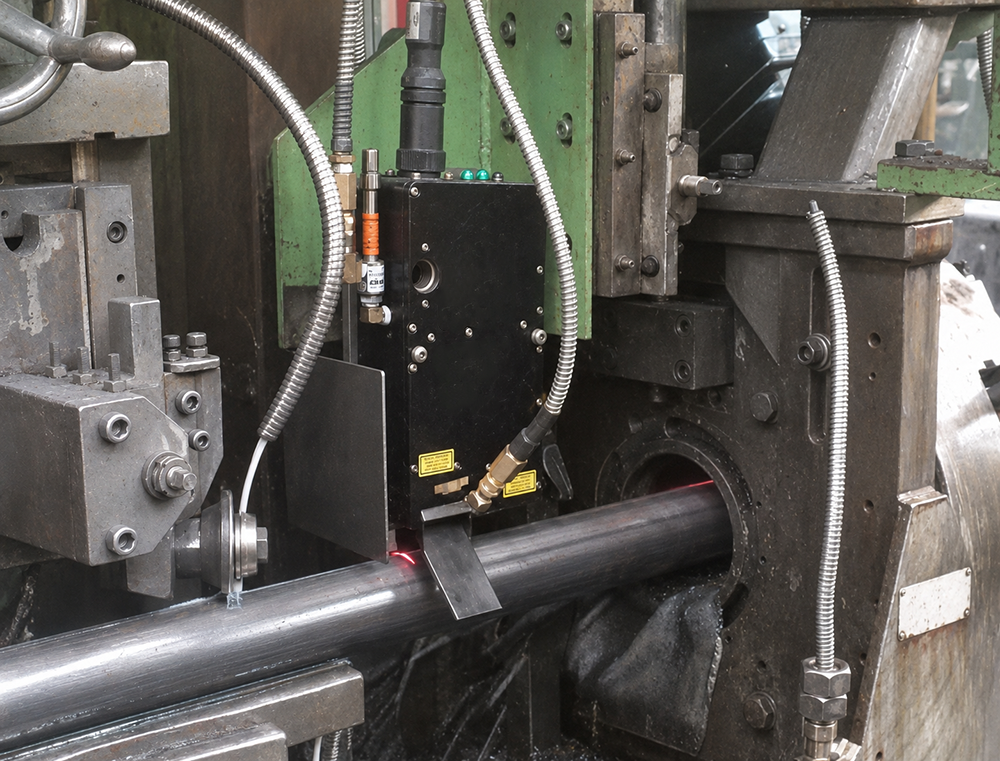
Before a visual check or camera-based surface inspection, reducing moving droplets can help make the intended viewing area more consistent. The useful question is whether unwanted liquid obscures the feature being examined, rather than whether the whole circumference looks dry.
For a weld-seam camera, assess the seam band and the approach to the viewing position. A local arrangement may be sufficient if only that band needs preparation. A dimensional optical system observing a wider area may need a different coverage pattern. Confirm the optical equipment's requirements instead of transferring a camera setup to every measuring station.
Inspect the view during normal production, including the wettest expected incoming condition. Compare images taken with the existing arrangement and the proposed preparation step under comparable lighting and speed. Record whether the relevant feature remains visible and whether spray reaches windows, lighting, or protective covers.
Avoid claiming that blow-off increases measurement accuracy simply because an image looks clearer. The inspection-system owner must verify measurement or detection performance using the applicable checks. Cleaning the pipe also does not replace maintenance of a contaminated optical window.
If liquid reappears between the knife and the camera, inspect the intervening guides, rolls, and drip sources. Relocating the preparation step or correcting the source may be more useful than increasing airflow at a position farther upstream.
Eddy current testing does not require the acoustic couplant used by conventional ultrasonic methods. That does not mean every eddy current station requires a completely dry pipe, or that any wet surface makes its results invalid. Follow the equipment requirements and the qualified inspection setup.
Blow-off may be worth assessing where carried liquid and loose debris create a documented housekeeping or equipment-contamination problem. Establish that problem first. Don't assume all changes in test signals originate from coolant; sensor spacing, pipe positioning, material condition, and instrument setup also need review by the inspection team.
In particular, keep the pipe-to-sensor relationship stable. A modification that interferes with guides, changes clearance, or introduces vibration can create a new problem while removing liquid. Check installation space around coils or probe heads with the inspection-equipment supplier.
Evaluate the proposal with the reference checks required by the inspection procedure. Review the expected indications and background response rather than judging success from fewer alarms alone. A quieter signal is not evidence of improved detection if the response to the reference feature has also changed.
Keep air delivery and test-setting changes separate during commissioning where practical. If both are altered together, retain a record of each change and have the responsible inspection personnel assess the result. The air-knife supplier should not redefine detection thresholds or acceptance criteria.
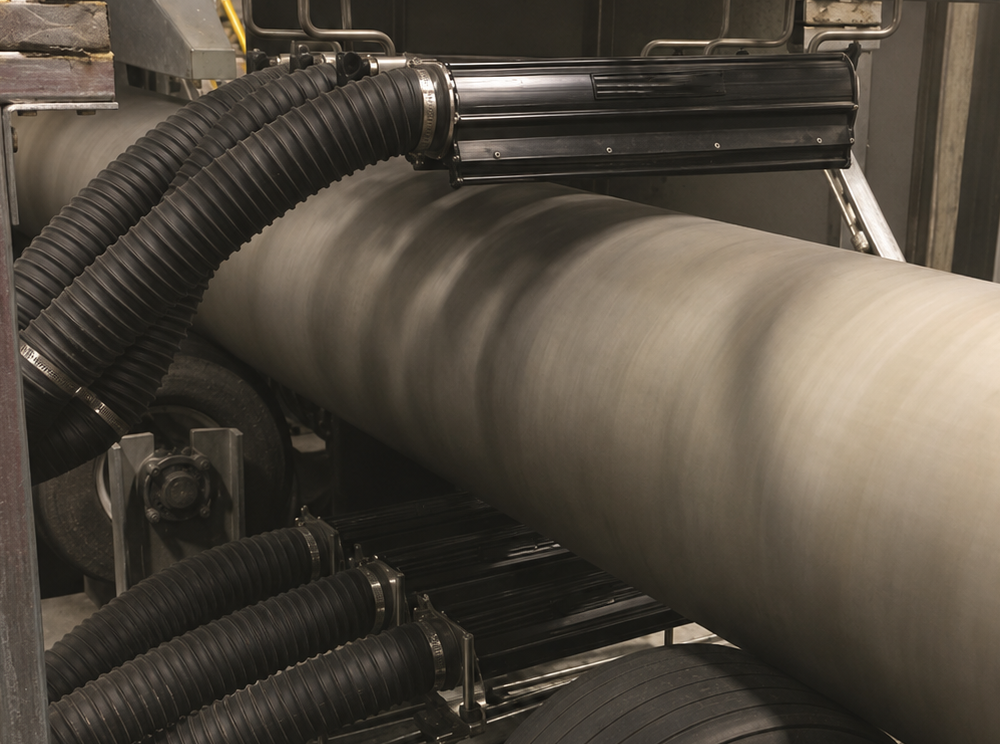
Once the inspection requirement is clear, define whether the target is the weld band, selected outside surfaces, or the full circumference. A single straight outlet facing one side should not be assumed to treat the hidden side of a round pipe. Circumferential treatment may require several directions or a suitable surrounding arrangement.
Check the complete product range. Pipe diameter, profile, seam position, and permitted movement change the relationship between the outlet and the target. Square or rectangular welded sections also present corners and faces that differ from a round profile. Retain a setup record for the approved range rather than relying on visual adjustment at every changeover.
The supports must preserve stable transport and safe clearance. Allow for the normal pipe path and changes in product size, and confirm access for threading, maintenance, and inspection setup. Do not mount equipment where a foreseeable pipe movement could bring it into contact with the outlet.
Specify air supply for the installed arrangement, including all outlets and connecting pipework. Blower-fed and compressed-air equipment have different supply requirements. A nominal pressure or motor rating is not enough to demonstrate coverage at operating speed.
Plan where the removed coolant and particles will go. Use suitable containment and collection so blow-off does not send spray toward the inspection head, operators, adjacent equipment, or the next pipe surface. Where the liquid can form mist, include the site's exposure-control assessment and any required extraction.
Give loose debris and swarf appropriate upstream removal. An air knife is not a substitute for a scarfing system, a chip-handling device, or cleaning needed for adherent deposits. The installation should not turn a local debris problem into airborne material around the test station.
Commissioning should answer two separate questions: has the unwanted carryover been reduced at the specified location, and does the inspection still perform as required? Agree on both before the trial, with production, maintenance, and inspection personnel involved.
For the preparation result, define the observation area and acceptable surface condition. Record incoming wetness, pipe dimensions, line speed, outlet position, supply setting, and collection behavior. Include sustained operation rather than inspecting only a short, unusually dry section.
For the inspection result, retain the procedure's reference checks, response requirements, and records. The responsible inspection personnel should review any change in images, signal behavior, coupling, or indications. Do not interpret a lower reject rate as an improvement without confirming that the required detection capability remains intact.
Check the transition conditions as well. Start-up, a line stop, a size change, or an interruption to air supply can leave a different surface condition at the inspection station. Define the response in the controls and operating procedure, including how affected material is identified and handled when the agreed inspection conditions are lost.
An air knife for welded pipe mills should be accepted for the documented operating range, not for an undefined promise of better inspection. Preserve settings and verification records so later maintenance does not silently change the approved arrangement.
QXY Machinery supplies industrial air knives and configurable air knife systems. For a welded-pipe application, provide the product range, line layout, surface condition, production speed, and inspection method alongside the required blow-off result.
Ask QXY to review the air-delivery and integration requirements with the inspection-equipment team. Pipe-mill suitability, thermal limits, circumferential coverage, and any inspection-related performance claim require application-specific confirmation. General air-knife information does not certify weld quality or inspection capability.
No. Blow-off can be evaluated for loose material, but it should not be assumed to remove adherent scale or replace specified surface preparation. Identify the deposit and use the preparation process required by the inspection procedure.
Not by default. An outside air-delivery arrangement does not establish internal coverage. Any bore-cleaning or drying requirement needs a separate review of access, drainage, contamination, and acceptance, rather than being inferred from the outer surface.
Use that method's approved preparation and processing sequence. Do not direct blow-off across active examination media or indications without procedure-specific approval. A location suitable before a camera cannot automatically be transferred to another inspection method.
Only within confirmed limits. Provide the actual surface temperature and exposure conditions to the equipment and inspection suppliers. Verify component ratings and the inspection procedure's temperature requirements; do not infer hot-pipe suitability from the air knife's metal construction.
Need a custom air knife solution? Send us your application details, material requirement ,or air source type . Our engineering team will help you select the right model.

Shenzhen Qixingyuan Machinery Equipment Co., Ltd.
info@airknifecn.com
Building 8, Wanfeng Third Industrial Zone, Xinqiao Street, Bao'an District, Shenzhen, Guangdong, China


