

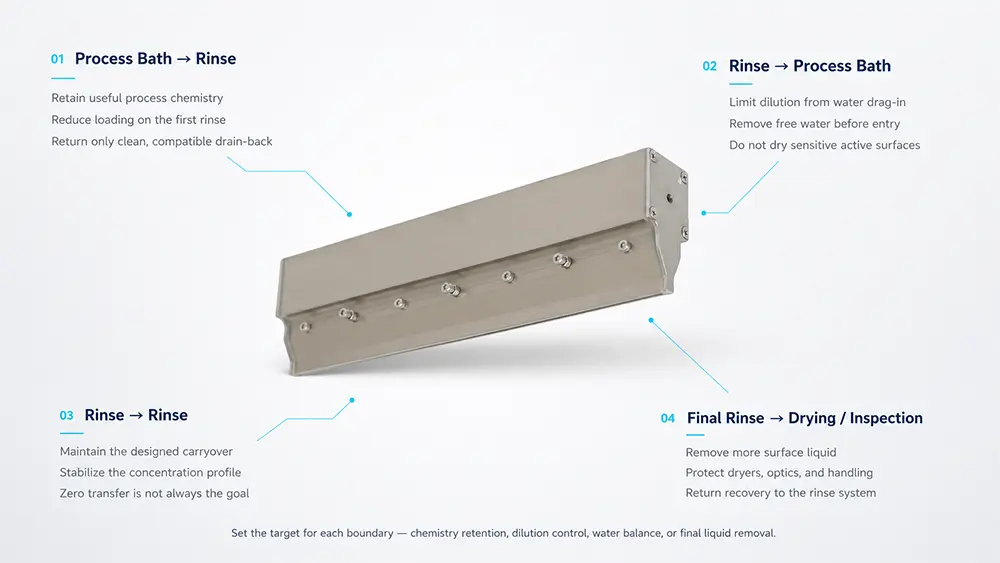
A process bath can meet its setpoint at the start of a shift and still run inefficiently. Every wet part, rack, basket, sheet, or strip transfers liquid when it moves to the next stage. The source bath loses us...
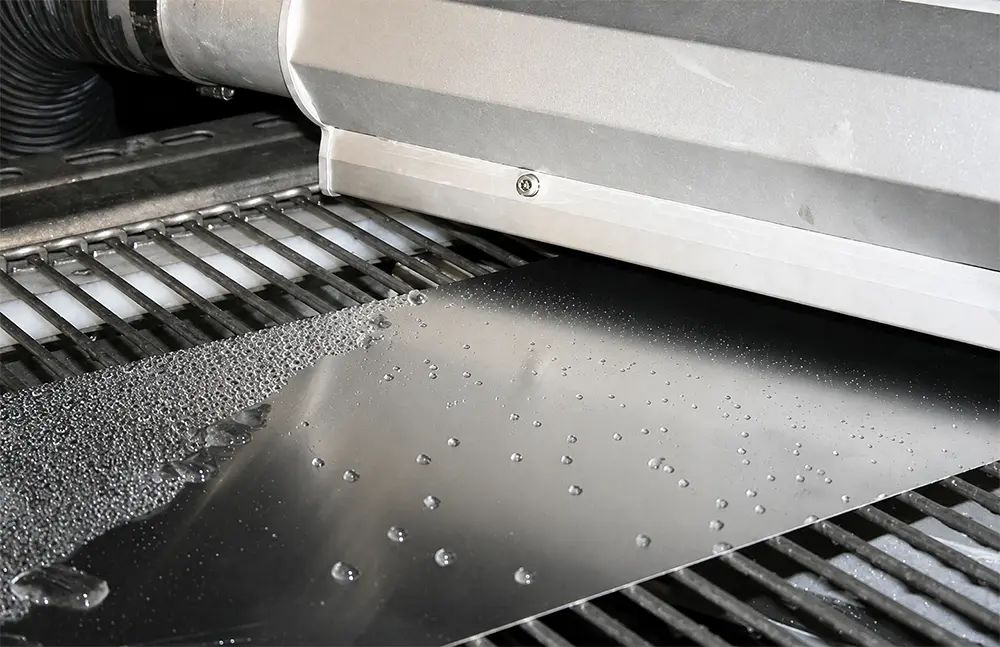
Every rack that leaves an electroplating bath carries a liquid film with it. Some solution sits on open surfaces. More remains around hooks, holes, seams, rack insulation, recesses, and horizontal ledges. If th...
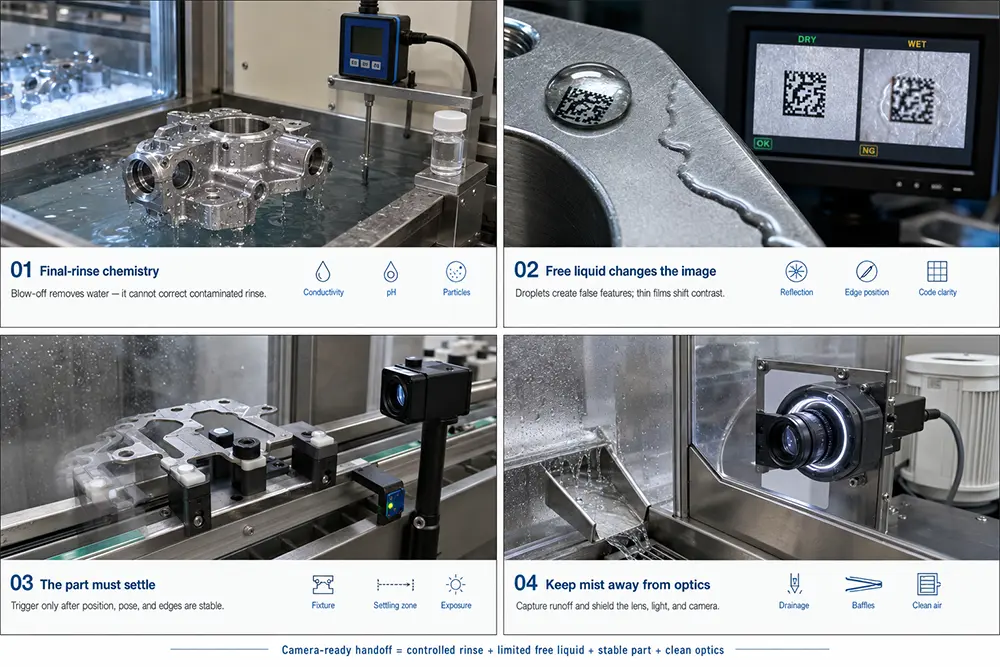
Aqueous washing removes oil, chips, dust, and process residue, but the part normally leaves the final rinse wet. Machine vision needs a different condition: the surface, position, and lighting response must rem...
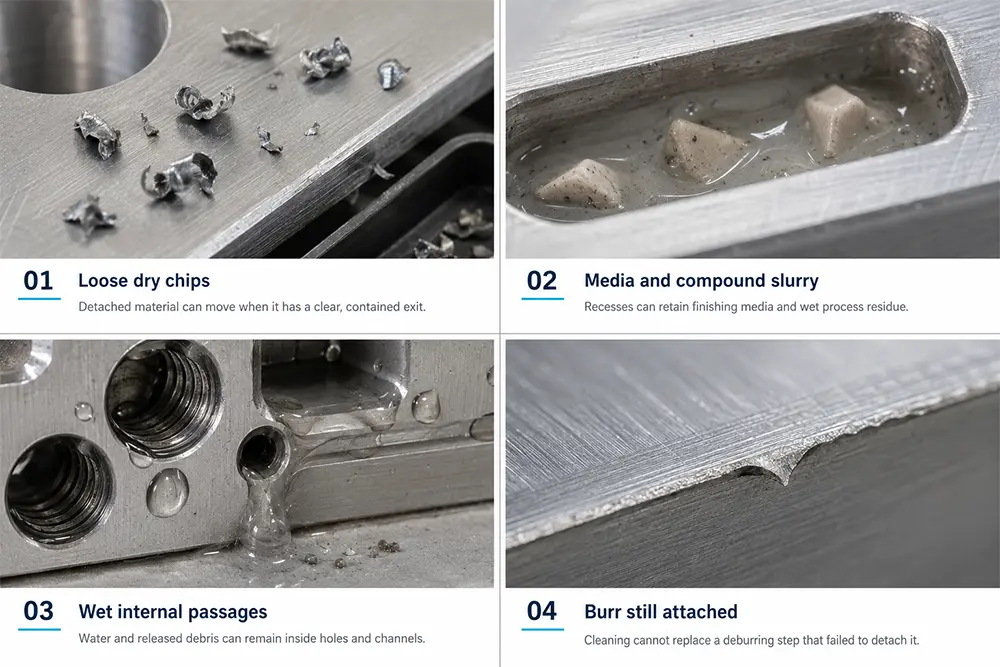
Deburring leaves different material states. Cutting or brushing can leave loose chips. Vibratory finishing leaves media and compound slurry. High-pressure water deburring leaves wet passages. Some burrs remain ...
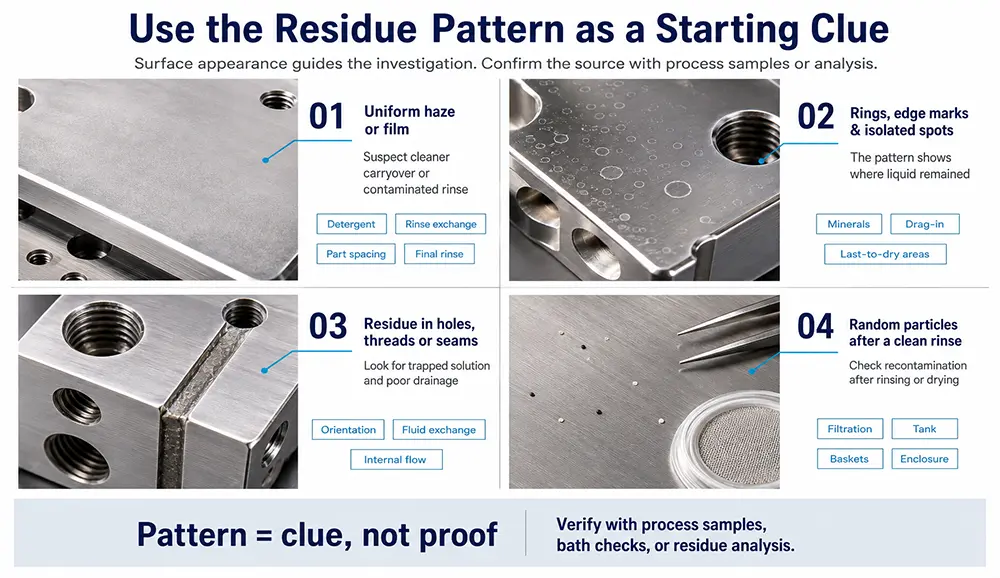
A component can look clean when it leaves the wash tank and still fail after drying. A faint film appears under angled light. White marks form around a drain edge. A blind hole releases liquid during assembly. ...
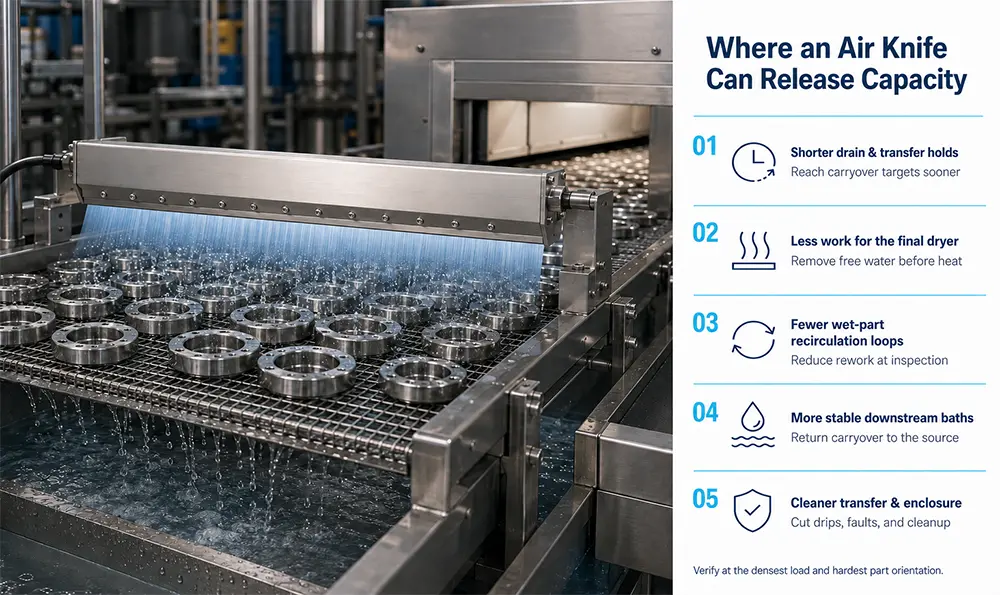
A multi-stage cleaning line can include washing, ultrasonic treatment, rinsing, blow-off, drying, inspection, and unload. Adding an Air Knife does not automatically make it faster. Throughput improves only when...
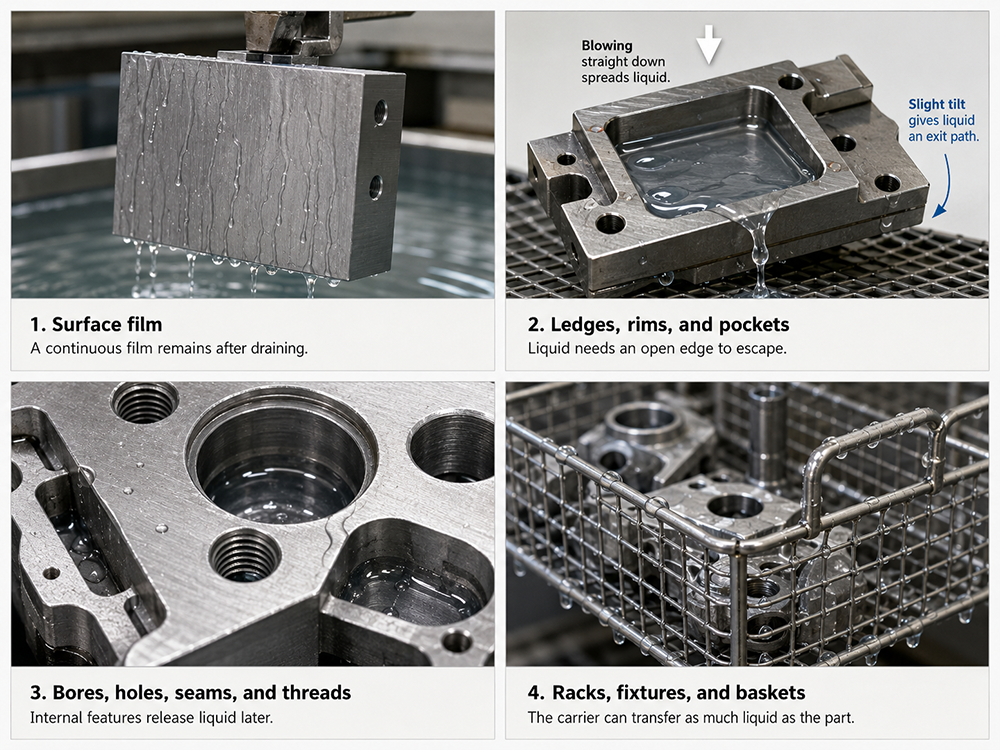
Every part leaving a cleaning tank takes some liquid with it. A thin film coats the surface. Drops sit on horizontal ledges. Bores, seams, baskets, and rack contacts hold more. When that liquid enters the next ...
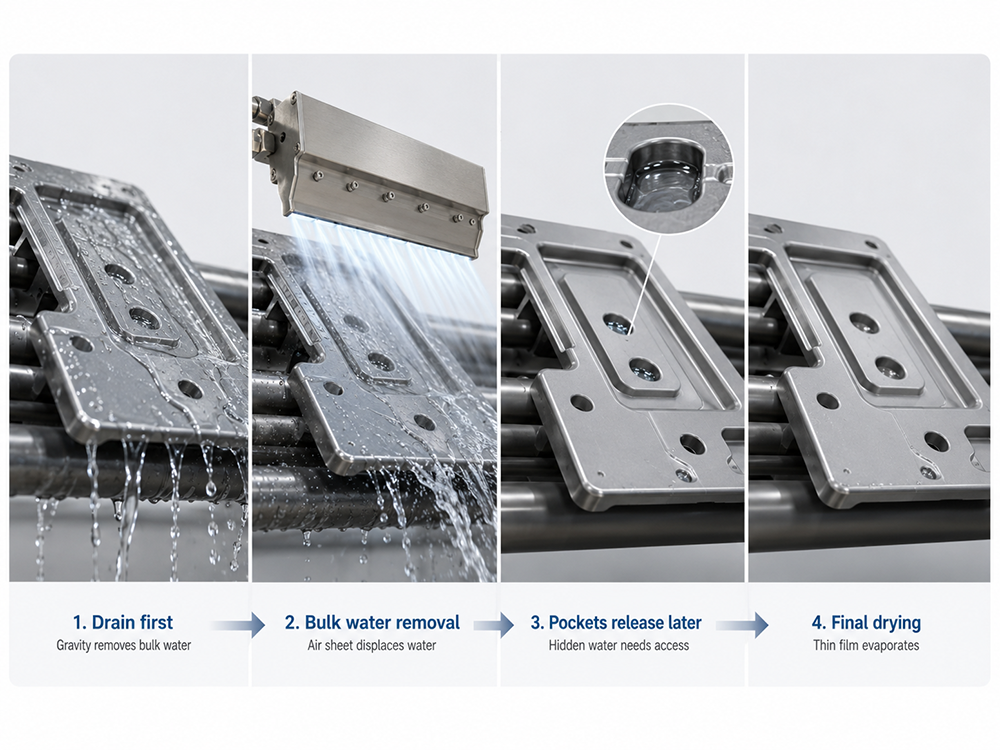
Drying often becomes the slowest stage in an automated parts washer. Wash and rinse may finish on time, yet water remains on ledges, inside pockets, or between parts in a basket. Raising dryer temperature adds ...

Shenzhen Qixingyuan Machinery Equipment Co., Ltd.
info@airknifecn.com
Building 8, Wanfeng Third Industrial Zone, Xinqiao Street, Bao'an District, Shenzhen, Guangdong, China


