How Air Knives Reduce Chemical Drag-Out in Electroplating Operations
2026-08-28

Every rack that leaves an electroplating bath carries a liquid film with it. Some solution sits on open surfaces. More remains around hooks, holes, seams, rack insulation, recesses, and horizontal ledges. If that liquid reaches the first rinse, the line loses metal salts and additives while the rinse system receives a higher contaminant load.

An Air Knife can interrupt that loss at the tank boundary. Positioned over the correct bath or recovery area, it applies a controlled sheet of air as the work is withdrawn and drained. The liquid is pushed toward a known collection point and returned to the compatible process solution. The goal is recovery, not simply making the part look dry.
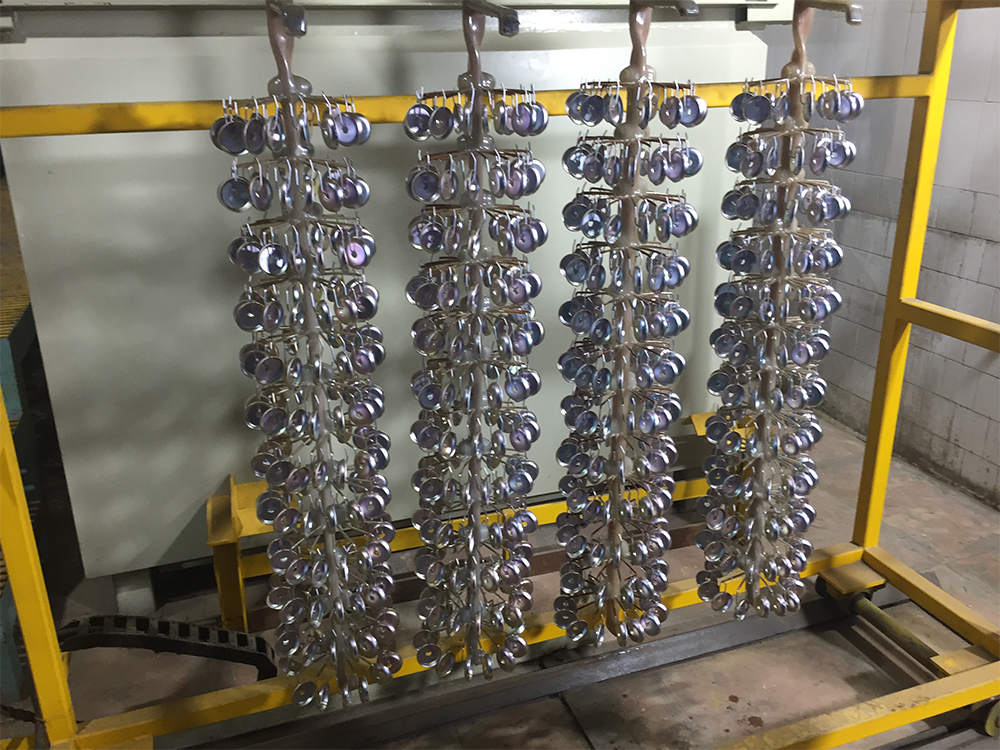
Drag-Out Is Chemical Inventory Leaving the Bath

Every rack that leaves an electroplating bath carries a liquid film with it. Some solution sits on open surfaces. More remains around hooks, holes, seams, rack insulation, recesses, and horizontal ledges. If that liquid reaches the first rinse, the line loses metal salts and additives while the rinse system receives a higher contaminant load. An Air Knife can interrupt that loss at the tank boundary. Positioned over the correct bath or recovery area, it applies a controlled sheet of air as the work is withdrawn and drained. The liquid is pushed toward a known collection point and returned to the compatible process solution. The goal is recovery, not simply making the part look dry. Drag-Out Is Chemical Inventory Leaving the Bath  Electroplating drag-out is not just water on a part. It may contain nickel, copper, zinc, chromium compounds, acids, alkalis, complexing agents, brighteners, wetting agents, or other bath constituents. The cost appears in several places: fresh chemical makeup, rinse-water demand, wastewater treatment, sludge, bath imbalance, and contamination of later stages. The loss rate changes with bath viscosity, surface tension, temperature, withdrawal speed, drainage time, rack orientation, part geometry, and barrel condition. A flat coupon drains differently from a threaded casting. A rack with damaged insulation can hold solution in cracks even when the parts themselves drain well. For this reason, air knife performance should be measured by recovered liquid and reduced rinse loading, not by outlet velocity alone. Put the Air Knife Inside the Recovery Boundary For direct recovery, install the air knife over the plating tank or over a drainboard that slopes back to that same tank. The work should not cross above an unrelated bath while concentrated solution is being removed. Splash guards, drip trays, and exhaust capture must keep the displaced liquid and mist inside the intended boundary. The first rinse is a different location with a different objective. Blow-off there may reduce carryover into the next rinse, but that liquid is already diluted and may not be suitable for direct return to the plating bath. Mark each knife in the line by source chemistry, approved destination, and operating recipe. This prevents a useful recovery device from becoming a cross-contamination path. The Four-Part Air Knife Removal Sequence 1. Controlled Withdrawal Lift the work smoothly. Fast withdrawal leaves a thicker liquid film, while abrupt acceleration shakes droplets outside the tank. On automated hoists, tune the lift profile for the highest-drag-out product family rather than using one aggressive motion for every rack. 2. Gravity Drainage Pause over the bath long enough for major streams to stop. EPA guidance has documented large drag-out reductions from longer drainage and slower withdrawal, but excessive dwell can create dry-on marks or process delays. The correct time comes from a line trial, not a universal timer value. 3. Directed Airflow Start the air knife after the heavy runoff has fallen. Aim the air curtain toward the return zone and sweep from the upper liquid edge toward the lowest drain point. Too much force atomizes solution, loads the exhaust system, and can blow chemistry onto bus bars or adjacent tanks. 4. Captured Return Keep the part above the source tank or sloped drainboard until displaced liquid has cleared. The return path must be clean, chemically compatible, and free of debris. A knife that moves liquid off the work but sends it to the floor or first rinse has not reduced the chemical loss. Air Knife Setups for Rack Plating, Barrel Plating, and Flat Work  Rack-plated parts usually need coverage from more than one direction. Hooks, shielded rear faces, nested components, and pockets can sit outside a single air curtain. Two opposed knives or a staged top-to-bottom sweep may be needed, but the jets should not collide and create uncontrolled mist. Racks also need regular inspection for cracked insulation and metal buildup that forms liquid pockets. Barrels retain solution in perforations, end plates, internal parts, and plugged holes. Rotation in the upright drain position often matters more than a stationary external jet. Use the air knife as part of the withdrawal-and-rotation sequence, and verify that air reaches the drainage path without driving aerosol through the enclosure. Panels, strip, wire, and other continuous products give a more repeatable target. A narrow, angled air curtain can push the liquid line back toward the tank. Two-sided products may need upper and lower knives, balanced so the lower jet does not lift the strip, disturb electrical contact, or throw liquid beyond the capture zone. Recovery Must Protect the Plating Chemistry Returning solution is valuable only when the return is chemically acceptable. Confirm that the recovered liquid comes from the same bath and has not collected rinse water, cleaner, etchant, oil, particles, or corrosion debris. Some baths tolerate direct return; others require filtration, concentration control, or a separate recovery rinse. Electroless and tightly controlled baths can be especially sensitive to unwanted contaminants. Also review the bath volume balance. A hot bath with normal evaporation may accept recovered solution more easily than a low-evaporation bath already near its operating level. Coordinate air knife recovery with makeup water, level control, filtration, and analytical additions. Recovery should stabilize the process, not gradually overfill or dilute it. Air Knife Control of Mist, Air Quality, and Surface Risk Plating solution can be hazardous and corrosive. The exhaust hood must capture the mist created during blow-off without pulling the air curtain away from the work. Test with the enclosure operating at its normal extraction rate. Add shields where the stream can strike edges, holes, or fixtures and break into droplets. The supplied air must not add oil, condensate, rust, or particles to a freshly plated surface. Use suitable filtration and drain the air system. Blower-driven air is often preferred for continuous coverage and energy control, while compressed air may fit short, intermittent, or highly localized tasks. In either case, confirm the cleanliness required by the plating finish and the next process step. Do not chase a completely dry surface if the process cannot tolerate it. Rapid drying can leave salts, stains, or dry-on patterns, and some downstream coatings require a clean, active surface. Define the acceptable endpoint as reduced transferable solution with no finish damage, not “maximum air.” QXY Air Knife Starting Specifications for Electroplating Lines These values are engineering starting points for blower-driven systems, not final settings. QXY Machinery should review the actual chemistry, rack envelope, wet width, exhaust arrangement, and return geometry before selection. Design item	QXY starting point	Why it matters on a plating line Body material	PVC for many low-temperature acidic or alkaline wet zones; verify exact chemistry	Reduces corrosion risk near plating and rinse tanks without paying for a premium alloy where it is not needed Blower pressure	2–6 psi (0.14–0.42 bar) at the knife inlet	Supports a continuous air curtain; final pressure must be set by runoff and mist tests Working distance	20–50 mm from the target surface	Keeps useful impact while leaving clearance for racks, hooks, and part variation Impingement angle	15°–45° from the surface, aimed toward the approved return zone	Moves liquid in a controlled direction instead of atomizing it across the line Slot and width	0.5–2 mm standard slot; standard lengths 150–1,000 mm; custom lengths available	Matches the wet width and liquid load; wider openings require enough blower flow Inlet arrangement	Dual inlets normally used above 600 mm	Helps maintain coverage across wide panels, long racks, or strip lines  PVC is often a practical body material near low-temperature acid, alkaline, plating, and rinse environments. It is light and economical, but its suitability depends on chemical type, concentration, temperature, exposure time, pressure, impact, and mounting span. Stainless steel or titanium may be better where temperature, load, or documented corrosion conditions exceed the PVC operating window. Commission the Air Knife with a Mass-Balance Test Begin with the existing line. For a representative rack or barrel load, measure drip time, first-rinse conductivity or chemistry, bath makeup, and visible runoff pattern. Then run the same product with the air knife operating. Keep production rate, withdrawal profile, bath condition, and rinse flow as constant as possible. Collect returned liquid where practical, or use bath-level and concentration records over enough cycles to smooth out normal variation. Check the first rinse for reduced contaminant loading. Inspect the plated surface under the normal quality standard for stains, residue, roughness, adhesion problems, or marks caused by rapid drying. •Confirm that all displaced liquid reaches the approved tank or recovery vessel. •Record pressure, slot setting, distance, angle, hoist speed, drain time, and exhaust state. •Test the worst-draining rack and the most sensitive finish, not only a flat sample. •Look for mist on tank rims, bus bars, sensors, floors, and neighboring stages. •Recheck rinse loading and chemical makeup after a stable production period. Maintenance Determines Whether Savings Continue Inspect the slot for salt buildup and verify that airflow remains even across the wet width. Check brackets, shields, hoses, blower filters, drains, and the sloped return surface. A shifted angle or blocked drain can quietly redirect recovered chemistry away from the process tank. Include the system in plating-line change control. A new part family, rack design, bath chemistry, concentration, temperature, hoist program, or exhaust setting can change the liquid path. Repeat the runoff and rinse-loading checks after any change that affects drainage or airflow. About QXY Machinery QXY Machinery (Shenzhen Qixingyuan Machinery Equipment Co., Ltd.) is a high-tech enterprise integrating R&D, design, production, and sales. Based in Shenzhen, China, the company has more than 10 years of focused air knife experience for industrial drying, liquid removal, dust control, and wet-process equipment. For electroplating and surface-treatment lines, QXY Machinery supplies PVC, 304 and 316 stainless steel, titanium alloy, aluminum alloy, slot, small-hole, and dual-sided air knife configurations. Length, slot width, inlet direction, mounting, material, and air source can be matched to the tank layout and work envelope. A useful application request includes the plating chemistry, concentration, temperature, rack or barrel drawing, wet width, withdrawal motion, drain time, exhaust arrangement, available air source, return destination, and surface-quality limit. → Contact QXY Machinery to review an air knife system for electroplating drag-out recovery. FAQ Q: Where should an air knife be installed to reduce electroplating drag-out? A: For direct recovery, place it over the source plating bath or a drainboard that returns to that bath, before the work enters the first rinse. Q: Can an air knife replace drainage time over the plating tank? A: No. Slow withdrawal and gravity drainage remove the heavy liquid first. Airflow should handle the remaining film and droplets inside the recovery zone. Q: How much can air knives reduce chemical drag-out? A: Results depend on geometry, bath properties, withdrawal, drainage, airflow, and capture. EPA material reports a 75% reduction at one facility, but each line needs its own baseline and mass-balance test. Q: Is PVC suitable for an electroplating air knife? A: PVC can suit many low-temperature acidic, alkaline, plating, and rinse environments. Confirm the exact chemical, concentration, temperature, exposure time, pressure, and structural load. Q: Will higher air pressure always recover more plating solution? A: No. Excess force can create mist, scatter chemistry, and damage surface quality. Use the lowest setting that moves liquid consistently into the approved return path. Q: Can recovered solution always be returned to the plating bath? A: Only when the chemistry owner approves the source, cleanliness, concentration, and volume balance. Some solutions require filtration, analysis, or a separate recovery step. Q: How is drag-out reduction verified after installation? A: Compare representative production before and after installation using rinse loading, returned-liquid measurements, bath makeup, chemical balance, mist inspection, and plated-surface quality. 

Electroplating drag-out is not just water on a part. It may contain nickel, copper, zinc, chromium compounds, acids, alkalis, complexing agents, brighteners, wetting agents, or other bath constituents. The cost appears in several places: fresh chemical makeup, rinse-water demand, wastewater treatment, sludge, bath imbalance, and contamination of later stages.

The loss rate changes with bath viscosity, surface tension, temperature, withdrawal speed, drainage time, rack orientation, part geometry, and barrel condition. A flat coupon drains differently from a threaded casting. A rack with damaged insulation can hold solution in cracks even when the parts themselves drain well. For this reason, air knife performance should be measured by recovered liquid and reduced rinse loading, not by outlet velocity alone.

Put the Air Knife Inside the Recovery Boundary

For direct recovery, install the air knife over the plating tank or over a drainboard that slopes back to that same tank. The work should not cross above an unrelated bath while concentrated solution is being removed. Splash guards, drip trays, and exhaust capture must keep the displaced liquid and mist inside the intended boundary.

The first rinse is a different location with a different objective. Blow-off there may reduce carryover into the next rinse, but that liquid is already diluted and may not be suitable for direct return to the plating bath. Mark each knife in the line by source chemistry, approved destination, and operating recipe. This prevents a useful recovery device from becoming a cross-contamination path.

The Four-Part Air Knife Removal Sequence

1. Controlled Withdrawal

Lift the work smoothly. Fast withdrawal leaves a thicker liquid film, while abrupt acceleration shakes droplets outside the tank. On automated hoists, tune the lift profile for the highest-drag-out product family rather than using one aggressive motion for every rack.

2. Gravity Drainage

Pause over the bath long enough for major streams to stop. EPA guidance has documented large drag-out reductions from longer drainage and slower withdrawal, but excessive dwell can create dry-on marks or process delays. The correct time comes from a line trial, not a universal timer value.

3. Directed Airflow

Start the air knife after the heavy runoff has fallen. Aim the air curtain toward the return zone and sweep from the upper liquid edge toward the lowest drain point. Too much force atomizes solution, loads the exhaust system, and can blow chemistry onto bus bars or adjacent tanks.

4. Captured Return

Keep the part above the source tank or sloped drainboard until displaced liquid has cleared. The return path must be clean, chemically compatible, and free of debris. A knife that moves liquid off the work but sends it to the floor or first rinse has not reduced the chemical loss.
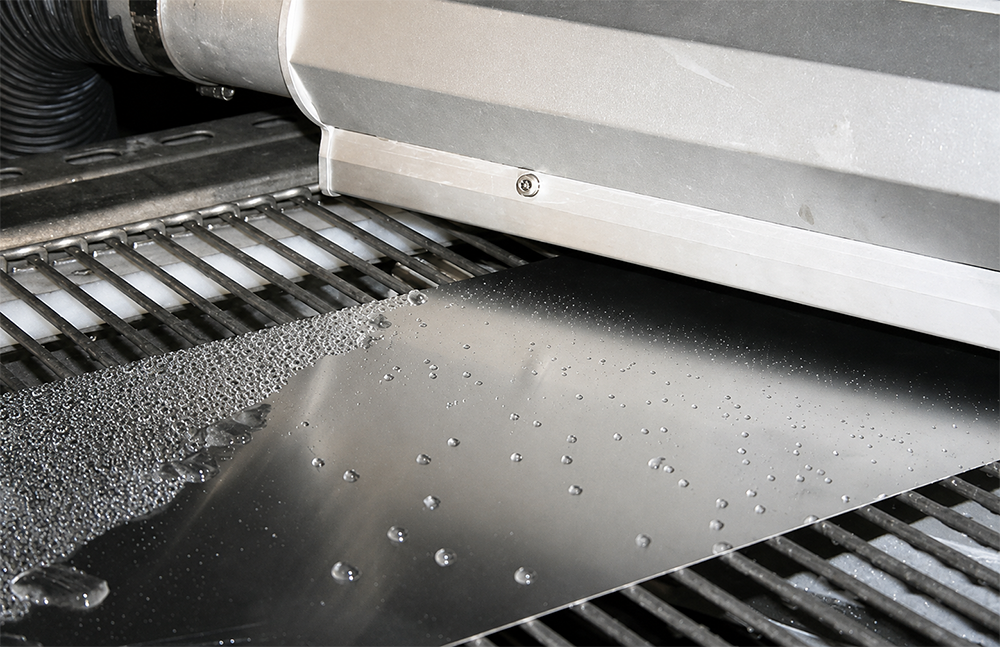
Air Knife Setups for Rack Plating, Barrel Plating, and Flat Work

Air Knife Setups for Rack Plating, Barrel Plating, and Flat Work 

Rack-plated parts usually need coverage from more than one direction. Hooks, shielded rear faces, nested components, and pockets can sit outside a single air curtain. Two opposed knives or a staged top-to-bottom sweep may be needed, but the jets should not collide and create uncontrolled mist. Racks also need regular inspection for cracked insulation and metal buildup that forms liquid pockets.

Barrels retain solution in perforations, end plates, internal parts, and plugged holes. Rotation in the upright drain position often matters more than a stationary external jet. Use the air knife as part of the withdrawal-and-rotation sequence, and verify that air reaches the drainage path without driving aerosol through the enclosure.

Panels, strip, wire, and other continuous products give a more repeatable target. A narrow, angled air curtain can push the liquid line back toward the tank. Two-sided products may need upper and lower knives, balanced so the lower jet does not lift the strip, disturb electrical contact, or throw liquid beyond the capture zone.

Recovery Must Protect the Plating Chemistry

Returning solution is valuable only when the return is chemically acceptable. Confirm that the recovered liquid comes from the same bath and has not collected rinse water, cleaner, etchant, oil, particles, or corrosion debris. Some baths tolerate direct return; others require filtration, concentration control, or a separate recovery rinse. Electroless and tightly controlled baths can be especially sensitive to unwanted contaminants.

Also review the bath volume balance. A hot bath with normal evaporation may accept recovered solution more easily than a low-evaporation bath already near its operating level. Coordinate air knife recovery with makeup water, level control, filtration, and analytical additions. Recovery should stabilize the process, not gradually overfill or dilute it.

Air Knife Control of Mist, Air Quality, and Surface Risk

Plating solution can be hazardous and corrosive. The exhaust hood must capture the mist created during blow-off without pulling the air curtain away from the work. Test with the enclosure operating at its normal extraction rate. Add shields where the stream can strike edges, holes, or fixtures and break into droplets.

The supplied air must not add oil, condensate, rust, or particles to a freshly plated surface. Use suitable filtration and drain the air system. Blower-driven air is often preferred for continuous coverage and energy control, while compressed air may fit short, intermittent, or highly localized tasks. In either case, confirm the cleanliness required by the plating finish and the next process step.

Do not chase a completely dry surface if the process cannot tolerate it. Rapid drying can leave salts, stains, or dry-on patterns, and some downstream coatings require a clean, active surface. Define the acceptable endpoint as reduced transferable solution with no finish damage, not “maximum air.”

QXY Air Knife Starting Specifications for Electroplating Lines

These values are engineering starting points for blower-driven systems, not final settings. QXY Machinery should review the actual chemistry, rack envelope, wet width, exhaust arrangement, and return geometry before selection.

Design item

QXY starting point

Why it matters on a plating line

Body material

PVC for many low-temperature acidic or alkaline wet zones; verify exact chemistry

Reduces corrosion risk near plating and rinse tanks without paying for a premium alloy where it is not needed

Blower pressure

2–6 psi (0.14–0.42 bar) at the knife inlet

Supports a continuous air curtain; final pressure must be set by runoff and mist tests

Working distance

20–50 mm from the target surface

Keeps useful impact while leaving clearance for racks, hooks, and part variation

Impingement angle

15°–45° from the surface, aimed toward the approved return zone

Moves liquid in a controlled direction instead of atomizing it across the line

Slot and width

0.5–2 mm standard slot; standard lengths 150–1,000 mm; custom lengths available

Matches the wet width and liquid load; wider openings require enough blower flow

Inlet arrangement

Dual inlets normally used above 600 mm

Helps maintain coverage across wide panels, long racks, or strip lines

 PVC is often a practical body material near low-temperature acid, alkaline, plating, and rinse environments. It is light and economical, but its suitability depends on chemical type, concentration, temperature, exposure time, pressure, impact, and mounting span. Stainless steel or titanium may be better where temperature, load, or documented corrosion conditions exceed the PVC operating window.

Commission the Air Knife with a Mass-Balance Test

Begin with the existing line. For a representative rack or barrel load, measure drip time, first-rinse conductivity or chemistry, bath makeup, and visible runoff pattern. Then run the same product with the air knife operating. Keep production rate, withdrawal profile, bath condition, and rinse flow as constant as possible.

Collect returned liquid where practical, or use bath-level and concentration records over enough cycles to smooth out normal variation. Check the first rinse for reduced contaminant loading. Inspect the plated surface under the normal quality standard for stains, residue, roughness, adhesion problems, or marks caused by rapid drying.

Confirm that all displaced liquid reaches the approved tank or recovery vessel.

Record pressure, slot setting, distance, angle, hoist speed, drain time, and exhaust state.

Test the worst-draining rack and the most sensitive finish, not only a flat sample.

Look for mist on tank rims, bus bars, sensors, floors, and neighboring stages.

Recheck rinse loading and chemical makeup after a stable production period.

Maintenance Determines Whether Savings Continue

Inspect the slot for salt buildup and verify that airflow remains even across the wet width. Check brackets, shields, hoses, blower filters, drains, and the sloped return surface. A shifted angle or blocked drain can quietly redirect recovered chemistry away from the process tank.

Include the system in plating-line change control. A new part family, rack design, bath chemistry, concentration, temperature, hoist program, or exhaust setting can change the liquid path. Repeat the runoff and rinse-loading checks after any change that affects drainage or airflow.

About QXY Machinery

QXY Machinery (Shenzhen Qixingyuan Machinery Equipment Co., Ltd.) is a high-tech enterprise integrating R&D, design, production, and sales. Based in Shenzhen, China, the company has more than 10 years of focused air knife experience for industrial drying, liquid removal, dust control, and wet-process equipment.

For electroplating and surface-treatment lines, QXY Machinery supplies PVC, 304 and 316 stainless steel, titanium alloy, aluminum alloy, slot, small-hole, and dual-sided air knife configurations. Length, slot width, inlet direction, mounting, material, and air source can be matched to the tank layout and work envelope.

A useful application request includes the plating chemistry, concentration, temperature, rack or barrel drawing, wet width, withdrawal motion, drain time, exhaust arrangement, available air source, return destination, and surface-quality limit.

→ Contact QXY Machinery to review an air knife system for electroplating drag-out recovery.

FAQ

Q: Where should an air knife be installed to reduce electroplating drag-out?

A: For direct recovery, place it over the source plating bath or a drainboard that returns to that bath, before the work enters the first rinse.

Q: Can an air knife replace drainage time over the plating tank?

A: No. Slow withdrawal and gravity drainage remove the heavy liquid first. Airflow should handle the remaining film and droplets inside the recovery zone.

Q: How much can air knives reduce chemical drag-out?

A: Results depend on geometry, bath properties, withdrawal, drainage, airflow, and capture. EPA material reports a 75% reduction at one facility, but each line needs its own baseline and mass-balance test.

Q: Is PVC suitable for an electroplating air knife?

A: PVC can suit many low-temperature acidic, alkaline, plating, and rinse environments. Confirm the exact chemical, concentration, temperature, exposure time, pressure, and structural load.

Q: Will higher air pressure always recover more plating solution?

A: No. Excess force can create mist, scatter chemistry, and damage surface quality. Use the lowest setting that moves liquid consistently into the approved return path.

Q: Can recovered solution always be returned to the plating bath?

A: Only when the chemistry owner approves the source, cleanliness, concentration, and volume balance. Some solutions require filtration, analysis, or a separate recovery step.

Q: How is drag-out reduction verified after installation?

A: Compare representative production before and after installation using rinse loading, returned-liquid measurements, bath makeup, chemical balance, mist inspection, and plated-surface quality.

Need a custom air knife solution? Send us your application details, material requirement ,or air source type . Our engineering team will help you select the right model.

  • *Company
  • *Email
  • Name
  • Phone
  • Message
  • *Verify Code
img