

Wash solution leaves a tank on every wetted part, rack, basket, hook, and fixture. Some drains back immediately. The rest travels toward the rinse, floor, exhaust, or wastewater system. This drag-out removes useful chemistry from the wash tank and adds a contamination load to the next stage.
An Air Knife can recover part of that liquid, but placement decides whether recovery actually occurs. A knife aimed at the part downstream may make the surface look clear while sending wash solution forward as droplets or mist. The effective layout removes liquid while the load is still over the source tank or an approved drain-back zone.
Drag-out includes surface film, pools, liquid inside features, and solution held by racks or baskets. The amount changes with geometry, withdrawal speed, viscosity, surface tension, temperature, load density, and drain time.
Not every collected liquid should return. Chips, oil, abrasive media, mixed chemistry, or downstream contamination can make recovery unsuitable. Approve the return rule before connecting a tray or catch tank to the wash tank.
Use measurable targets: solution lost per load, wash makeup, chemical addition, first-rinse condition, or wastewater load. Visible dripping alone misses mist and trapped liquid.
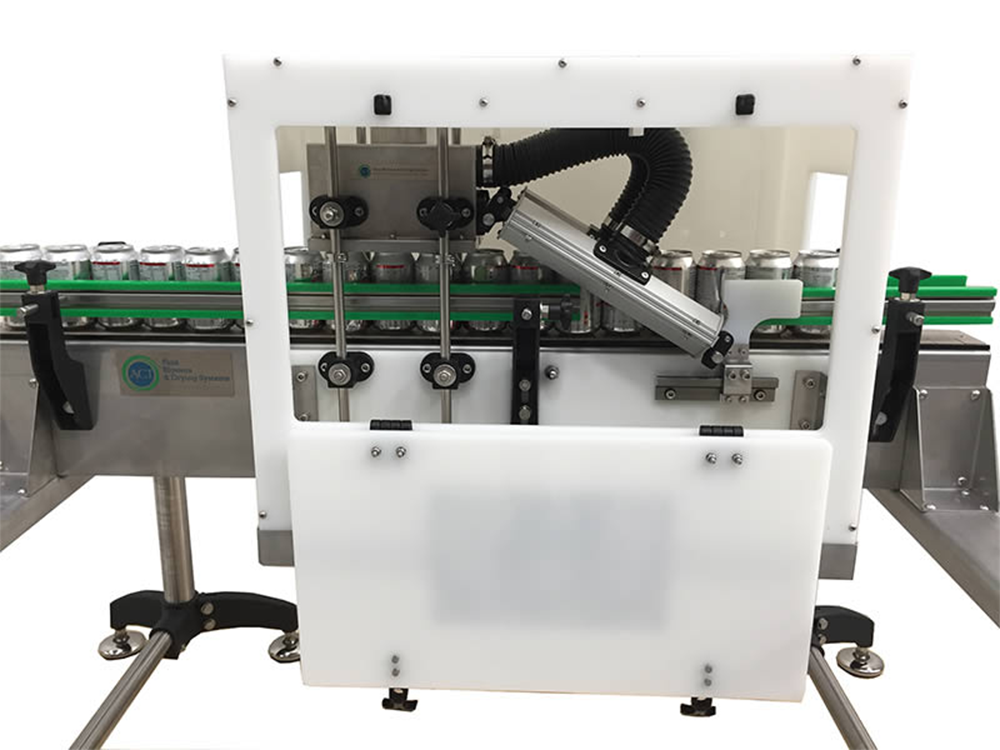
The simplest destination is the open source tank. Where the transfer path extends beyond the tank lip, use an inclined drip shield, drain board, or catch section connected to the same tank. A separate recovery chamber can collect liquid for filtration, inspection, and pump-back when direct return is not appropriate.
The air knife should not blow onto a flat shelf. Removed solution must reach a sloped, drainable surface with no lip that holds a secondary pool. Keep hoses, fasteners, and structural members out of the runoff path. A small obstruction can split the stream and send liquid toward the rinse.
The full wet envelope must remain above the tank opening or drain-back surface during blow-off. Include the outer basket wires, lifting bar, hooks, and the farthest part position. If any wet feature crosses beyond the recovery boundary before the air knife acts, that liquid is already lost to the next zone.
A slight downward and backward direction usually supports return to the wash tank. The exact angle depends on the surface and carrier. The jet should move liquid toward an open edge without driving it into a pocket or across the enclosure. Confirm the destination by watching runoff, not only the part surface.
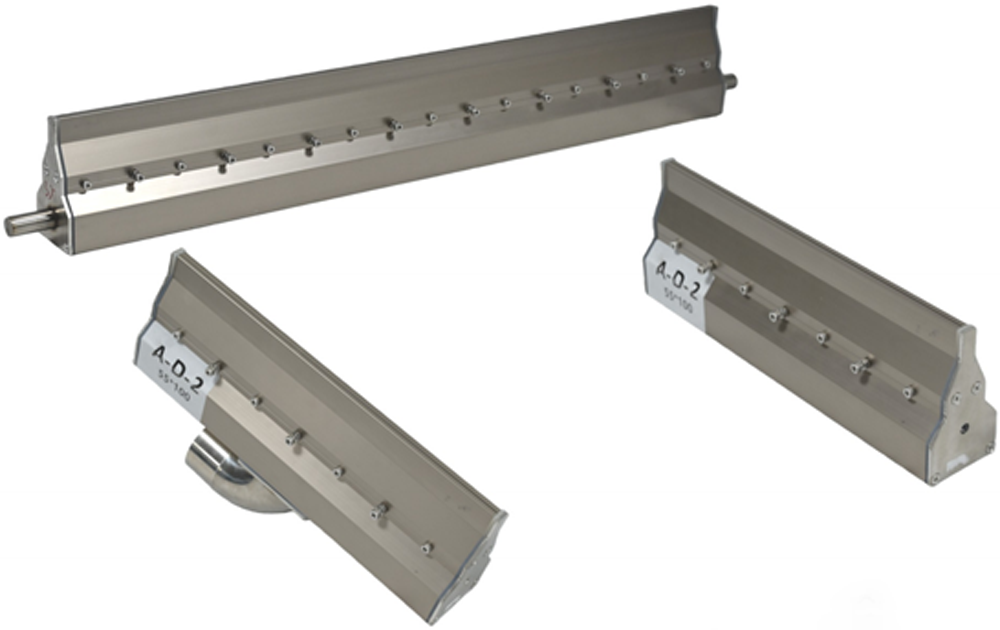
This is the shortest return path. The rack or part rises, pauses to drain, and passes through or in front of the air sheet while still over the tank. It works well where the tank has enough freeboard and the jet can be contained without disturbing the bath surface or exhaust capture.
A drip shield bridges the gap between wash and rinse. It extends the recovery boundary when the hoist or conveyor cannot complete blow-off directly over the tank. The shield must slope back to the wash stage and shed solution faster than the next load arrives.
A short enclosed chamber can provide more blow-off distance, mist capture, and access. The catch tank or sump returns approved liquid to the wash tank, often after filtration or a quality check. This layout adds equipment and residence, so confirm that it does not create a transfer bottleneck.
Let the load drain while it is still above the wash tank. Free drainage costs no blower energy and reduces the liquid load the knife must move. Part orientation should expose open edges and avoid upward-facing trays. Rotating a barrel or tilting a rack can release solution from surfaces the air sheet cannot see.
The drain period must fit material and process risk. Extra dwell may reduce drag-out but can stain, oxidize, cool, or dry chemistry onto some surfaces. Test the shortest drain-plus-blow-off combination that reaches the recovery target without harming the part or delaying the line.
Coordinate the knife with the hoist or conveyor so it operates only when the wet load is inside the recovery position. A sensor or PLC trigger reduces unnecessary air use and avoids blowing across an empty tank or open transfer path.
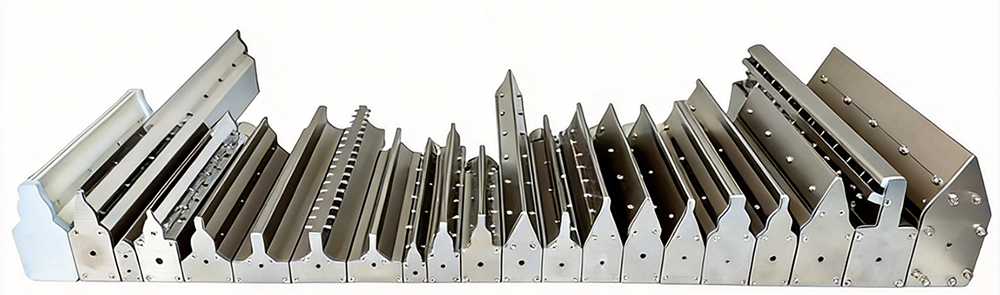
For many blower-driven QXY applications, a 20–50 mm knife-to-part distance and a 15°–45° impingement angle are practical starting ranges. Standard slot gaps are commonly 0.5–2 mm, with working pressure around 2–6 psi (0.14–0.42 bar). Drag-out recovery may use a different final angle from downstream drying because the destination is upstream.
Use the lowest stable airflow that moves the wash film into the return path. Excess velocity can atomize solution, create foam, disturb the bath surface, cool heated chemistry, or increase the load on ventilation. More pressure is not recovery if the liquid leaves through the exhaust.
Cover the full wet width. QXY aluminum alloy air knives are factory calibrated for airflow uniformity of ±5% across the knife length. Standard lengths include 150, 300, 450, 600, 800, and 1000 mm, with custom lengths available. Knives over 600 mm normally use dual inlets to support distribution.
Flat and open parts are strong candidates because the air sheet can sweep liquid toward an edge. Deep pockets, blind holes, nested parts, and dense baskets hold solution beyond the direct jet. Reorient the part, add a second direction, rotate the carrier, or extend drain time rather than relying on one stronger blast.
Racks and baskets are part of the wet load. Hooks, sleeves, mesh crossings, and contact pads can retain solution and drip after the part appears clear. Direct the air through or across the carrier without blowing collected liquid onto another part.
Barrels need rotation above the tank so trapped solution can reach openings. An air knife can assist at the barrel surface, but the barrel design, loading level, rotation, and drain time still control how much liquid leaves the interior.
A visible dry surface can hide poor recovery. Fine droplets may travel into the rinse, exhaust, or enclosure walls. Place baffles and extraction so mist returns to the wash boundary where practical. Avoid a cross-draft that pulls the air sheet toward the next tank.
Solution chemistry affects the result. Surfactants, temperature, and contamination change drainage and foaming. A setting that works with a fresh bath may create foam or mist later in bath life. Include normal chemistry age and temperature in the trial.
Keep the air source clean. Oil or particles from compressed air, blower inlets, or ducts can contaminate the bath and parts. Position blower inlets away from tank vapor and dirty exhaust, and maintain filters and the knife slot.
Aluminum alloy air knives suit general positions with limited chemical exposure. Stainless steel may be better near alkaline cleaners, washdown, heat, or corrosive vapor. PVC can suit some acid or alkaline environments where temperature remains within its limit. Titanium is reserved for highly corrosive conditions beyond stainless capability.
Material review must include the body, shim, fasteners, supports, ducts, seals, and drain surfaces. Check the actual concentration, temperature, splash, vapor, contaminants, and cleaning procedure. A compatible knife mounted on an incompatible bracket is not a durable recovery system.
Use a repeatable part, carrier, withdrawal speed, drain time, and bath condition. One direct method is to weigh the dry load, immerse it, apply the standard drain period, and weigh it again. The wet-minus-dry mass estimates retained solution. A catch tray or recovery sump can measure the liquid returned during blow-off.
Track process-level evidence too: wash-tank makeup, chemical addition, first-rinse conductivity or concentration where relevant, rinse-water demand, wastewater load, and recovery-sump quality. Normalize results by loads or parts processed so production changes do not hide the trend.
• Measure the left, center, and right load positions.
• Include the carrier and the part family with the deepest liquid traps.
• Test fresh and normally aged wash solution at operating temperature.
• Inspect the rinse zone, enclosure, and exhaust path for transferred mist.
• Confirm that recovered liquid remains suitable for return over time.
Compare baseline, gravity-drain-only, and drain-plus-air-knife conditions. Do not claim a universal reduction percentage. The result depends on the part, solution, withdrawal, drainage, geometry, and recovery layout.
A downstream knife acts after liquid crosses the recovery boundary. A forward jet pushes chemistry toward the rinse; a flat tray stores liquid; excessive velocity creates escaping mist. The part may look cleaner while solution loss rises.
Design for basket edges, hooks, and tall variants. Monitor the recovery sump before return. Good placement covers the full load, runoff, mist, maintenance, and return quality.
QXY Machinery (Shenzhen Qixingyuan Machinery Equipment Co., Ltd.) is a high-tech enterprise integrating R&D, design, production, and sales. Based in Shenzhen, China, the company specializes in industrial drying, dust removal, and water-blowing solutions and has more than 10 years of focused air knife experience.
For wash-tank drag-out recovery, relevant QXY products include aluminum alloy slot air knives, stainless steel and PVC air knives, titanium alloy air knives, tornado air knives, and dual-sided configurations. Custom length, slot width, hole pattern, and inlet arrangements are available to match tanks, racks, baskets, chemistry, load width, and recovery zones.
A useful application review includes wash chemistry, temperature, bath contamination, return restrictions, part and carrier drawings, withdrawal motion, drain time, line speed, available tank freeboard, drip-shield geometry, air source, ventilation, and the target reduction in solution loss.
→ Contact QXY Machinery to discuss air knife placement for wash-tank drag-out recovery.
Q: Where should an air knife be installed to reduce wash-tank drag-out?
A: Install it while the wet load is still over the source tank, an inclined drip shield, or an enclosed recovery zone connected to the source tank.
Q: Which direction should the air knife point?
A: Aim the air sheet downward and back toward the approved return path. Confirm the direction by observing runoff and mist, not only the part surface.
Q: Should parts drain before air blow-off?
A: Yes. Gravity should remove easy liquid first. Combine the shortest safe drain period with blow-off, considering staining, oxidation, bath cooling, and line cycle time.
Q: Can recovered wash solution always be returned to the tank?
A: No. Check for chips, oil, mixed chemistry, rinse water, and other contamination. Some recovery streams require filtration, testing, controlled addition, or disposal instead of direct return.
Q: Are air knives effective for baskets and parts with blind holes?
A: They can help, but shielding and trapped liquid limit a single air sheet. Use repeatable loading, orientation, carrier rotation, another air direction, or more drain time.
Q: What distance and angle should be tested first?
A: For many blower-driven applications, QXY uses 20–50 mm stand-off and a 15°–45° angle as starting ranges. Optimize the final direction for return to the source tank.
Q: How should drag-out reduction be measured?
A: Use wet-versus-dry load mass, recovered volume, wash makeup, chemical addition, rinse condition, wastewater load, and mist inspection under repeatable production conditions.
Need a custom air knife solution? Send us your application details, material requirement ,or air source type . Our engineering team will help you select the right model.

Shenzhen Qixingyuan Machinery Equipment Co., LTD.
info@airknifecn.com
Building 8, Wanfeng Third Industrial Zone, Xinqiao Street, Bao'an District, Shenzhen, Guangdong, China


